Sourdough discard pancakes
Sourdough discard pancakes that use a full cup of discard straight from the fridge: tangy, tender and ready in 30 minutes, or sourer and fluffier made overnight. Waffles and freezing too.
- 410
- kcal
- 12g
- protein
- 15g
- fat
- 56g
- carbs
- Prep
- 10 min
- Cook
- 20 min
- Serves
- 4
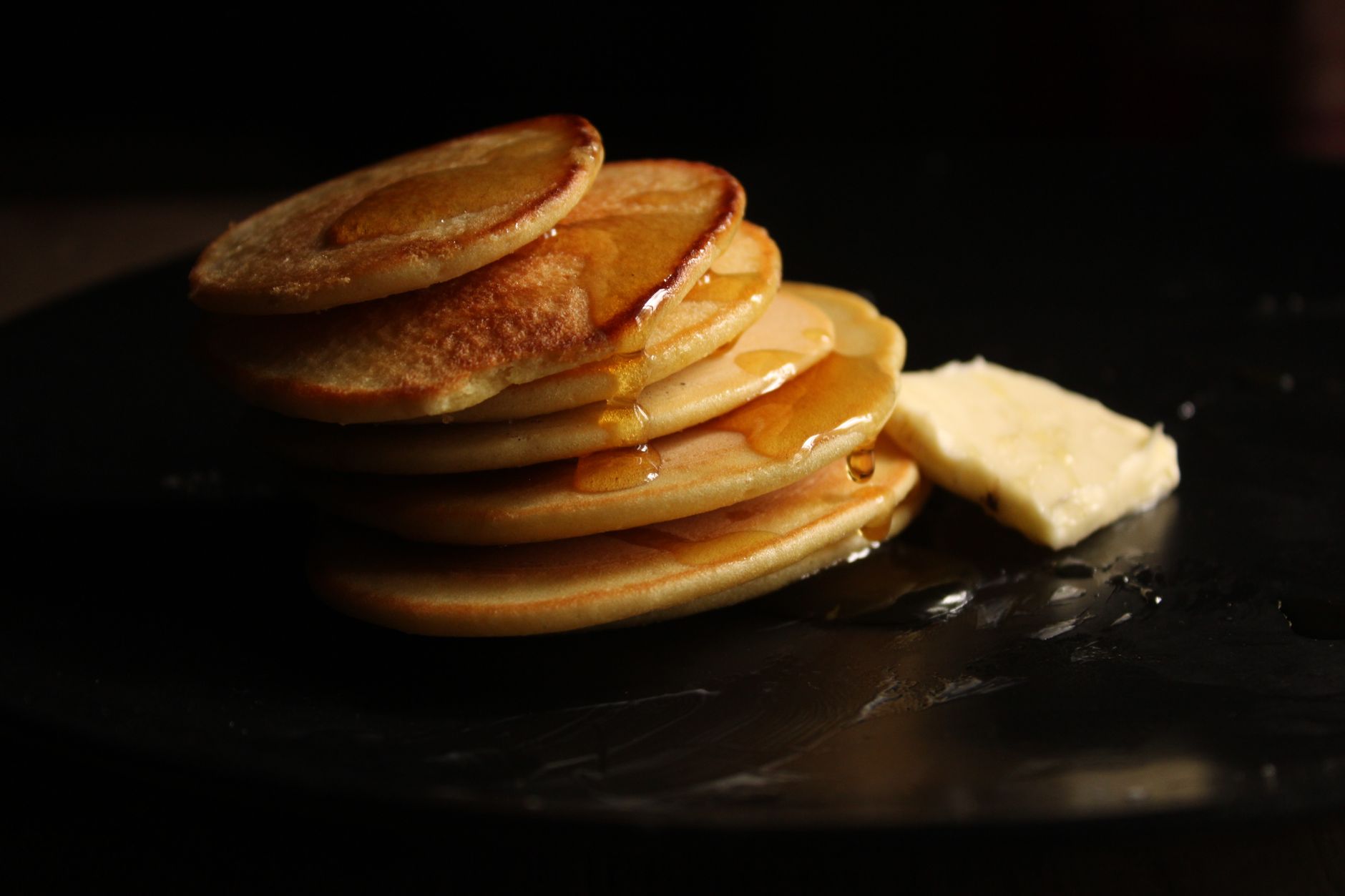
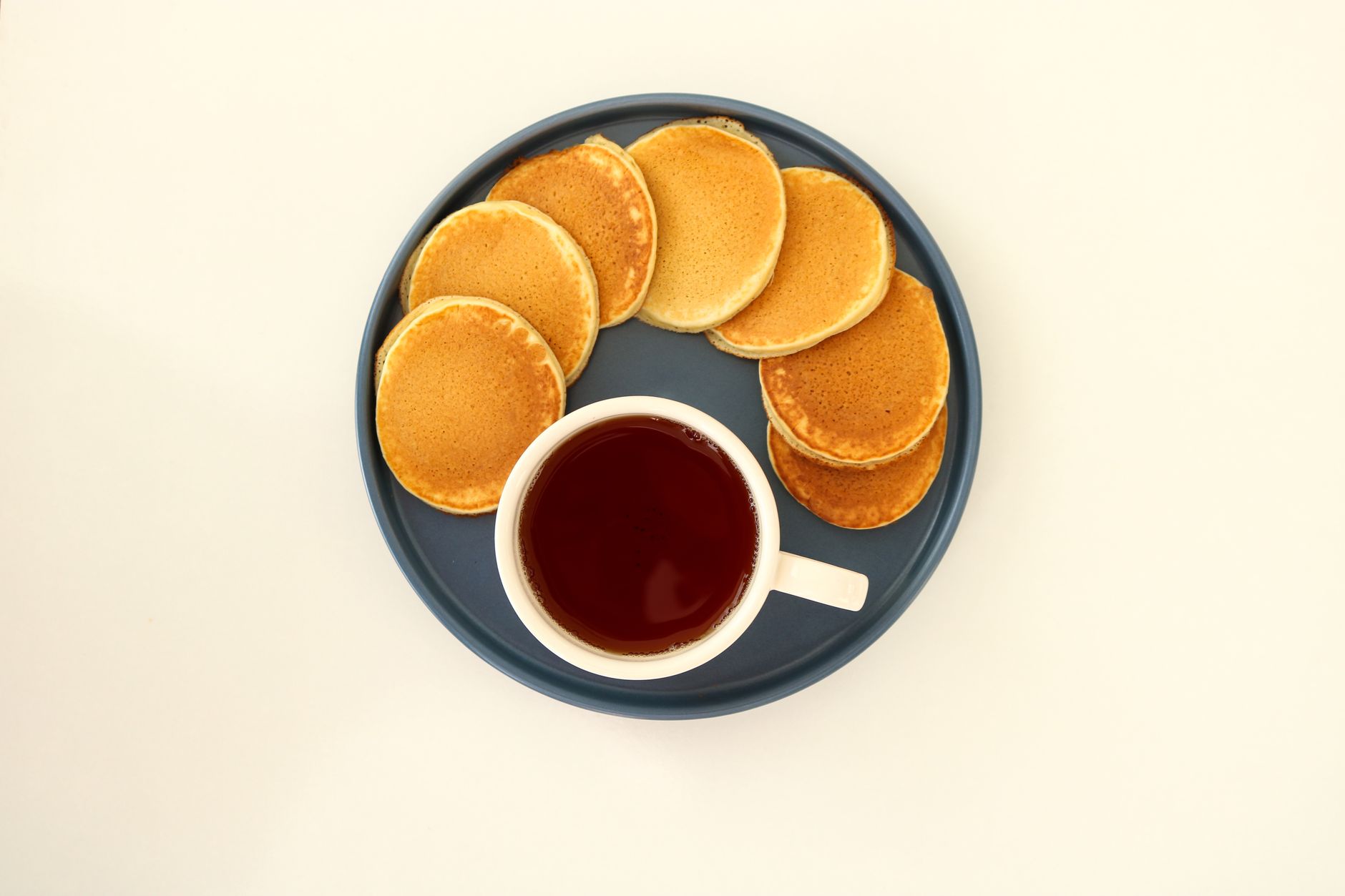
Photograph by Jahra Tasfia Reza on Pexels
Ingredients
- 1 cup (240 g) sourdough discard from a 100% hydration starter, straight from the fridge is fine
- 1 cup (125 g) all-purpose flour
- 2 tbsp sugar
- 1 tsp baking powder
- 1/2 tsp kosher salt
- 1 cup (240 ml) 2% milk
- 2 large eggs
- 3 tbsp butter, melted and cooled slightly, plus 2 tsp for the griddle
- 1 tsp vanilla extract
- 1/2 tsp baking soda, dissolved in 1 tsp water
Method
-
1
Mix the dry ingredients
Whisk the flour, sugar, baking powder and salt in a large bowl.
-
2
Mix the wet ingredients
In a second bowl, whisk the discard, milk, eggs, melted butter and vanilla until smooth. The discard is stringy at first; keep whisking and it loosens.
-
3
Combine and rest
Pour the wet ingredients into the dry and stir just until no dry flour is left. A few lumps are fine. Leave 5 minutes while the griddle heats.
-
4
Heat the griddle
Heat a griddle or large nonstick skillet over medium heat, or an electric griddle to 375°F, and wipe it with a little of the butter.
-
5
Add the baking soda
Stir the dissolved baking soda into the batter. It foams and thickens slightly. Start cooking right away.
-
6
Cook the pancakes
Pour 1/4 cup of batter per pancake. Cook 2 to 3 minutes, until bubbles break on top and the edges look dry, then flip and cook 1 to 2 minutes more, until golden. Turn the heat down a little if they brown before the centers set.
-
7
Keep them warm
Keep finished pancakes in a single layer on a rack in a 200°F oven while you cook the rest, wiping the griddle with butter between batches.
What sourdough discard does in a pancake
Sourdough discard is the starter you pour off before a feed. In these pancakes it does two jobs. It brings a mild tang, like buttermilk, and it brings acid, which reacts with the baking soda to lift the batter. The discard does not need to be active or bubbly. Straight from a jar in the fridge is fine.
The recipe assumes a 100 percent hydration starter, equal weights of flour and water, like the one in our sourdough starter recipe. One cup weighs about 240 g and is half flour, half water. A stiffer starter makes a thicker batter, so add a few tablespoons more milk.
The short version on the starter page uses discard as the only flour. Adding a cup of all-purpose flour and some milk makes a bigger batch, 12 to 14 pancakes, a little fluffier and easier to flip.
Same-morning or overnight sourdough pancakes
The recipe as written is a same-morning batter: mix, rest 5 minutes, cook. The flavor is gently sour and the baking powder and soda do all the rising.
For overnight sourdough pancakes, start the night before:
- The night before. Stir the discard, flour, sugar and milk together in a large bowl until smooth. Cover and refrigerate for 8 to 12 hours. Because the batter contains milk, the fridge is the safe place for it overnight; it still turns sour there, just more slowly.
- In the morning. Whisk in the eggs, melted butter, vanilla, salt and baking powder, then the baking soda last, and cook as usual.
Overnight, the yeasts and bacteria in the discard feed on the fresh flour. The batter turns bubbly and noticeably more sour, and the pancakes come out lighter and more tender. Very old discard has little life left, so with it the batter mostly just gets sourer. If you like a strong sour flavor, make it overnight; if not, the same morning.
How old can sourdough discard be?
Discard keeps for about a week in a covered jar in the fridge, and you can keep adding to the same jar. Older discard is often still usable, but it grows more acidic each day, and the pancakes can taste more of vinegar than buttermilk. A layer of gray liquid, called hooch, on top is harmless: stir it in for more tang or pour it off for less.
Throw it away if you see fuzzy spots of any color, or pink or orange streaks. Those are mold and bacteria, and cooking does not make them safe. Discard left out at room temperature should be used within a day or moved to the fridge. Discard with a pinch of yeast also makes good sourdough pizza dough.
Why baking soda
Discard is acidic. On its own, that acid makes a flat, dense, sour pancake. Baking soda is an alkali: it neutralizes some of the acid, which softens the sourness, and the reaction gives off the gas that makes the pancakes rise. Baking powder adds a steadier second lift, since it carries its own acid.
- Add the baking soda last, dissolved in a teaspoon of water, and cook soon after. The reaction is fastest in the first 15 minutes.
- Do not add more than the recipe calls for. Soda that has no acid left to react with tastes soapy and metallic and turns the pancakes too dark. Very sour discard can take up to 3/4 tsp; mild discard is fine with 1/2 tsp.
Sourdough discard waffles
The same batter makes good waffles. Increase the melted butter to 1/4 cup (4 tbsp), which helps them crisp and release from the iron. Heat the waffle iron fully, brush it with butter or oil, and cook until the steam slows almost to nothing, usually 4 to 5 minutes. The batch makes about 4 to 6 waffles, depending on the size of the iron. The overnight method works especially well for waffles: the extra fermentation makes them crisp outside and airy inside. Keep them warm in a single layer on a rack in a 200°F oven; stacked, they go soft.
Freezing sourdough pancakes
Cool the pancakes on a rack so they do not go soggy, freeze them flat on a tray for an hour, then move them to a freezer bag. They keep up to 2 months. Reheat straight from frozen in a toaster, or in the microwave for about 30 seconds. In the fridge, they keep up to 4 days.
Batter with the soda in it does not keep. To cook in two sittings, refrigerate half the batter before adding the soda and baking powder, and stir in half of each later.
Higher-protein or whole wheat sourdough pancakes
- Higher protein. Replace 1/4 cup of the flour with 1 scoop (30 g) of whey protein powder, and 3/4 cup of the milk with 3/4 cup of plain nonfat Greek yogurt. That takes the pancakes from about 12 g to about 20 g of protein a serving, depending on the powder. Thin the thicker batter with milk a tablespoon at a time and cook on medium-low, since whey browns quickly. Why the yogurt does so much is covered in Greek yogurt protein. For more protein still, our protein pancakes reach 30 g a serving and cottage cheese pancakes 25 g without any powder.
- Whole wheat. Use whole wheat flour, or the milder white whole wheat, in place of the all-purpose flour, and add 2 to 3 tablespoons more milk, since whole grain flour absorbs more. Rest the batter 10 minutes instead of 5. Fiber goes from under 2 g to about 4 g a serving. A starter fed on whole wheat makes the discard more whole grain, too. Other easy ways to add fiber at breakfast are in our list of high-fiber foods.
What they are worth nutritionally
A serving of 3 pancakes has about 410 kcal, with 12 g of protein, 15 g of fat and 56 g of carbohydrate, about 2 g of it fiber. Most of the fat is the butter in the batter and on the griddle; using 2 tbsp instead of 3 saves about 25 kcal a serving. Syrup and toppings are not included: 2 tablespoons of maple syrup add about 105 kcal, nearly all of it sugar. Claims that discard pancakes are easier to digest than ordinary ones are not well supported: the discard is only part of the flour, and it gets little fermentation time unless you make the overnight batter. To see how much protein your breakfast should carry, try the protein calculator.