Protein pancakes
Fluffy protein pancakes made with oats, whey and Greek yogurt: 30 g of protein a serving from a blender and a skillet. Not rubbery, if you keep the heat low.
- 375
- kcal
- 30g
- protein
- 11g
- fat
- 39g
- carbs
- Prep
- 10 min
- Cook
- 15 min
- Serves
- 2
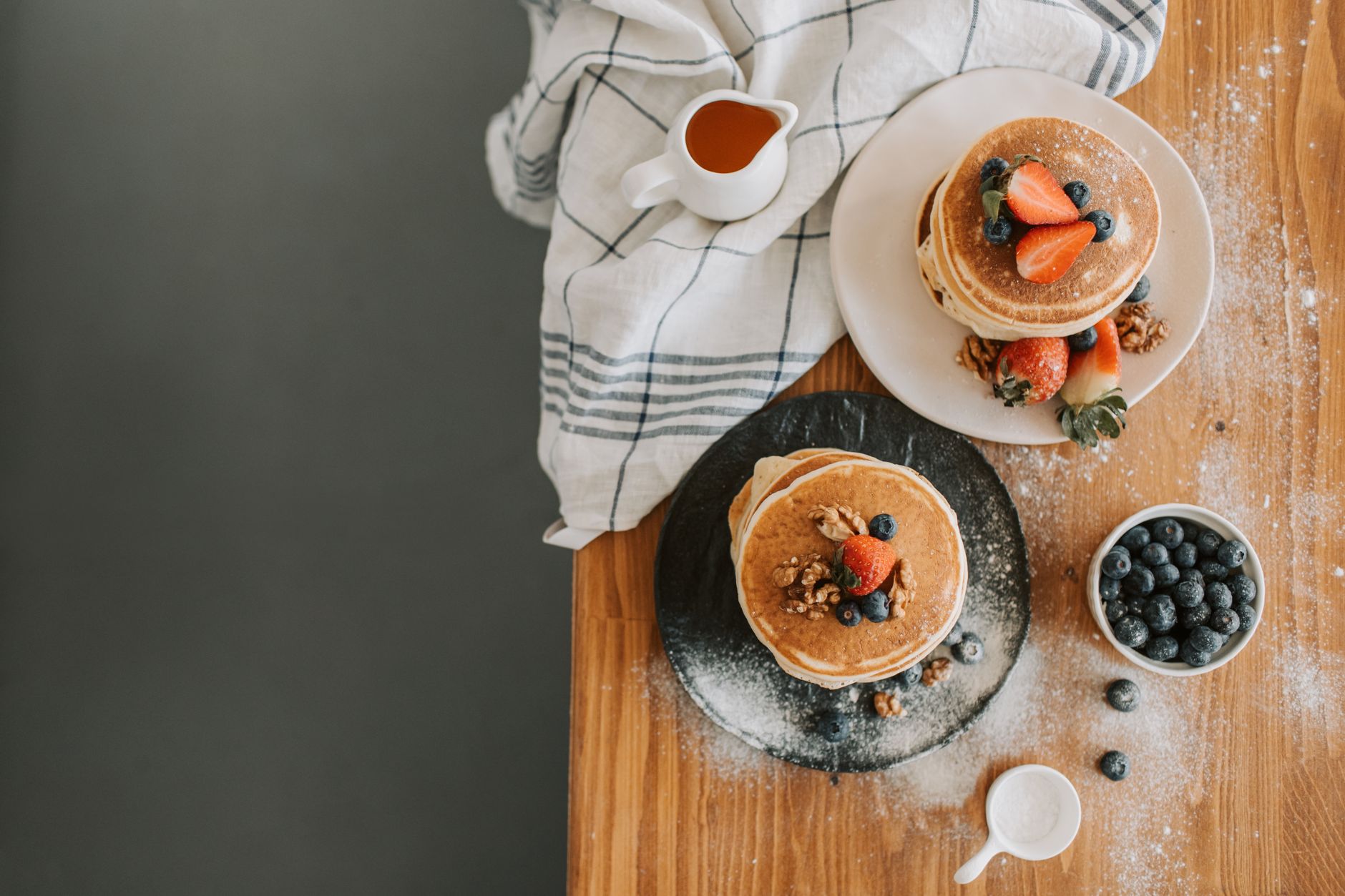
Photograph by Vlada Karpovich on Pexels
Ingredients
- 1 cup (80 g) old-fashioned rolled oats
- 1 scoop (30 g) vanilla whey protein powder
- 1 tsp baking powder
- 1/2 tsp ground cinnamon
- A pinch of kosher salt
- 2 large eggs
- 1/2 cup (120 g) plain nonfat Greek yogurt
- 1/4 cup milk, plus more if needed
- 1 tbsp maple syrup
- 1 tsp vanilla extract
- 1 tsp butter, for the pan
Method
-
1
Blend the oats
Blend the oats in a blender until they are a fine flour, about 30 seconds.
-
2
Make the batter
Add the protein powder, baking powder, cinnamon, salt, eggs, yogurt, milk, maple syrup and vanilla and blend until smooth.
-
3
Rest the batter
Leave the batter 5 minutes while the pan heats. The oats absorb liquid and it thickens. It should pour slowly, like thick pancake batter; add milk a tablespoon at a time if it only drops in clumps.
-
4
Heat the pan
Heat a nonstick skillet or griddle over medium-low heat and wipe it with a little butter.
-
5
Cook the pancakes
Pour 1/4 cup batter per pancake. Cook 2 to 3 minutes, until bubbles appear on top and the edges look dry, then flip and cook 1 to 2 minutes more. Whey browns faster than flour, so turn the heat down if the outsides darken before the centers set.
Why protein pancakes turn out rubbery
Protein powder behaves nothing like flour. Whey sets firm as soon as it is hot, browns fast, and does not hold air well. That is why many protein pancake recipes come out dense, dry and chewy. Three things fix it:
- Do not use protein powder as the only "flour". Here it is a quarter of the dry ingredients. Oats do the structural work and keep the pancakes tender.
- Add moisture that is not just milk. Greek yogurt adds protein, and its thickness makes the pancakes softer.
- Cook low and slow. On medium-high heat the outside burns before the inside cooks through. Medium-low takes a minute longer and gives an even golden color.
Which protein powder to use
- Whey, or a whey and casein blend: works best. Blends with casein make softer pancakes than pure whey isolate.
- Plant protein (pea, soy, brown rice): absorbs much more liquid. Expect to add 2 to 4 tablespoons more milk, and expect a slightly denser pancake.
- Pancake mixes labeled "protein": work, but they are a different recipe. Follow the package.
Check the label of your powder for added sugar. Flavored powders already taste sweet, so you can usually leave out the maple syrup in the batter. Whether you need protein powder at all is covered in protein supplements.
Without a blender
Use about 3/4 cup (80 g) of store-bought oat flour instead of the rolled oats and whisk everything together in a bowl. Do not use whole rolled oats without blending them: the pancakes fall apart.
Without protein powder
Make cottage cheese pancakes instead. Cottage cheese and eggs give 25 g of protein a serving with no powder at all.
Toppings, and what they add
- Greek yogurt and berries: 1/2 cup of each adds about 110 kcal and 12 g of protein.
- Peanut butter: 1 tablespoon adds about 95 kcal and 4 g of protein.
- Maple syrup: 2 tablespoons add about 105 kcal, all of it sugar.
Meal prep
Cool the pancakes on a rack, then refrigerate up to 4 days or freeze up to 2 months with parchment between them. Reheat in a toaster, which keeps the edges crisp, or in the microwave for 20 to 30 seconds.
What they are worth nutritionally
A serving of about 4 pancakes has around 375 kcal, with 30 g of protein, 11 g of fat and 39 g of carbohydrate, including about 4 g of fiber from the oats. A typical stack of buttermilk pancakes made from a mix has a similar number of calories and less than half the protein. Toppings are not included in the numbers.