Sourdough pizza dough
Sourdough pizza dough from an active starter, bread flour, water and salt: three 12-inch crusts, cold-fermented 24 to 72 hours for a crisp, blistered crust. Same-day and discard versions too.
- 350
- kcal
- 11g
- protein
- 4g
- fat
- 67g
- carbs
- Prep
- 31 h 45 min
- Cook
- 25 min
- Serves
- 6

Photograph by Valeria Boltneva on Pexels
Ingredients
- 1/2 cup (100 g) active sourdough starter, at or near its peak
- 4 cups (500 g) bread flour
- 1 1/3 cups plus 2 tsp (325 g) water, about 80°F
- 2 tsp (10 g) fine sea salt; weigh it, since salts differ
- 1 tbsp olive oil, plus a little for the containers
- Semolina or flour, for the peel
- Your choice of sauce and toppings
Method
-
1
Dissolve the starter
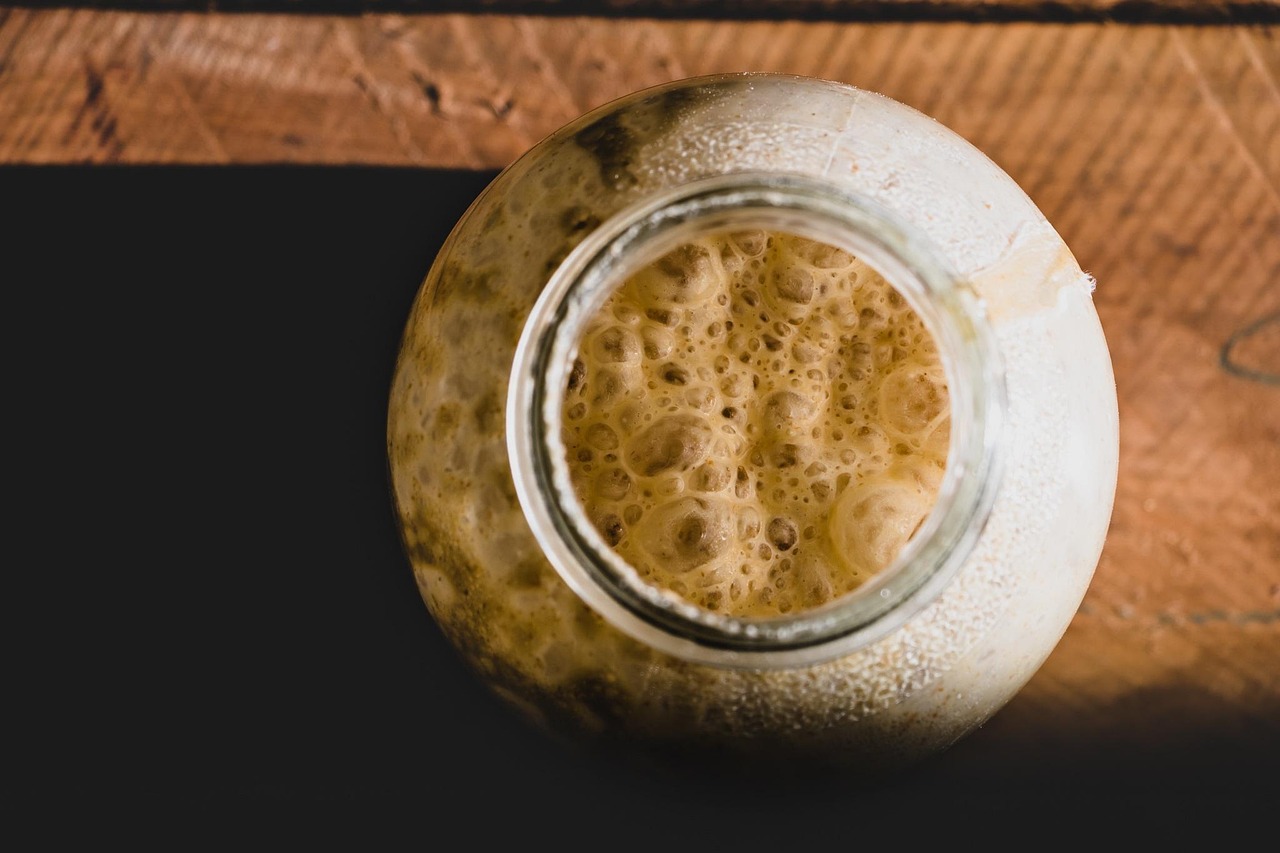
In a large bowl, stir the starter into the water until it is milky and loose.
-
2
Mix the dough
Add the flour and mix with your hand or a spatula until no dry flour is left. It will be shaggy. Cover and rest 30 minutes.
-
3
Add salt and oil
Sprinkle the salt over the dough, add the olive oil, and squeeze and fold them through for 2 to 3 minutes, until the dough comes back together and feels smoother.
-
4
Bulk ferment with folds
Cover and leave at room temperature, ideally 70 to 75°F, for 4 to 6 hours in total. In the first 2 hours, do two or three sets of folds 30 minutes apart: with a wet hand, lift one side of the dough, fold it over the middle, and repeat on all four sides. It is ready when it has grown by about half and has bubbles on top and at the sides.
-
5
Divide and shape into balls
Turn the dough onto a lightly floured counter and divide into 3 pieces of about 315 g. Fold the edges of each into the middle, turn it seam side down and drag it toward you on the counter until the surface is taut. Put each ball in a lightly oiled lidded container or on an oiled tray covered with plastic wrap.
-
6
Cold-ferment
Refrigerate for 24 to 72 hours. The longer it goes, the deeper the flavor and the more the crust blisters.
-
7
Warm the dough and heat the oven
Take the balls out 2 to 3 hours before baking and leave them, covered, at room temperature. An hour before baking, put a baking steel or stone on a rack about 6 inches below the broiler and heat the oven to its highest setting, 500 to 550°F.
-
8
Stretch the dough
Flour a ball generously and set it on the counter. Press it out from the center with your fingertips, leaving a 1/2-inch rim untouched, then lift it and stretch it over your knuckles, turning it, to 12 inches. Do not use a rolling pin; it presses out the gas that makes the rim puff.
-
9
Top and bake
Lay the dough on a peel dusted with semolina, top it lightly and quickly, and slide it onto the steel or stone. Bake 6 to 8 minutes on a steel or 8 to 10 on a stone, until the rim is puffed and charred in spots. If the top is pale when the base is done, broil for the last 1 to 2 minutes. Repeat with the other balls, broiling for 5 minutes between pizzas to reheat the steel.
What makes sourdough pizza dough different
Sourdough pizza dough is raised by an active starter instead of commercial yeast. It rises more slowly, and that is the point: the crust bakes up crisp and blistered, chewy inside, with a wheaty flavor that is only faintly sour, since the dough is mostly fermented cold and baked thin.
The recipe uses a 100 percent hydration starter, fed at 1:1:1 with equal weights of starter, flour and water, as in our sourdough starter recipe. Use it near its peak, when it has about doubled. A starter that reliably raises sourdough bread will raise this dough.
The batch makes 3 balls of about 315 g, each a 12-inch pizza with a medium crust and a puffy rim.
Cold-fermented or same-day: the timeline
The cold ferment gives the best flavor and the easiest dough to stretch. For pizza on Saturday evening:
- Thursday, 10 pm: feed the starter at 1:5:5 (10 g starter, 50 g flour, 50 g water), so it peaks in the morning instead of overnight.
- Friday, 9 am: mix the dough and bulk ferment it for 4 to 6 hours, folding two or three times in the first 2 hours.
- Friday, 2 to 3 pm: divide into balls and refrigerate.
- Saturday, 4 pm: take the balls out 2 to 3 hours before baking. Heat the oven for the last hour.
The balls can stay in the fridge 24 to 72 hours. At 24 hours the flavor is mild and the dough easy to handle. At 48 to 72 hours it tastes deeper and slightly sour, browns and blisters more, and stretches more easily. Past about 3 days it turns slack, sticky and sharply sour.
For same-day sourdough pizza, mix in the morning and leave the dough at 75 to 78°F for 6 to 8 hours, until it has grown by about half and looks airy. Ball it, rest the balls 1 to 2 hours, and bake. The flavor is milder, with a little less blistering. In a cool kitchen, give it more time rather than more starter.
Bread flour, all-purpose or 00?
- Bread flour is the best choice for a home oven. Its higher protein, usually 12 to 13 percent, makes a strong, chewy dough that stretches thin without tearing and browns well at 500°F. This is a New York style crust.
- All-purpose flour works. The crust is softer and the dough weaker, so hold back about 15 g (1 tbsp) of the water.
- 00 flour is Italian flour milled very fine; "00" describes the grind, not the protein. Pizzeria 00 is made for wood-fired ovens at 800°F or more and can bake up pale in a home oven. Look for one labeled for home ovens, or use half 00 and half bread flour.
Hydration
Hydration is the water as a percentage of the flour, by weight. This dough is 65 percent, about 68 percent counting the starter. That is a good middle ground: soft enough to blister, firm enough to stretch on a counter and slide off a peel. At 70 to 75 percent the crust is lighter and more open but the dough is sticky to shape. At 60 percent it is easy to handle, with a denser crust.
Sourdough discard pizza dough
Discard from the fridge will not raise a pizza dough well on its own. Unfed discard has too little yeast activity left; it gives flavor and acidity, and a dense, flat crust. The fix is a pinch of commercial yeast:
- Cold ferment: use 100 g of discard in place of the active starter and add 1/4 tsp of instant yeast with the flour. Follow the recipe as written.
- Same day: add 1 tsp of instant yeast instead. Ball it after about 2 hours and bake 1 hour after that.
Discard up to a week old adds a pleasant tang; older discard makes the dough sour and slack. The rest of the jar goes into sourdough discard pancakes.
Baking pizza in a home oven
A crisp, blistered crust needs heat from underneath. Home ovens top out at 500 to 550°F, so bake on a surface that stores a lot of heat.
- A baking steel bakes a 12-inch pizza in 6 to 8 minutes; a pizza stone in 8 to 10. Without either, preheat an upside-down heavy sheet pan and expect 10 to 12 minutes and a softer base.
- Preheat 45 to 60 minutes at the highest setting, with the steel or stone about 6 inches below the broiler. The oven reaches temperature long before the stone does.
- The broiler trick. If the top is pale when the base is done, broil for the last 1 to 2 minutes, watching closely. Five minutes of broiling between pizzas also reheats the steel.
- Top lightly and quickly on a peel dusted with semolina. An overloaded pizza sticks to the peel and bakes soggy.
Neapolitan style
Neapolitan pizza is made with 00 flour, water, salt and yeast or natural starter, no oil, at about 60 to 62 percent hydration, and baked in 60 to 90 seconds at around 900°F. For that style, use 00 flour, leave out the oil, cut the water to 305 g, and make 4 balls of about 230 g, stretched to 10 inches. It needs an outdoor pizza oven to bake properly. In a home oven, the main recipe gives a better crust.
Freezing pizza dough balls
Freeze the balls after at least 24 hours in the fridge, so they have their flavor. Rub each with a little oil, wrap tightly, and freeze in a freezer bag up to 3 months. Thaw overnight in the fridge, then 2 to 3 hours at room temperature before shaping. They may rise a little less, but bake into a good crust.
What it is worth nutritionally
The numbers are for the dough only, since toppings vary so much. One serving is half of a 12-inch crust: about 350 kcal, with 11 g of protein, 4 g of fat, 67 g of carbohydrate and about 2 g of fiber. It has about 650 mg of sodium, more than a quarter of the 2,300 mg Daily Value, before any sauce or cheese. An ounce of whole-milk mozzarella adds about 85 kcal and 6 g of protein. The olive oil is a small amount; the case for it is in healthy fats. Some studies suggest sourdough bread raises blood sugar a little less than yeast bread, but the evidence is mixed and has not been tested on pizza. To fit a pizza night into your targets, use the macro calculator.