Healthy fats: monounsaturated, polyunsaturated, saturated, and what replaced what
The low-fat era treated a whole category as one substance. Which healthy fats to eat depends entirely on what they are replacing — and that is where the trials disagree with the slogans.
August 7, 2026 · 6 min read
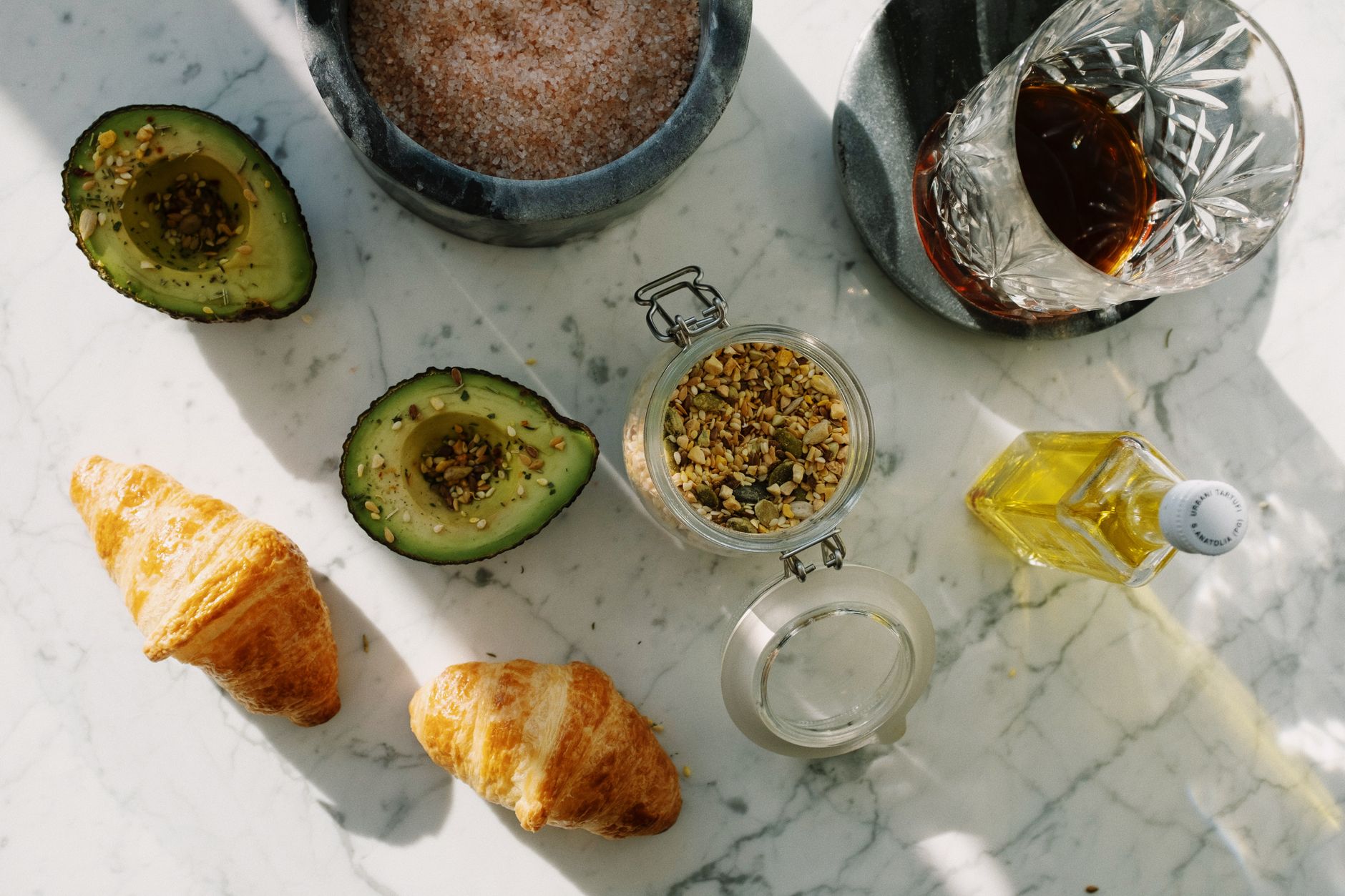
Photograph by ready made on Pexels
Fat carries nine calories per gram against four for protein and carbohydrate. That single fact made it the obvious target when public health first turned its attention to obesity and heart disease, and it produced several decades of advice to eat less of it.
The advice got the arithmetic right and the biology wrong. It treated a whole category as if it were one substance, and it left the crucial question unasked: less fat, replaced by what? Populations that replaced fat with refined carbohydrate did not see the promised improvement in cardiovascular outcomes, and in some analyses the lipid picture got worse.
So the useful question is never whether fat is good or bad. It is what a given fat is replacing.
The four kinds of fat, and which are the healthy fats
Monounsaturated fat
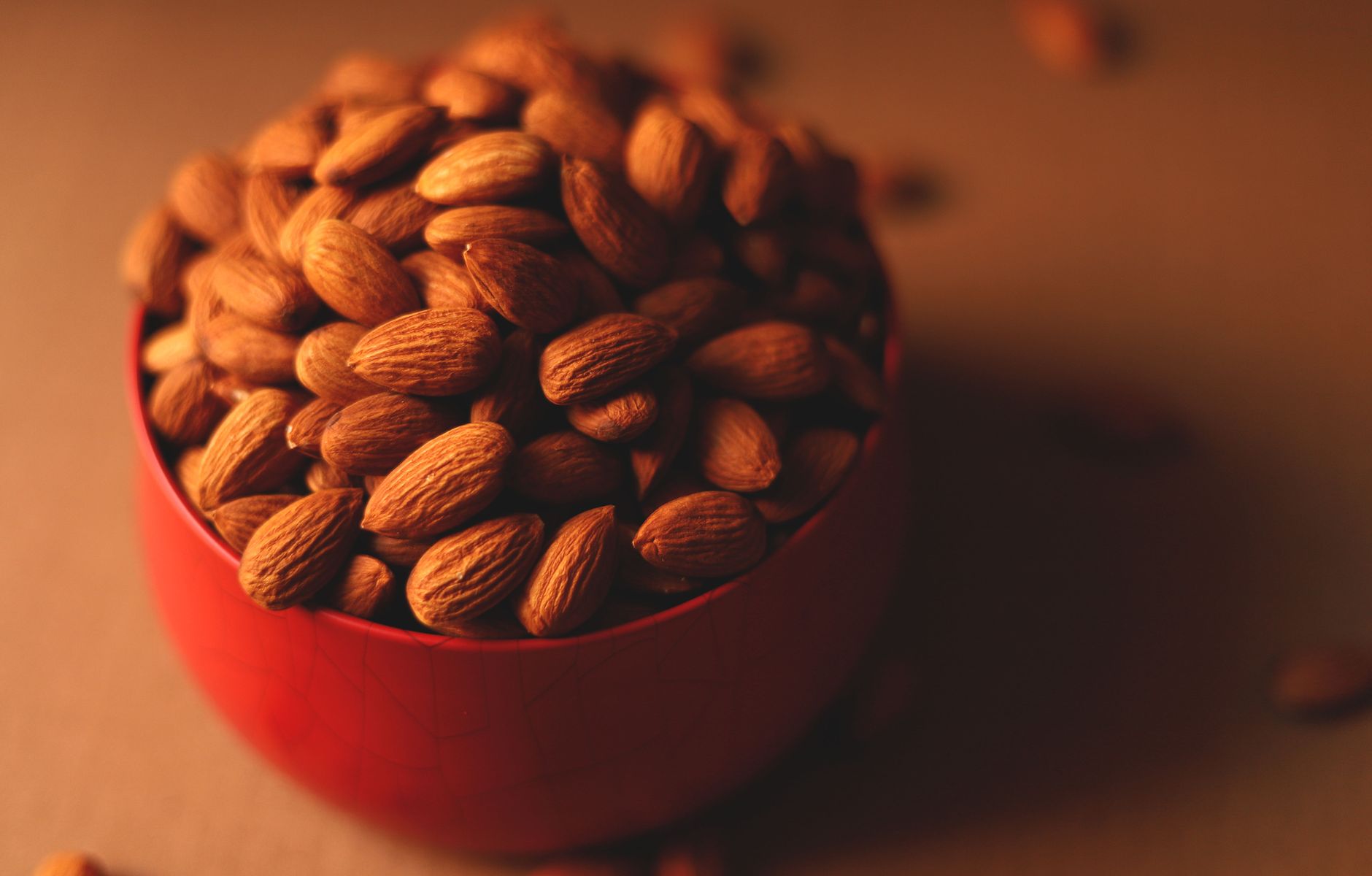
Olive oil, avocado, most nuts, and a surprising share of the fat in poultry and pork. This is the best-supported fat there is and the backbone of the Mediterranean pattern. Replacing saturated fat with monounsaturated fat improves blood lipids, and the trials built on this pattern — PREDIMED most prominently — are among the strongest evidence in the whole of nutrition.
Polyunsaturated omega-3
Two distinct things share this label, which causes endless confusion. ALA is the short-chain form in flax, chia, hemp and walnuts. EPA and DHA are the long-chain forms in oily fish, and they are the ones with the strongest evidence for cardiovascular and neurological function.
The body converts ALA to EPA and DHA at a poor rate — commonly cited below 10% for EPA and lower still for DHA. Eating more flax does not efficiently solve a DHA shortfall, because the bottleneck is the conversion step rather than the supply. For people not eating fish, algae oil is the direct route.
Polyunsaturated omega-6
Sunflower, corn, soybean and safflower oil, and the fat in most nuts and seeds. Widely blamed for driving inflammation on the strength of a mechanistic argument: linoleic acid is a precursor to arachidonic acid, which is a precursor to inflammatory eicosanoids.
The trouble with that argument is that controlled trials replacing saturated fat with omega-6 generally show improved cardiovascular outcomes, and controlled feeding studies find that increasing linoleic acid intake does not measurably raise arachidonic acid in tissue. The mechanism is real in a diagram and does not appear to operate at the doses people eat.
The "omega-6 to omega-3 ratio" framing is considerably weaker than its popularity suggests. Raising omega-3 intake has evidence behind it. Aggressively cutting omega-6 does not.
Saturated fat
Butter, coconut oil, fatty meat, cheese, cream. This is where the genuine scientific argument still lives, and it is worth stating both sides accurately.
Replacing saturated fat with unsaturated fat lowers LDL cholesterol and, in the better randomized trials and their meta-analyses, reduces cardiovascular events. Replacing it with refined carbohydrate does neither — and that null result is what a great deal of the "saturated fat has been exonerated" coverage is actually built on. The comparison matters more than the nutrient.
It is also true that saturated fat is not a single substance: stearic acid in chocolate behaves differently from palmitic acid, and the food matrix matters — the saturated fat in cheese and yogurt does not behave like the saturated fat in processed meat.
Trans fats: the one settled case
Industrial trans fats, produced by partial hydrogenation of vegetable oils, are the only fat with no defensible level of intake. They raise LDL and lower HDL simultaneously — a combination no other dietary fat manages — and the association with coronary heart disease is strong and consistent.
Most countries have now banned or effectively eliminated them, and the resulting fall in trans fat intake is one of the clearest public-health wins nutrition policy has produced. Where regulation is weaker, "partially hydrogenated oil" on an ingredient list is the thing to look for; small amounts per serving can be rounded to zero on the panel.
The naturally occurring trans fats in dairy and beef are a different family and do not carry the same risk at the amounts people eat.
Coconut oil, specifically
It comes up constantly, so it deserves its own answer. Coconut oil is roughly 80 to 90% saturated fat, and controlled trials show it raises LDL relative to unsaturated oils.
The medium-chain triglyceride defense does not hold up well: the MCTs studied for their metabolic effects are largely caprylic and capric acid, whereas coconut oil is dominated by lauric acid, which behaves more like a long-chain fat in terms of transport and lipid effects.
It is a perfectly good cooking fat in reasonable amounts and it does specific things in specific dishes that nothing else does. The health-food positioning is not supported.
Cooking with fats: smoke points and stability
A practical point that gets mangled. Extra virgin olive oil is often said to be unsuitable for cooking because of its smoke point. In practice its high monounsaturated content and its polyphenols make it more oxidatively stable than many oils with higher smoke points, and it performs well in normal domestic frying and roasting.
Refined oils high in polyunsaturated fat are the more fragile ones under prolonged high heat, because polyunsaturated bonds are the ones that oxidize. For deep frying, more saturated or more monounsaturated fats hold up better.
How much healthy fat a day, and in what proportions
Most guidelines land around 20 to 35% of calories from fat, with saturated fat under about 10%. Those numbers are less useful than the substitution rule, because substitution is what the trials actually tested.
In practice that means: use olive oil where you would have used butter. Eat oily fish twice a week. Keep a handful of nuts in the day. And — the part most often skipped — do not replace the fat you remove with white bread, because that swap is the one the evidence says buys you nothing.
There is a floor as well as a ceiling. Very low fat intakes impair absorption of the fat-soluble vitamins A, D, E and K, and sustained very low fat intake affects hormone production. The calorie calculator sets fat at 25% of calories for exactly this reason.