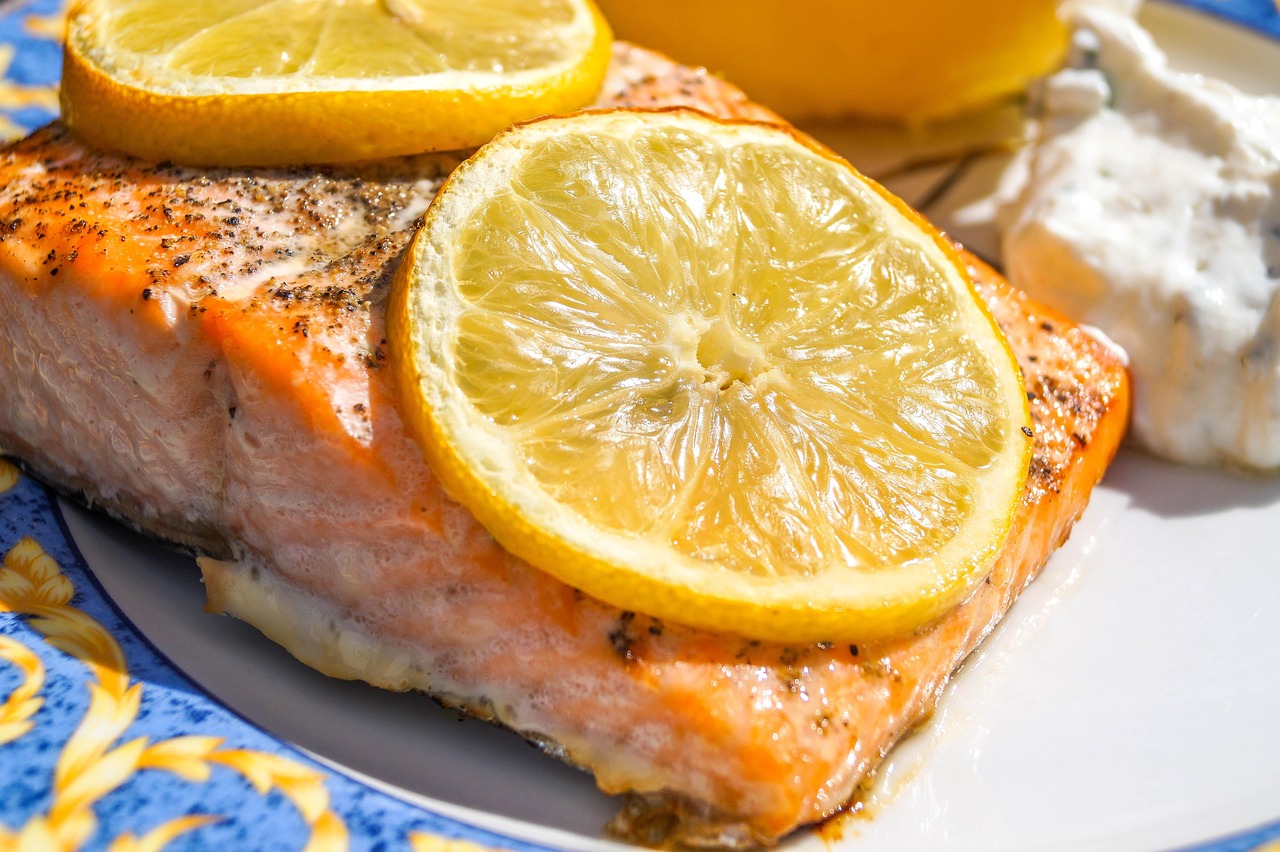
Lemon garlic baked salmon
Oven baked salmon with lemon, garlic and Dijon, at 400°F for 12 to 15 minutes. How long to bake it by thickness, the right internal temperature, and 35 g of protein a fillet.
- 410
- kcal
- 35g
- protein
- 29g
- fat
- 2g
- carbs
- Prep
- 10 min
- Cook
- 15 min
- Serves
- 4
Ingredients
- 4 skin-on salmon fillets, about 6 oz (170 g) each and 1 inch thick
- 1 tbsp olive oil
- 1 tbsp butter, melted
- 3 cloves garlic, finely grated
- 1 lemon, zested, plus 2 tbsp juice
- 1 tsp Dijon mustard
- 1 tsp kosher salt
- 1/2 tsp black pepper
- 2 tbsp chopped parsley or dill
- Lemon wedges, to serve
Method
-
1
Heat the oven
Heat the oven to 400°F and line a rimmed baking sheet with parchment or foil. Take the salmon out of the fridge while it heats.
-
2
Dry and season
Pat the fillets dry with paper towels and set them skin side down on the sheet, a couple of inches apart. Season with the salt and pepper.
-
3
Make the lemon garlic butter
Stir the oil, butter, garlic, lemon zest and juice and mustard together and spoon it over the tops of the fillets.
-
4
Bake
Bake 12 to 15 minutes for fillets 1 inch thick, until the thickest part flakes easily and reads 145°F, the USDA temperature. Many cooks stop at 125°F, when the center is still slightly translucent; that is below USDA guidance, so not for anyone pregnant, older or immunocompromised. Check thinner fillets after 8 minutes.
-
5
Rest and serve
Leave the salmon on the sheet for 3 minutes, spoon the juices over, and scatter with the herbs. Serve with lemon wedges. The skin lifts off easily if you slide a spatula between it and the flesh.
How long to bake salmon
At 400°F, salmon fillets bake in about 12 to 15 minutes per inch of thickness, measured at the thickest part. As a guide:
- 3/4 inch thick: 9 to 12 minutes
- 1 inch thick: 12 to 15 minutes
- 1 1/2 inches thick: 16 to 20 minutes
Thickness matters much more than weight. A long, thin tail piece cooks in half the time of a thick center-cut fillet of the same weight. If your fillets are of different sizes, put the thinner ones in a few minutes later. Wild salmon, such as sockeye or coho, is leaner than farmed Atlantic salmon, cooks faster and dries out sooner, so check it early.
Baked salmon temperature
The USDA recommends cooking fish to 145°F. At that temperature, salmon is opaque all the way through and flakes easily, but it starts to get dry. Many cooks and restaurants take salmon out at 120 to 125°F, when the center is still slightly translucent and very moist. Salmon keeps cooking for a few minutes after it comes out of the oven, and the temperature rises by 3 to 5 degrees. Choose the doneness you prefer, but cook it to 145°F for anyone pregnant, older or immunocompromised, and use an instant-read thermometer: it is the only reliable way to know.
If you see white stuff on the surface of the salmon, that is albumin, a protein that is pushed out of the fish as it cooks. A lot of it is a sign of overcooking. To reduce it, soak the fillets for 15 minutes in a brine of 2 1/2 tbsp kosher salt in 4 cups of cold water before baking, then pat them dry and use less salt to season.
With skin or without
Baking with the skin on protects the bottom of the fillet from drying out, and the skin comes off easily after baking if you do not want to eat it. It does not get crisp in the oven. For crisp skin, sear the fillets skin side down in an oven-safe skillet for 4 minutes before moving them to the oven.
Variations
- Honey garlic: add 1 tbsp honey and 1 tbsp soy sauce to the lemon garlic butter. That adds about 20 kcal and 5 g of carbohydrate a fillet.
- Dijon and herb crust: spread the tops with Dijon mustard and press on a mix of panko, Parmesan and parsley.
- Sheet pan dinner: roast asparagus, green beans or broccoli on the same pan. Start sturdier vegetables 10 minutes before the fish.
- In foil: wrap each fillet in a foil packet with lemon slices and herbs. It steams rather than roasts, and is very hard to overcook.
Leftovers
Cooked salmon keeps 3 days in the fridge. Reheating it often dries it out, so it is better eaten cold, flaked over a salad or mixed into a quinoa salad.
What it is worth nutritionally
A 6-oz fillet of farmed Atlantic salmon, baked this way, has about 410 kcal, with 35 g of protein, 29 g of fat and 2 g of carbohydrate. Wild sockeye is leaner, at about 290 kcal for the same fillet. Salmon is one of the best sources of the omega-3 fats EPA and DHA, with roughly 3 g in a 6-oz fillet of farmed salmon. The American Heart Association recommends eating fish, especially fatty fish, twice a week. Salmon is also one of very few foods that contain a meaningful amount of vitamin D; see our guide to vitamin D deficiency. For a leaner white fish done the same way, see our baked cod.