Baked salmon patties
Baked salmon patties from canned salmon, coated in panko and baked at 400°F for 16 to 18 minutes, all eight on one sheet pan. Greek yogurt binds them instead of mayo: 35 g of protein a serving.
- 370
- kcal
- 35g
- protein
- 19g
- fat
- 13g
- carbs
- Prep
- 25 min
- Cook
- 18 min
- Serves
- 4
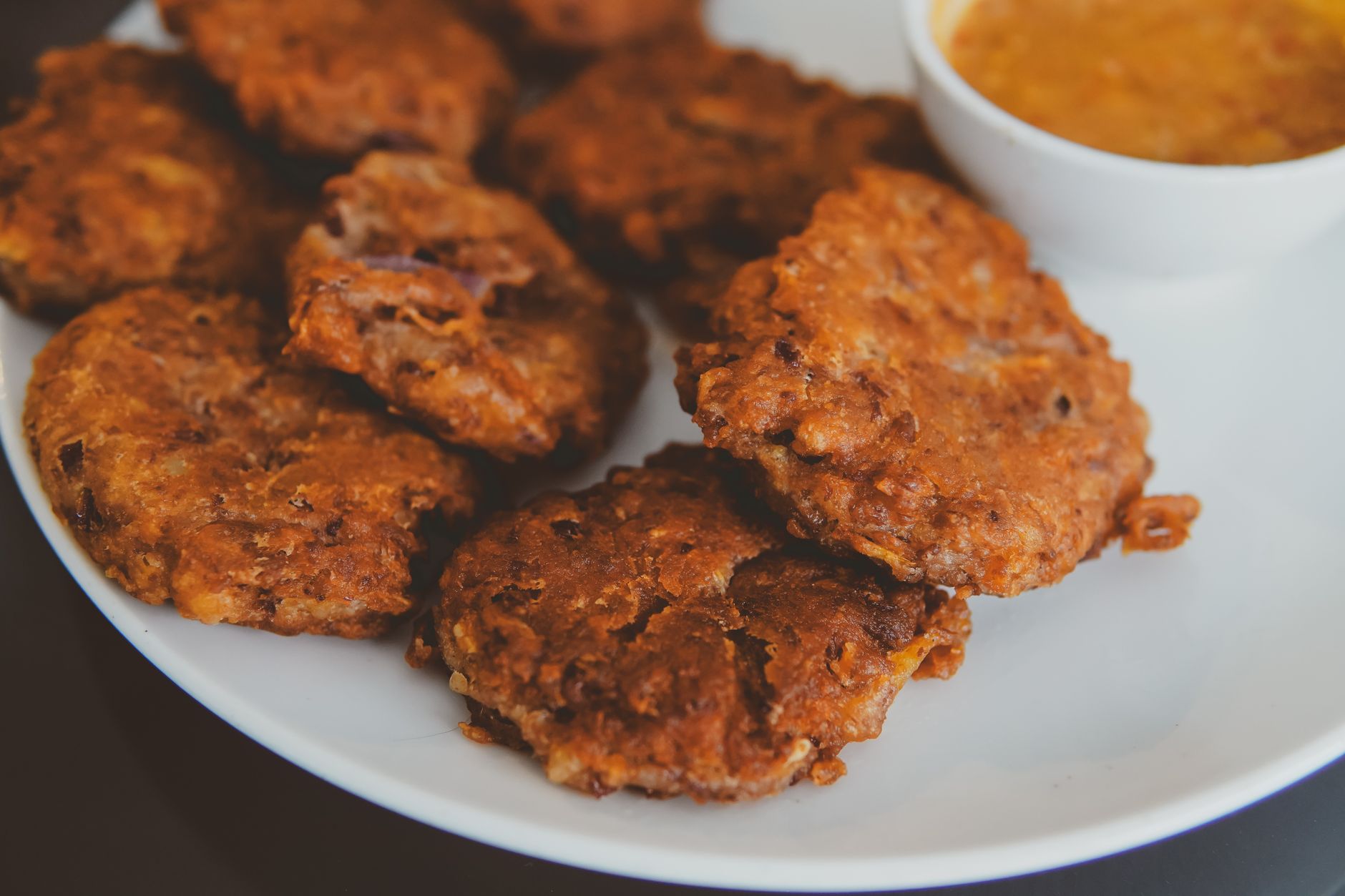
Photograph by Su La Pyae on Pexels
Ingredients
- 2 cans (14.75 oz each) pink or red salmon, drained (about 1 1/4 lb / 570 g)
- 2 large eggs
- 1/4 cup (60 g) plain 2% Greek yogurt
- 1 tbsp Dijon mustard
- 1 lemon, zested, plus 1 tbsp juice
- 1 tsp Old Bay seasoning
- 1/4 tsp black pepper
- 3 green onions, thinly sliced
- 2 tbsp chopped dill or parsley
- 1 cup (55 g) panko breadcrumbs, divided
- 2 tbsp olive or avocado oil, divided
- Lemon wedges, to serve
Method
-
1
Heat the oven
Heat the oven to 400°F with a rack in the middle. Line a rimmed baking sheet with parchment and brush it with 1 tbsp of the oil.
-
2
Drain and flake the salmon
Drain the salmon well in a strainer. Tip it into a bowl, pick out any large pieces of skin and the round spine bones if you like, and crush the soft bones into the fish with a fork.
-
3
Make the mix
In a large bowl, whisk the eggs, yogurt, mustard, lemon zest and juice, Old Bay and pepper. Add the salmon, green onions, herbs and 1/2 cup of the panko and fold together until evenly mixed. Leave 10 minutes so the panko soaks up some moisture. Canned salmon and Old Bay are both salted, so no extra salt is needed.
-
4
Shape and coat
Put the rest of the panko on a plate. With wet hands, shape the mix into 8 patties about 3 inches wide and 3/4 inch thick, pressing them firmly. Press both sides of each patty into the panko and set them on the baking sheet an inch apart. Brush or drizzle the tops with the remaining 1 tbsp of oil.
-
5
Bake
Bake 10 minutes, until the bottoms are golden. Turn them over with a thin, wide spatula and bake 6 to 8 minutes more, until golden on both sides and 160°F in the center.
-
6
Serve
Leave them on the pan for 2 minutes to firm up, then serve with lemon wedges and the yogurt dill sauce in the notes below.
Why bake salmon patties
Frying salmon patties means two or three batches, a skillet of hot oil and a stovetop to clean. Baked salmon patties all go in at once on one sheet pan, need only 2 tablespoons of oil for eight of them, and leave you free, apart from one flip, for the 18 minutes they take. What you give up is a little of the deep, even crust that a skillet gives. The panko coating and the oiled pan are there to win most of it back.
The mix is close to our pan-fried canned salmon patties, with two changes made for the oven: Greek yogurt binds them in place of mayonnaise, and they are rolled in panko on the outside as well as having it in the mix.
How long to bake salmon patties at 400°F
Bake patties 3 inches wide and 3/4 inch thick for 16 to 18 minutes at 400°F: 10 minutes, then turn them over and bake 6 to 8 minutes more. They are done when both sides are golden and the center reads 160°F on an instant-read thermometer. That is the USDA temperature for dishes made with egg. The canned salmon itself is already cooked in the can, so the oven is only heating it through and setting the egg that holds the patties together.
- At 425°F, they take about 14 to 16 minutes and brown a little more, but watch the panko in the last few minutes.
- At 375°F, allow about 20 to 22 minutes. They come out paler and softer.
- Thicker or bigger patties need longer, and the thermometer is the only reliable test.
Getting a crisp crust in the oven
- Oil the pan, not just the patties. The tablespoon of oil brushed on the parchment is what browns the bottoms. On a dry pan they bake pale.
- Coat both sides in panko. Panko browns and crisps in the oven far better than the mix itself does.
- Turn them once. The side against the hot pan browns best, so turning them halfway gives you two good sides. Use a thin, wide spatula and slide it under firmly; after 10 minutes they release easily.
- Leave space. An inch between patties lets the steam escape. Packed close, they steam and soften.
For an even darker top, broil them for the last minute, watching closely.
Greek yogurt instead of mayonnaise
Most salmon cake recipes bind the mix with mayonnaise. A quarter cup of plain Greek yogurt does the same job of moistening the crumbs and holding the fish together, with about 45 kcal in place of the roughly 280 in 3 tablespoons of mayonnaise. It also adds a few grams of protein, as our guide to Greek yogurt protein explains. The patties taste a little brighter and less rich. If you prefer mayonnaise, use 3 tbsp in place of the yogurt; each serving gains about 60 kcal and 7 g of fat.
Baked salmon cakes with fresh salmon
Raw salmon works too. Use 1 1/4 lb (570 g) of skinless fillet and chop it finely with a sharp knife; a food processor turns it to paste. Add 1/2 tsp of salt, since fresh salmon is not salted like canned. The patties are softer to shape, so chill them for 20 minutes before coating. Bake them 12 minutes, turn them, and bake 8 to 10 minutes more, until the center reaches 160°F. That covers both the egg and the raw fish, which is safe at 145°F. Leftover cooked salmon, such as our baked salmon, needs no change to the times at all.
A quick sauce, and what to serve
Stir 1/3 cup of Greek yogurt with 1 tbsp chopped dill pickle, 1 tsp lemon juice, a pinch of salt and some chopped dill. It is close to tartar sauce, without the mayonnaise. Serve the patties with a green salad, roasted green beans or a vinegar coleslaw, or on a bun like a burger.
Make ahead and freezing
Shape and coat the patties up to a day ahead, cover them on the baking sheet and refrigerate; bake them straight from the fridge, adding a minute or two. Baked patties keep 3 days in the fridge. Reheat them on a sheet pan at 375°F for about 10 minutes, which keeps the outside crisp; the microwave makes the coating soggy.
To freeze, set the shaped, coated patties on a tray until firm, then bag them. They keep 3 months. Bake them from frozen at 400°F for about 25 minutes in all, turning them halfway, until the center reaches 160°F.
What it is worth nutritionally
A serving of two patties has about 370 kcal, with 35 g of protein, 19 g of fat and 13 g of carbohydrate. That is about 40 kcal less than the pan-fried version, because the mayonnaise is gone; the extra panko coating wins back a little of it. Red sockeye salmon gives slightly more protein and fat than pink. With the soft bones mashed in, canned salmon is a good source of calcium, and it carries omega-3 fats and some vitamin D, one of the few foods that do. Canned salmon and Old Bay are both salty, so a serving has a fair amount of sodium; low-sodium canned salmon is worth looking for if that matters to you. To see how this fits a day, try the protein calculator.
Sources
- Safe Minimum Internal Temperature Chart. USDA Food Safety and Inspection Service