Roasted butternut squash
Roasted butternut squash at 425°F: 1-inch cubes, olive oil and 25 to 30 minutes. How to peel and cut it, times for halves and the air fryer, and 160 kcal a serving.
- 160
- kcal
- 2g
- protein
- 7g
- fat
- 26g
- carbs
- Prep
- 15 min
- Cook
- 30 min
- Serves
- 4
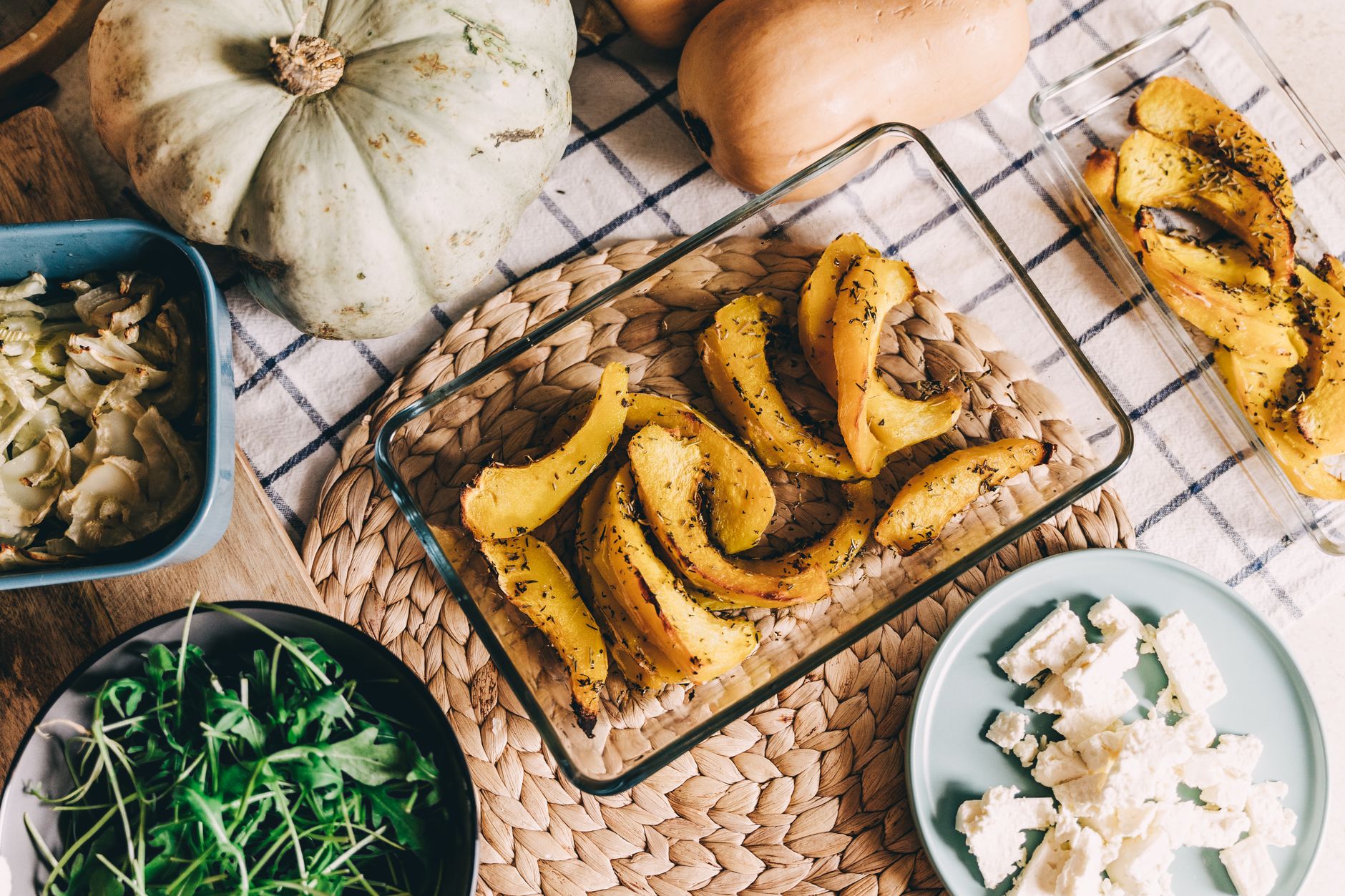
Photograph by Alesia Kozik on Pexels
Ingredients
- 1 large butternut squash, about 3 lb (1.4 kg), or 2 lb (900 g) peeled and cubed
- 2 tbsp olive oil
- 1 tsp kosher salt
- 1/2 tsp black pepper
- 1/2 tsp garlic powder
- 1 tbsp chopped fresh sage or thyme, or 1/2 tsp dried
Method
-
1
Heat the oven
Heat the oven to 425°F with a rack in the middle. Line a large rimmed baking sheet with parchment, or leave it bare for darker browning.
-
2
Peel and cut the squash
Prick the whole squash a few times with a knife and microwave it for 2 to 3 minutes to soften the skin. Cut off both ends, cut the neck from the round bottom, and peel both pieces with a vegetable peeler. Halve the bottom, scoop out the seeds, and cut everything into 1-inch cubes. You should have about 6 1/2 cups.
-
3
Season
Toss the cubes on the sheet with the oil, salt, pepper and garlic powder, and dried herbs if you are using them, until every piece is coated. Spread them in a single layer with a little space between them.
-
4
Roast
Roast 15 minutes, then turn the cubes with a spatula and roast 10 to 15 minutes more, until the edges are browned and a knife slides into the biggest piece with no resistance.
-
5
Finish
Scatter the fresh herbs over the hot squash, taste for salt, and serve.
How to cut a butternut squash
This is the only hard part, and it is mostly about keeping the squash from rolling. Use a large, sharp chef's knife. A dull knife is the one that slips.
- Soften the skin. Prick the squash a few times with a knife and microwave it whole for 2 to 3 minutes. It will not cook, but the skin gets soft enough for a peeler.
- Cut off both ends, about 1/2 inch from the top and the bottom, so it has flat sides to stand on.
- Separate the neck from the bulb. Cut across where the straight neck meets the round bottom. Now you have two pieces that each stand flat on the board.
- Peel. Stand each piece on a flat end and run a Y-shaped vegetable peeler down the sides. Peel until the flesh is bright orange all over, with no pale green streaks, which stay tough.
- Seed the bulb. Halve the round piece and scoop out the seeds and strings with a spoon.
- Cube. Cut the neck into 1-inch slabs, then into sticks, then into cubes. Do the same with the bulb halves, cut side down.
Some people get a tight, dry, peeling film on their hands after handling raw butternut. It comes from the sap and goes away in a day or two. If it happens to you, wear gloves while you peel. Pre-cut squash from the store is fine for this recipe. Use 2 pounds, and cut any large pieces down to an inch, because store cubes are often uneven.
Butternut squash roasting time and temperature
425°F is the best temperature for cubes. It is hot enough to brown the edges before the inside turns to mush. For 1-inch cubes on a sheet pan:
- 375°F: 35 to 45 minutes. Tender, but only lightly browned.
- 400°F: 30 to 35 minutes. Use this if something else is in the oven with it.
- 425°F: 25 to 30 minutes, turned once. Browned edges and a creamy middle.
Smaller 3/4-inch cubes take about 20 minutes at 425°F. Whatever the size, keep the cubes the same size as each other, or the small ones burn before the big ones are done. Spread them in one layer with a little space around each piece. Squash is full of water, and a crowded pan steams instead of roasting. If the cubes cover the whole sheet edge to edge, use two pans.
Roasting butternut squash halves
If you want the flesh for mashing, for a puree or for butternut squash soup, there is no need to peel at all. Halve the squash lengthwise, scoop out the seeds, brush the cut sides with oil and lay them cut side down on a lined sheet. Roast at 400°F for 40 to 50 minutes, up to an hour for a very large squash, until a knife slides through the neck with no resistance. Scoop the flesh out of the skin with a spoon. A 3-pound squash gives about 3 cups of mashed squash.
The skin is edible. On thick wedges roasted skin-on, it softens enough to eat, though it stays a little chewy. On halves it is easier to scoop around it.
In the air fryer
Toss the cubes in oil and seasoning the same way and air fry at 400°F for 15 to 20 minutes, shaking the basket every 5 minutes. Cook it in two batches if the basket is small. The cubes need room, for the same reason as on a sheet pan.
Variations
- Maple and cinnamon: toss with 1 tbsp maple syrup and 1/2 tsp cinnamon for the last 10 minutes only. Added at the start, the syrup burns at 425°F. It adds about 13 kcal and 3 g of carbohydrate a serving.
- Parmesan and garlic: scatter 1/4 cup grated Parmesan over the cubes for the last 5 minutes.
- Smoky: swap the garlic powder for 1 tsp smoked paprika and a pinch of cayenne.
- With Brussels sprouts: halved sprouts roast in the same time at the same temperature, so they can share the pan.
- In a salad: fold the cooled cubes into a quinoa salad with some feta for a fall lunch.
What to serve it with
It goes with almost any roast chicken, pork or turkey, and is a lighter alternative to sweet potatoes on a holiday table. It is also good next to baked salmon, which bakes at 400°F, so roast the squash at 400°F too, put it in first and add the fish for the last 15 minutes. Squash is about half the calories of the same weight of sweet potato. If you would rather have the sweet potato, see our baked sweet potato.
Keeping it
Roasted squash keeps 4 days in the fridge. Reheat it on a sheet pan at 400°F for about 10 minutes, or in the air fryer for 5, which brings back some of the crisp edges. The microwave works but makes it soft. It freezes for 3 months, but it thaws soft and is better used in soup or mash than served as cubes.
A whole, uncut butternut squash keeps for a month or more in a cool, dry place. Choose one that feels heavy for its size, with matte beige skin and no soft spots. Once cut, wrap it and use it within 4 or 5 days.
What it is worth nutritionally
A serving, a quarter of the pan, has about 160 kcal, with 2 g of protein, 7 g of fat and 26 g of carbohydrate, including about 4 g of fiber. Nearly all of the fat is the olive oil. Butternut squash is very high in beta-carotene, which the body turns into vitamin A, and a serving gives well over a full day's needs. It also has about 750 mg of potassium, more than a medium banana. Beta-carotene is fat-soluble, so roasting it in oil rather than steaming it plain helps you absorb it. It is vegan and gluten-free as written. It is low in protein, so on its own it is a side dish, not a meal.