How to cook chickpeas: soaking, stovetop, Instant Pot and roasting, with the times
How to cook chickpeas from dried: soak 8 to 12 hours, simmer 1 to 1 1/2 hours, or 15 minutes in an Instant Pot. One cup dried makes about 3 cups cooked, or two cans.
October 27, 2026 · 11 min read
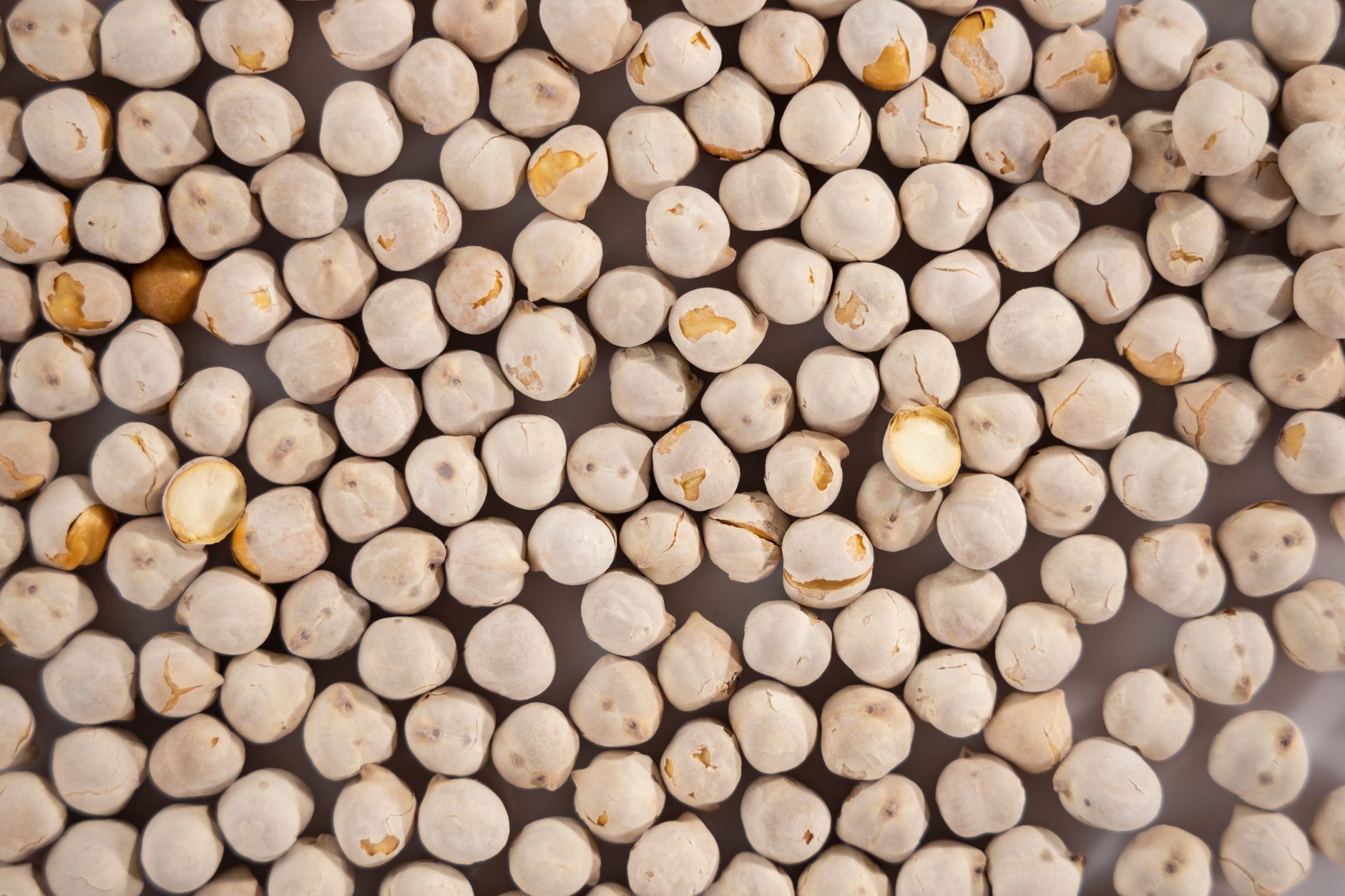
Photograph by Engin Akyurt on Pexels
Dried chickpeas are cheap, keep for a year in the pantry, and cook into something noticeably better than the canned kind: firmer, nuttier, and seasoned the way you want rather than the way the factory did. The catch is time. Soaked chickpeas take an hour or more on the stove, and unsoaked ones take most of an afternoon — or about 45 minutes in a pressure cooker.
Chickpeas and garbanzo beans are the same thing. Garbanzo is the Spanish name, and US stores use both, sometimes on the same can. Everything below applies to the common large, pale kabuli chickpea. The small dark desi type, sold as kala chana or split as chana dal, takes longer.
Dried vs canned chickpeas
Canned chickpeas are already cooked and perfectly good for most things — a chickpea salad, a chana masala or chickpea cutlets are all written for cans. Dried chickpeas earn the extra time in three situations:
- Falafel. Not optional. Falafel is made from chickpeas that are soaked but never cooked. Cooked or canned chickpeas make a mixture that falls apart in the oil.
- Hummus. Canned works, but home-cooked chickpeas boiled until they collapse make a smoother, lighter hummus.
- When you eat a lot of them. A pound of dried chickpeas makes about as much as four cans for a fraction of the price, and you control the salt.
Canned chickpeas are salted. Draining and rinsing them removes about 40 percent of the sodium, which is worth doing whenever the recipe does not need the liquid.
How to prepare dried garbanzo beans
Before soaking, tip the chickpeas onto a rimmed baking sheet and look them over. Dried legumes occasionally contain a small stone or a shriveled, discolored bean; pick those out. Then rinse the chickpeas in a colander under cold water to wash off the dust.
Buy from a store that sells a lot of them. Chickpeas that have sat on a shelf for years dry out further and may never soften, however long you cook them. There is no reliable way to tell from looking, so a bag from a busy store, or an Indian or Middle Eastern grocer, is the safest bet.
Soaking dried chickpeas
Soaking is not strictly necessary, but it cuts the cooking time by more than half and helps them cook evenly, so fewer split while others stay hard.
- Overnight soak. Put the chickpeas in a large bowl and cover with cold water by at least 3 inches — they more than double in size. Leave 8 to 12 hours at room temperature, or in the fridge if the kitchen is very warm. Drain and rinse.
- Quick soak. Cover the chickpeas with water in a pot, bring to a boil, boil 2 minutes, then turn off the heat, cover, and leave 1 hour. Drain and rinse. They cook almost as fast as overnight-soaked ones.
- Salted soak. Adding about a tablespoon of kosher salt per quart of soaking water gives softer, creamier chickpeas with fewer burst skins. The old warning that salt keeps beans hard is not true. Rinse them well afterward and salt the cooking water lightly.
- Baking soda. A little baking soda in the soaking or cooking water — about 1/4 teaspoon per cup of dried chickpeas — makes them softer and helps the skins come off. Too much gives them a soapy taste. For hummus, use more and boil them until they fall apart; our hummus uses 1 teaspoon for 1 1/2 cups.
The soaking water is often said to remove the compounds that cause gas. It removes some of the soluble sugars responsible, not all of them, so draining and using fresh water for cooking is worth doing even though it is not a cure.
How to cook chickpeas on the stovetop
- Put the drained, soaked chickpeas in a large pot and cover with fresh water by about 2 inches.
- Add 1 teaspoon of kosher salt per cup of dried chickpeas, and, if you like, a bay leaf, half an onion or a couple of garlic cloves.
- Bring to a boil, skim off the foam, then lower the heat to a gentle simmer. A hard boil knocks them about and splits the skins.
- Simmer partly covered for 1 to 1 1/2 hours, topping up with hot water so they stay covered, until a chickpea crushes easily between your tongue and the roof of your mouth with no chalky center.
- Leave them to cool in their cooking liquid. They absorb some of it and stay plump instead of drying and wrinkling.
Taste several, not one — they never cook perfectly evenly, and the hardest one decides when they are done.
Chickpea cooking times
| Method | Soaked | Unsoaked |
|---|---|---|
| Stovetop, simmering | 1 to 1 1/2 hours | 2 1/2 to 3 hours |
| Instant Pot, high pressure | 12 to 15 minutes + natural release | 40 to 45 minutes + natural release |
| Instant Pot, very soft (for hummus) | 20 minutes + natural release | 50 to 55 minutes + natural release |
| Slow cooker, low | 6 to 8 hours | 8 to 10 hours |
| Slow cooker, high | 3 to 4 hours | 5 to 6 hours |
All times are approximate. Older chickpeas, hard tap water and high altitude all make them slower, so start checking at the low end and keep going until they are right.
Chickpeas in the Instant Pot
A pressure cooker is the best way to cook chickpeas from dry without planning ahead. For 1 cup of dried chickpeas, use 4 cups of water if they are unsoaked or 3 cups if soaked, with 1 teaspoon of salt and a tablespoon of oil, which keeps the foam down. Do not fill the pot more than halfway: legumes foam as they cook and the foam can block the valve.
Cook at high pressure for the time in the table, then let the pressure release naturally for 15 to 20 minutes before opening the valve. A quick release makes the liquid boil violently inside the pot and splits many of the skins. If they are still firm, lock the lid again and give them another 5 minutes.
Chickpeas in the slow cooker
Put the soaked chickpeas in the slow cooker with water to cover by 2 inches and 1 teaspoon of salt per cup of dried chickpeas. Cook on low for 6 to 8 hours. Unsoaked chickpeas work too but take longer and cook less evenly. This is the hands-off option: start them in the morning and they are ready for dinner.
How many cooked chickpeas does 1 cup dried make?
- 1 cup dried (about 7 oz or 200 g) makes about 2 1/2 to 3 cups cooked.
- One 15-oz can, drained, holds about 1 1/2 cups of chickpeas.
- So 1 cup dried replaces about two cans, and 1 1/4 cups dried is a safe amount for a recipe that calls for two cans.
- A 1-lb bag (about 2 1/3 cups dried) makes 6 to 7 cups cooked, the same as roughly four cans.
Storing and freezing cooked chickpeas
Keep cooked chickpeas in their cooking liquid in a covered container in the fridge for up to 5 days. To freeze them, portion them into freezer bags in 1 1/2-cup amounts, the same as a can, with a few spoonfuls of liquid, and freeze flat. They keep 3 months, and can go straight from the freezer into a soup, stew or curry. For salads, thaw them overnight in the fridge first.
How to roast chickpeas
Roasted chickpeas are crisp outside and soft inside when they come out of the oven, and crunchy all the way through after a few more minutes. They work well from a can.
- Heat the oven to 400°F.
- Drain and rinse a 15-oz can of chickpeas, then dry them thoroughly. Roll them in a clean kitchen towel and leave them to air dry for 15 minutes if you can. Any loose skins that come off, discard; skinned chickpeas crisp better.
- Toss them with 1 tablespoon of olive oil and 1/2 teaspoon of salt on a rimmed baking sheet, in one layer with space between them.
- Roast 25 to 35 minutes, shaking the pan every 10 minutes, until deep golden and they rattle when you shake the pan.
- Toss with spices while they are still hot.
How to make crunchy chickpeas
The difference between chickpeas that stay crunchy and ones that go chewy in an hour is water. Three things help:
- Dry them properly before roasting. Wet chickpeas steam before they roast.
- Leave them in the oven. When they are done, turn the oven off and prop the door open a few inches. Leave them for 30 minutes to an hour as the oven cools. They dry out right to the center and stay crunchy far longer.
- Add spices at the end. Ground spices burn at 400°F over half an hour. Toss the hot chickpeas with smoked paprika and garlic powder, cumin and chili powder, cinnamon and a little sugar, or ranch seasoning just after they come out of the oven.
Store them in a jar with the lid loose or in a paper bag. An airtight container traps moisture and softens them within a day. If they do go soft, 5 minutes in a 350°F oven brings them back.
Air fryer: prepare them the same way and air fry at 390°F for 12 to 15 minutes, shaking the basket every 5 minutes. Cook one can at a time.
Roasted chickpeas are a good topping for a baked sweet potato with tahini, and a crunchy swap for croutons on a salad. As a snack, they have more calories than they seem to: a whole can roasted with a tablespoon of oil is about 450 kcal, with roughly 17 g of protein, so a quarter of it is a reasonable handful.
Aquafaba: do not pour it down the drain
Aquafaba is the thick liquid in a can of chickpeas, or the liquid from home-cooked ones. It contains enough dissolved protein and starch to behave like egg white. Whipped with an electric mixer and a pinch of cream of tartar, it forms soft and then stiff peaks, and can be used for vegan meringues and mousse.
As a rough guide, 3 tablespoons of aquafaba replaces 1 whole egg, and 2 tablespoons replaces 1 egg white. It works best in recipes where egg binds or lightens, rather than ones that rely on egg for most of their structure. Liquid from home-cooked chickpeas is usually thinner than canned; simmer it until it has reduced and has the slightly viscous feel of egg white before using it. It keeps a few days in the fridge and freezes well in ice cube trays. It is also useful in place of ice water for thinning hummus.
When chickpeas will not soften
- They are old. The most common reason, and there is no fix. Use them for something that is blended anyway, or buy a fresh bag.
- Your water is hard. Calcium and magnesium in hard water firm up the skins. A pinch of baking soda in the cooking water counters it.
- Acid went in too early. Tomatoes, vinegar and lemon slow the softening of legumes. Cook the chickpeas first and add them to a tomato sauce afterward, as in a chana masala.
Chickpea nutrition, honestly
A cup of cooked chickpeas, about 164 g, has roughly 270 kcal, 14.5 g of protein, 4 g of fat and 45 g of carbohydrate, including about 12.5 g of fiber — close to half a day's recommended fiber. It also provides a large share of a day's folate and manganese, and about a quarter of the iron, though in the non-heme form that the body absorbs less easily; eating it with vitamin C helps, as our guide to iron-rich foods explains. Canned chickpeas are a little lower in calories per cup because they hold more water.
The protein is real but not the whole story. Chickpeas are low in the amino acid methionine, which grains supply, so chickpeas with rice or bread make a complete protein — which is how they are usually eaten anyway. To see how a cup fits your own target, the protein calculator gives a daily figure. For anyone on a vegan diet, chickpeas are one of the most useful staples there is.
The gas is real too. Chickpeas contain galacto-oligosaccharides, a fermentable carbohydrate that gut bacteria break down, and that is the usual source of bloating. People who eat legumes regularly often find it settles over a few weeks. Canned chickpeas are lower in these compounds than home-cooked ones, because they leach into the canning liquid, so drained and rinsed canned chickpeas are often better tolerated. Monash University lists a small portion of canned, rinsed chickpeas as low-FODMAP; see our guide to the FODMAP diet if they give you persistent trouble.