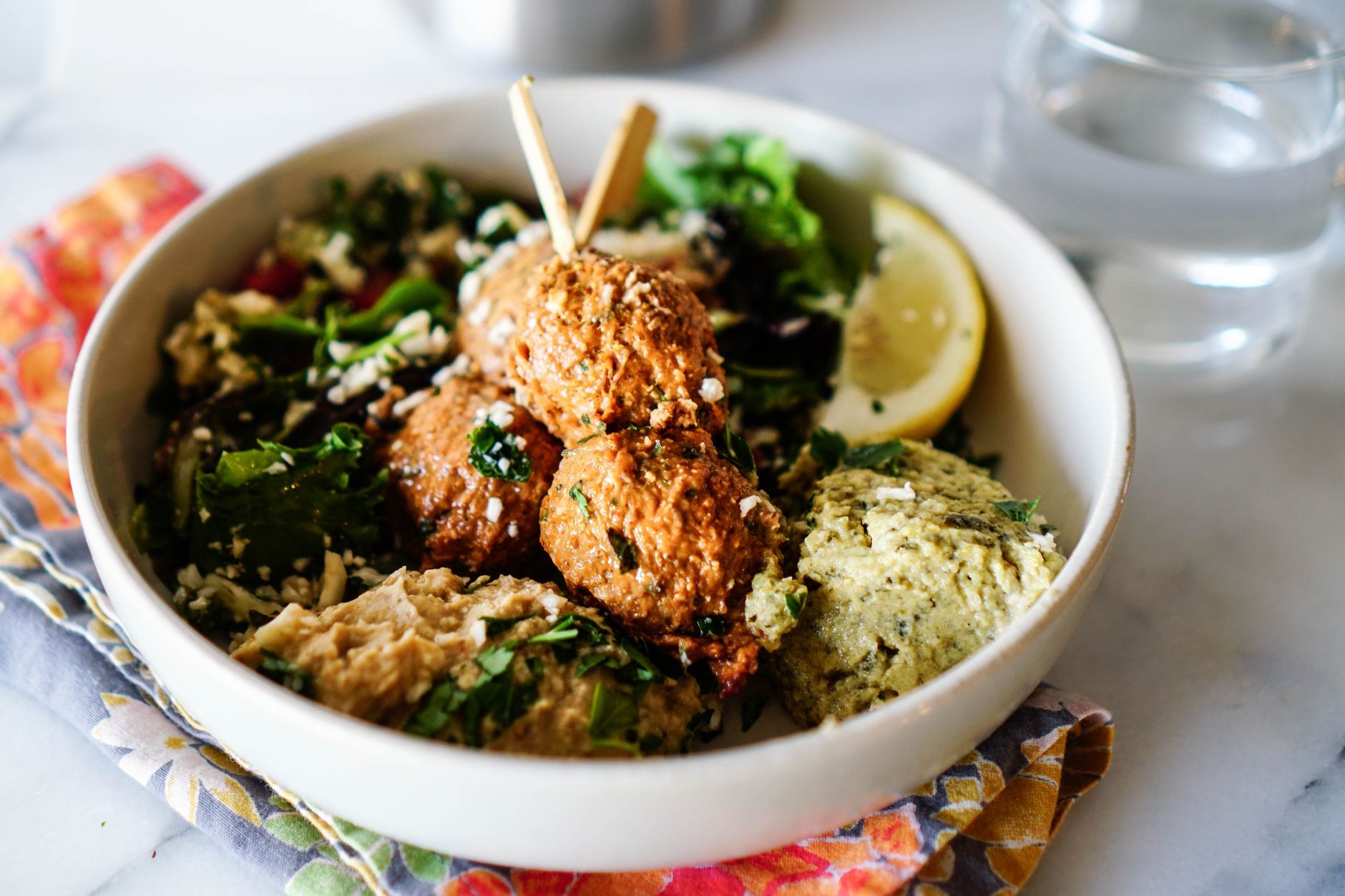
Homemade hummus
Silky homemade hummus from dried chickpeas and plenty of tahini. Overcooking the chickpeas with baking soda and blending in ice water make it smooth.
- 175
- kcal
- 7g
- protein
- 9g
- fat
- 19g
- carbs
- Prep
- 1 h 10 min
- Cook
- 45 min
- Serves
- 12
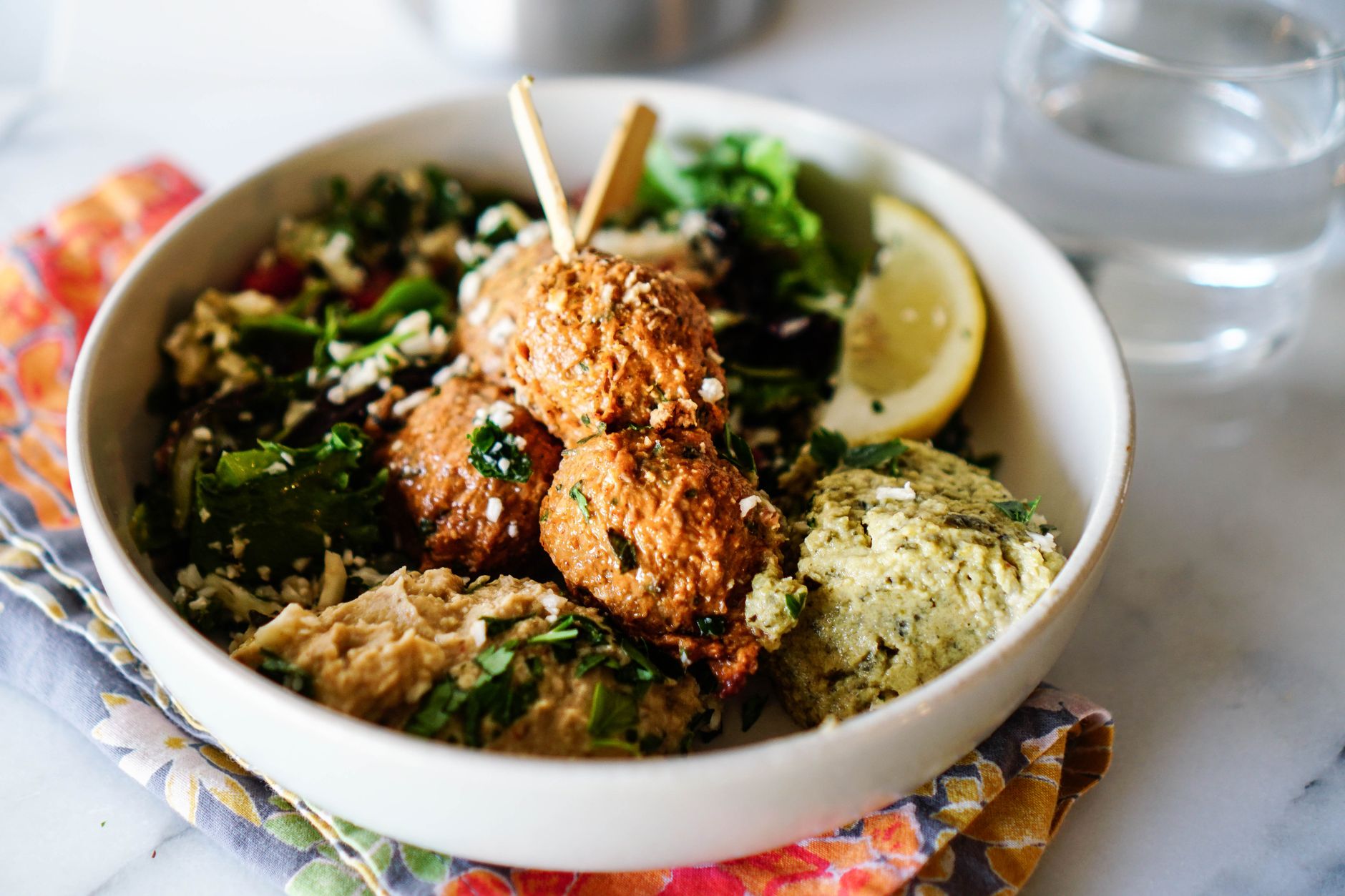
Photograph by Loren Castillo on Pexels
Ingredients
- 1 1/2 cups dried chickpeas, soaked overnight
- 1 tsp baking soda
- 2/3 cup tahini
- 2 cloves garlic
- Juice of 2 lemons
- 1/3 cup ice water
- 1 tsp kosher salt, plus more to taste
- Olive oil and paprika, to serve
Method
-
1
Toast the chickpeas with baking soda
Drain the chickpeas, put them in a pot with the baking soda and cook dry for 3 minutes, stirring.
-
2
Boil the chickpeas soft
Cover with water and boil hard for 40 minutes, until they crush between your fingers with no resistance. Skim the skins.
-
3
Blend with tahini
Blend hot with the garlic, lemon juice and tahini.
-
4
Add the ice water
With the motor running, pour in the ice water. It will look wrong, then it will go pale and smooth.
-
5
Season and rest
Season with the salt, rest an hour, and serve with oil and paprika.
Two rules, and both are non-negotiable
The difference between grainy homemade hummus and the silky kind is not the blender. It is these two things.
Overcook the chickpeas, badly. Not until tender — until they are falling apart and crush to paste between finger and thumb with no resistance at all. The baking soda raises the pH, which breaks down pectin in the cell walls and helps the skins separate and float off. Skim them as they rise. Undercooked chickpeas cannot be blended smooth by any machine.
Blend hot, and add ice water. The ice water loosens and lightens the tahini. Pour the ice water in slowly with the motor running; the mixture will look wrong, then loosen, then go pale and glossy. That visible change is the emulsion forming.
Tahini is most of the flavor
Two thirds of a cup is more than most recipes use, and it is where hummus gets its character. Cheap tahini is bitter and no amount of lemon disguises it. Look for one that pours easily and tastes nutty rather than acrid on its own. The oil separating on top of the jar is a good sign, not a fault.
Canned chickpeas, honestly
They work, and the result is a step below. If you use them, simmer them with the baking soda for twenty minutes anyway — they are cooked but not cooked enough. Reserve the aquafaba to loosen the hummus instead of ice water.
Hummus without tahini
You can make hummus without tahini, but it is a different dip. Tahini gives hummus its nutty, slightly bitter depth and much of its creaminess, so something has to fill in for both.
- Olive oil: the simplest swap. Replace the tahini with 1/4 cup of extra-virgin olive oil, and add 1/2 tsp of ground cumin and a little more lemon and garlic, since there is less flavor to carry them. It comes out lighter and brighter, and a little less smooth.
- Sunflower seed butter: the closest match in texture, and the usual choice for a sesame allergy. Use the same amount as the tahini, and buy an unsweetened one. It tastes more like sunflower seeds than sesame. Because the chickpeas are cooked with baking soda, it can turn the hummus faintly green after a few hours; the lemon juice limits this, and it is harmless.
- Greek yogurt: 1/3 cup makes a creamy, tangy dip. It is no longer vegan, and it keeps only 3 to 4 days.
The olive oil version has about 135 kcal a serving instead of 175, with 5 g of protein instead of 7, because the 2/3 cup of tahini supplies about 950 kcal and 28 g of protein to the whole batch. Sesame is one of the major food allergens in the US, so if you are making it for someone with an allergy, check that any store-bought swap was not made on shared equipment.
Low sodium hummus
Almost all the sodium in homemade hummus comes from two places: the salt you add and, if you use them, canned chickpeas. Dried chickpeas, tahini, lemon and garlic have very little. This recipe uses 1 tsp of kosher salt for 12 servings. How much sodium that is depends on the brand: about 1,100 mg a teaspoon for Diamond Crystal and about 1,900 mg for Morton, which has denser crystals. That works out to roughly 95 to 160 mg a serving. Table salt is saltier still, at about 2,300 mg a teaspoon.
To cut it:
- Halve the salt and make up the flavor with more lemon juice, garlic and a pinch of cumin. Taste before adding more.
- Cook the chickpeas from dry, as in the recipe, or buy cans labeled "no salt added". Regular canned chickpeas can carry several hundred milligrams of sodium per 1/2 cup; check the label. If you only have regular cans, drain and rinse them well, which removes roughly 40% of the sodium.
- Cut the baking soda to 1/2 tsp. Baking soda is sodium bicarbonate. Most of it goes down the drain with the cooking water, but some stays with the chickpeas.
For cooking chickpeas from dry, and freezing them in portions so they are as handy as a can, see how to cook chickpeas.
Keeping it
Five days refrigerated under a film of olive oil, which slows oxidation at the surface. It firms up considerably when cold; let it sit out for twenty minutes and stir before serving. It freezes well, which surprises people — thaw overnight and whisk.
What it is worth nutritionally
Chickpeas and tahini between them make this a genuinely useful plant protein source at 7 g a serving, with a good deal of fiber and a fat profile dominated by unsaturated fat from sesame. It is calorie-dense for a dip, which is worth knowing — the 175 kcal is for about 1/3 cup, and the bread it is eaten with is usually the larger number. Raw vegetables add far fewer calories, and hummus is the classic partner for falafel in pita. Leftover tahini goes into chickpea cutlets.