Egg white protein: grams per white and per cup, and what the yolk takes with it
Egg white protein: one large white has about 3.6 g for 17 calories, a cup of liquid whites about 26 g. What you lose without the yolk, and why raw whites carry two separate risks.
November 11, 2026 · 7 min read
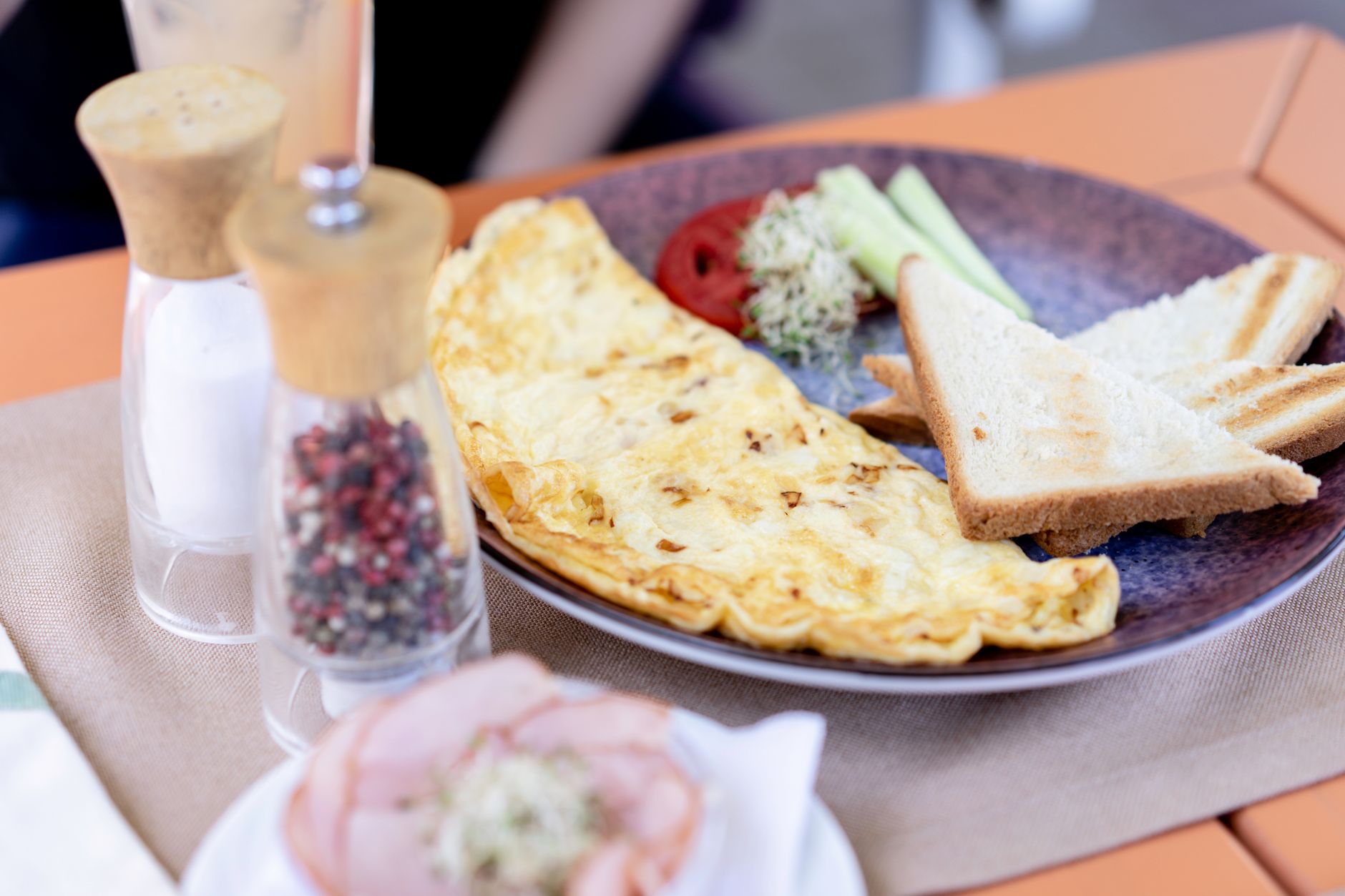
Photograph by Atlantic Ambience on Pexels
The white of one large egg has about 3.6 grams of protein and about 17 calories, with essentially no fat. That makes egg white one of the leanest proteins you can buy: roughly 21 grams of protein per 100 calories, better than skinless chicken breast. It is also the reason egg whites became a staple of diet breakfasts, and it is only half the story of the egg.
Egg white protein and calories, by portion
Rounded from USDA data for raw egg white:
- One large egg white (about 33 g): about 17 kcal and 3.6 g of protein.
- Two large egg whites: about 34 kcal and 7 g of protein.
- Three large egg whites, a typical egg white omelette: about 51 kcal and 11 g of protein.
- One cup of liquid egg whites (about 243 g, roughly the whites of 7 large eggs): about 126 kcal and 26.5 g of protein.
- Three tablespoons of carton egg whites, the serving size on most labels and roughly the volume of one whole large egg, or about one and a half whites: about 25 kcal and 5 g of protein.
Cooking does not change these numbers in any meaningful way, as long as you do not add fat. The calories in an egg white omelette are mostly the oil or butter in the pan and whatever goes inside.
Egg white is about 90% water. Of the rest, nearly all is protein, mainly ovalbumin, plus a little carbohydrate and minerals. One large white also has about 55 milligrams of sodium, more than the yolk, along with some riboflavin and selenium.
Egg white vs yolk: what you give up
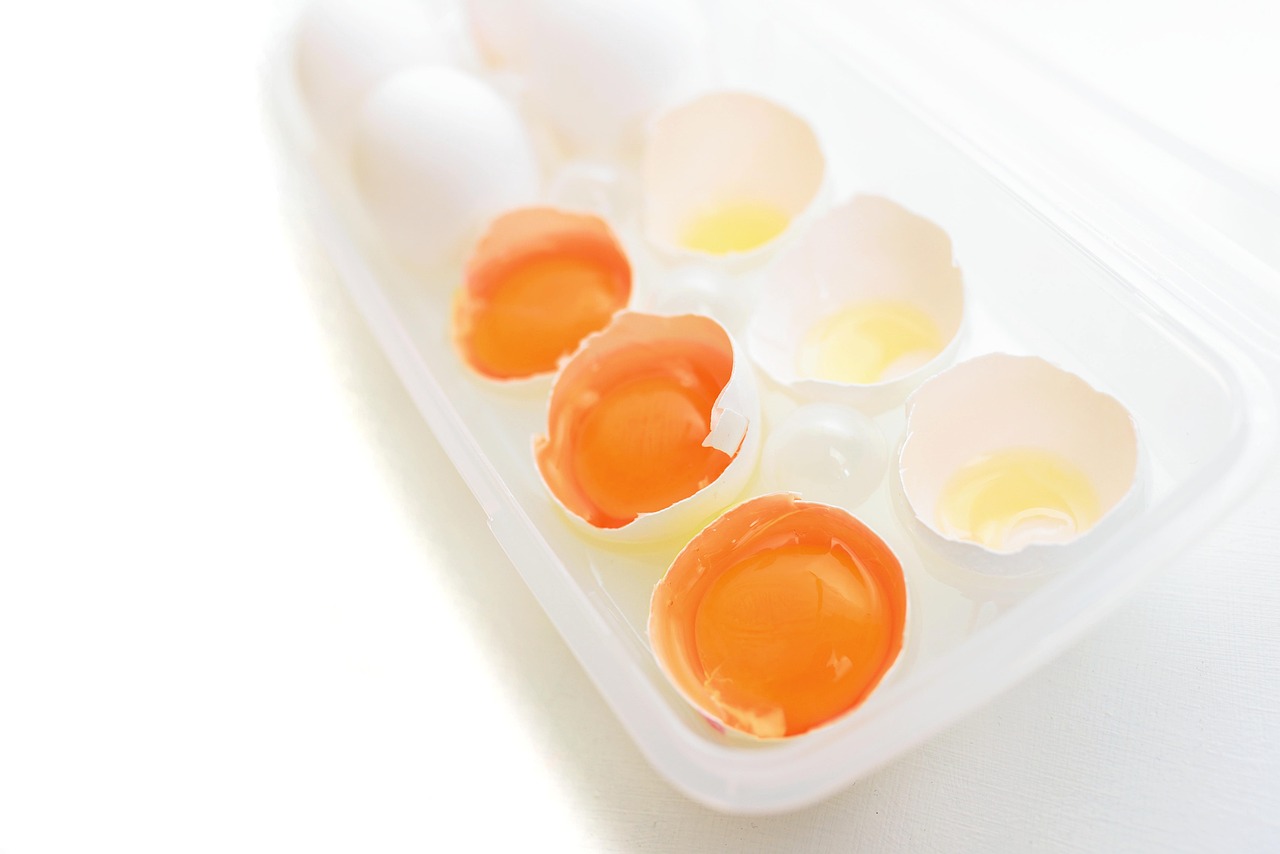
A whole large egg has about 72 calories and 6.3 grams of protein. Split it, and the numbers look like this:
| One large egg | White | Yolk |
|---|---|---|
| Calories | about 17 | about 55 |
| Protein | about 3.6 g | about 2.7 g |
| Fat | almost none | about 4.5 g |
| Cholesterol | none | about 185 mg |
| Choline | trace | about 145 mg |
| Vitamins A, D, B12, lutein | none to trace | almost all of the egg's supply |
The white holds a little more than half the protein and less than a quarter of the calories. The yolk holds almost everything else: the fat, the cholesterol, and most of the egg's vitamins, plus nearly all of its choline, iron and carotenoids (the white does keep a good share of the riboflavin). Choline in particular is a nutrient most Americans fall short of, and egg yolks are one of the richest sources.
So egg whites are a great way to add protein cheaply, but they are not a "healthier egg". They are a different, narrower food. The full breakdown of a whole egg, including where the research on dietary cholesterol now stands, is in egg nutrition.
When egg whites make sense
- When calories are tight and you want volume and protein, for example during a calorie deficit.
- When a doctor has told you to limit dietary cholesterol or saturated fat.
- As a stretcher. One whole egg plus two or three whites gives you the flavor and nutrients of the yolk and much of the protein of a big omelette, for well under 150 calories.
For most healthy people, the whole egg is the better default and whites are a useful addition.
Is it safe to eat raw egg whites?
There are two separate problems with raw egg whites, and one of them is easily solved.
Salmonella
Raw or undercooked eggs can carry Salmonella. Most eggs are fine, but the risk is real, and it is higher for pregnant women, young children, older adults and anyone with a weakened immune system. The USDA advises cooking egg dishes to 160°F. In practice, whites should be cooked until firm and opaque.
The solution for raw uses, such as protein shakes, cocktails or uncooked mousse, is pasteurized egg whites. Liquid egg whites sold in cartons in US stores are pasteurized, heated just enough to kill bacteria without cooking them, which makes them the safe choice for anything that will not be cooked. Pasteurized in-shell eggs are also sold. Pasteurized whites still whip, but more slowly; a pinch of cream of tartar helps them hold.
Avidin and biotin
Raw egg white contains avidin, a protein that binds tightly to biotin, one of the B vitamins, and keeps you from absorbing it. Eating large amounts of raw egg whites every day for a long time has caused biotin deficiency, with hair loss and skin rashes, in documented cases. Cooking denatures avidin and ends the problem, and an occasional raw white is not a concern. A daily habit of raw whites in shakes is the situation to avoid.
Cooked protein is better absorbed
There is also a simple nutritional reason to cook them. In one small study using labeled egg protein, about 91% of cooked egg protein was absorbed, compared with about half of raw egg protein. Drinking raw whites gets you less protein, not more.

Egg white powder and egg white protein supplements
Dried egg white, sold as egg white powder or egg white protein, is dehydrated and pasteurized albumen. It is about 80% protein by weight. A typical scoop gives a protein dose similar to a scoop of whey.
Its main appeal is for people who cannot use dairy: it has no lactose and no milk proteins, so it suits those with a milk allergy or lactose intolerance. It is a complete protein, though slightly lower in leucine than whey, which matters only at the margins. Unflavored powder tastes faintly eggy and foams when shaken, so it works better in baking and smoothies than stirred into water. For whether you need a powder at all, and how whey, casein and plant proteins differ, see protein supplements.
Do not confuse it with meringue powder, which is egg white mixed with sugar and stabilizers for baking.
How to make a good egg white omelette
Egg white omelettes have a reputation for being rubbery and bland. Both problems come from cooking.
- Use a nonstick pan and medium-low heat. Whites have no fat to buffer the heat, so they toughen and weep water if the pan is too hot.
- Season the whites, not just the filling. Salt, pepper and a pinch of garlic powder whisked in make a real difference.
- Add one yolk or one whole egg for every three whites. It improves color, flavor and texture for about 55 extra calories.
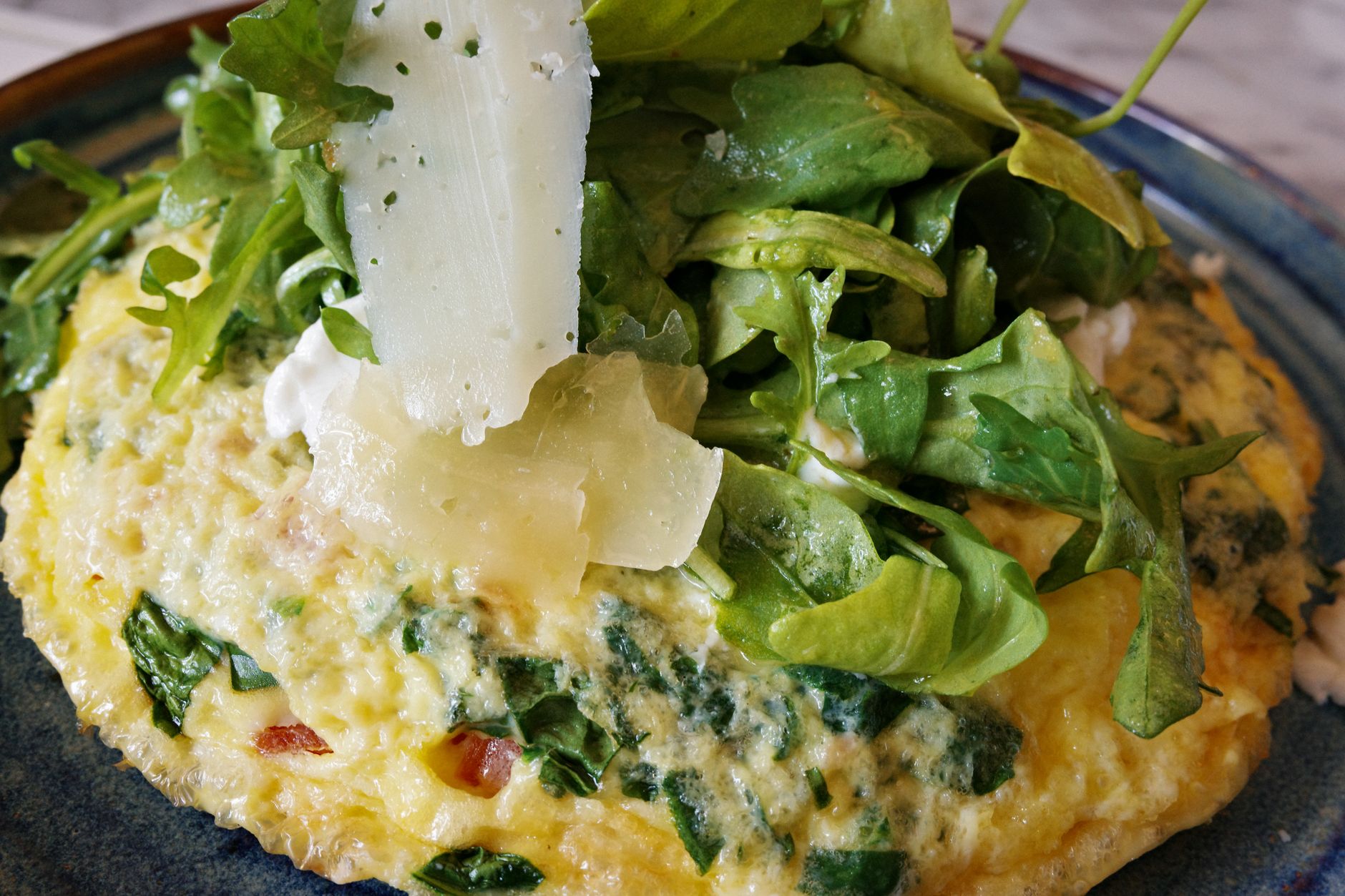
- Use a strong filling. Sautéed mushrooms, spinach, feta, herbs or salsa carry the flavor. The technique for folding is the same as for a classic French omelette.
Egg whites also work in baked egg dishes. A frittata made with half whites and half whole eggs holds together well, and the egg muffins recipe has an egg white version at about 145 calories for two muffins. Egg white "wraps", thin sheets of cooked egg white sold in packages or made in a skillet, are a low-carb stand-in for tortillas.
Using the leftover yolks
Separating eggs at home leaves yolks, and they are the nutritious half. Add them to scrambled eggs, custards, homemade mayonnaise or carbonara. Keep them covered in the refrigerator and use them within two days.
Going the other way, recipes that use only whites are worth knowing. The keto bread here uses four egg whites for structure without the eggy flavor that comes from the yolk.
The short version
Egg whites are nearly pure protein: about 3.6 grams in one large white and about 26 grams in a cup of liquid whites, for very few calories. Cook them, or buy pasteurized cartons for anything raw. Treat them as a protein booster rather than a replacement for whole eggs, because the yolk is where most of the nutrition lives.