French omelette
How to make a classic French omelette: three eggs, butter, and no browning anywhere. It takes about ninety seconds and a little practice.
- 340
- kcal
- 19g
- protein
- 28g
- fat
- 1g
- carbs
- Prep
- 3 min
- Cook
- 3 min
- Serves
- 1
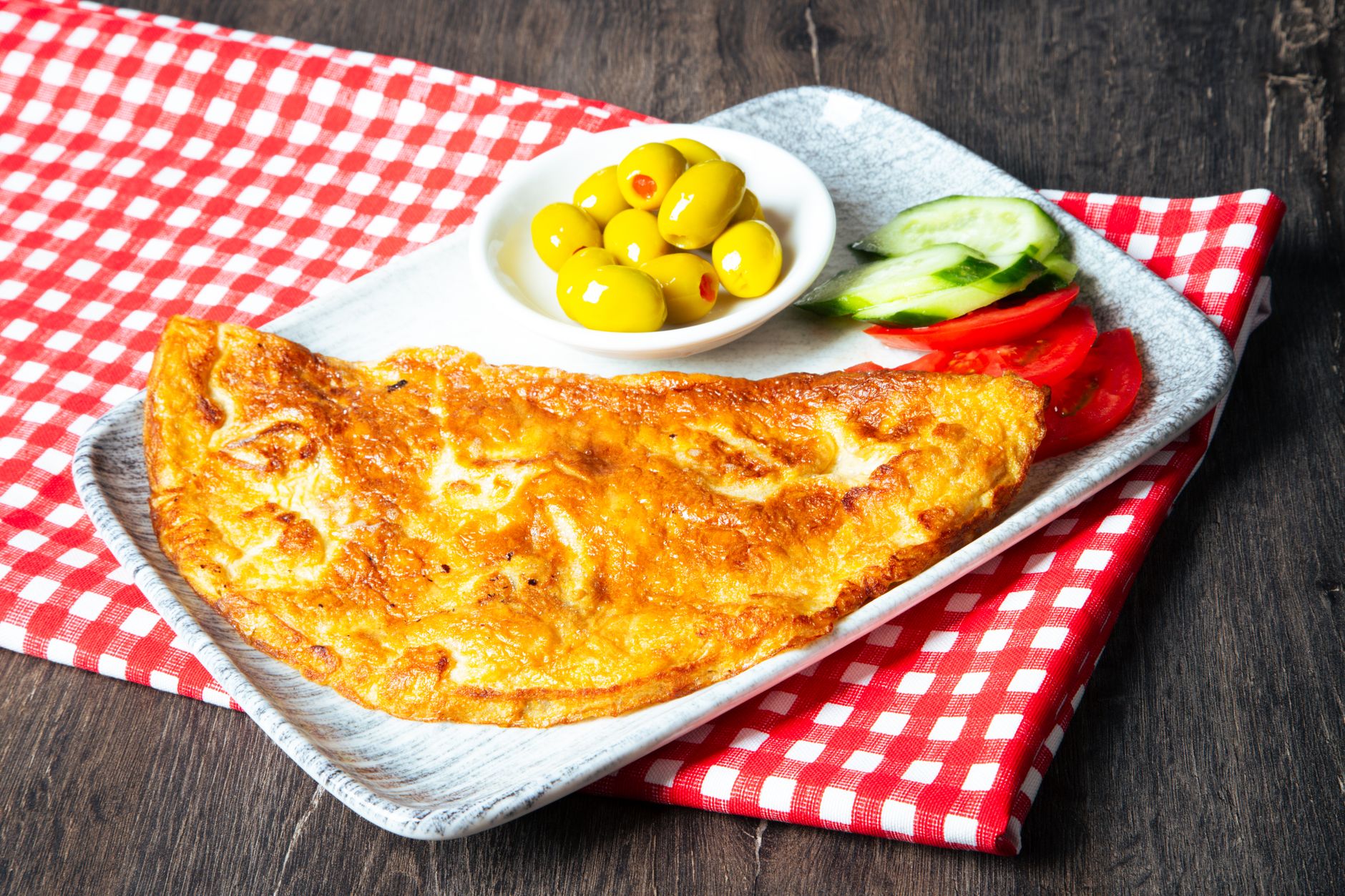
Photograph by Emine Gizem on Pexels
Ingredients
- 3 eggs
- 1 tbsp butter
- Salt
- Chives, optional
Method
-
1
Beat the eggs
Beat the eggs until completely uniform, with no streaks of white left.
-
2
Melt the butter
Melt the butter in an 8-inch nonstick pan over medium-low heat until it foams and the foam starts to subside. It must not brown.
-
3
Stir into curds
Add the eggs and stir constantly with a spatula for 20 seconds, shaking the pan, until it looks like loose curds.
-
4
Roll the omelette
Stop stirring. Let it set for 10 seconds, then tilt the pan and roll the omelette onto itself toward the handle.
-
5
Plate
Turn it out seam-side down. It should be pale yellow with no browning at all.
What makes it French
Pale yellow, no browning anywhere, a smooth exterior with no blisters, and a center that is just barely set — baveuse, in the French term. An American diner omelette is browned, folded around a filling and cooked through. Neither is wrong; they are different dishes, and this recipe is the first one.
The absence of color is the marker. If there is any brown on the surface, the pan was too hot.
The twenty seconds of stirring
The technique is small, fast and worth practicing. Stir constantly with the flat of a spatula while shaking the pan, so the egg is being agitated from two directions. What you are doing is breaking the setting protein into very small curds and keeping them suspended, which produces a fine, custard-like texture rather than one continuous sheet.
Then stop completely. The ten seconds of stillness sets a thin skin on the bottom, and that skin is what lets you roll it.
Beat the eggs properly
Until completely uniform, with no streaks of white left. Unbeaten albumen shows up in the finished omelette as tough white ribbons. A fork is fine; forty seconds is roughly what it takes. Do not add water or milk — it dilutes the protein and makes the set weaker and wetter.
The pan and the butter
An eight-inch nonstick pan for three eggs. Larger and the omelette is thin and sets before you can work it; smaller and it is too thick to roll. The butter should foam, and when the foam starts to subside — that is the water boiling off — the eggs go in. It must not brown.
If it tears
Turn it out seam-side down anyway and nobody will know. This is genuinely a technique that takes a dozen attempts, and the failures are all perfectly good breakfast.
What it is worth nutritionally
19 g of protein for 340 kcal, with 1 g of carbohydrate. The tablespoon of butter is around 100 of those calories and 11 g of the fat — this is a rich dish by design, and halving the butter changes the technique as much as the numbers, because the fat is what stops it sticking.