Frittata
An Italian frittata with slow-cooked onion and zucchini, set over low heat and finished under the broiler. 17 g of protein a slice.
- 260
- kcal
- 17g
- protein
- 19g
- fat
- 5g
- carbs
- Prep
- 10 min
- Cook
- 25 min
- Serves
- 4
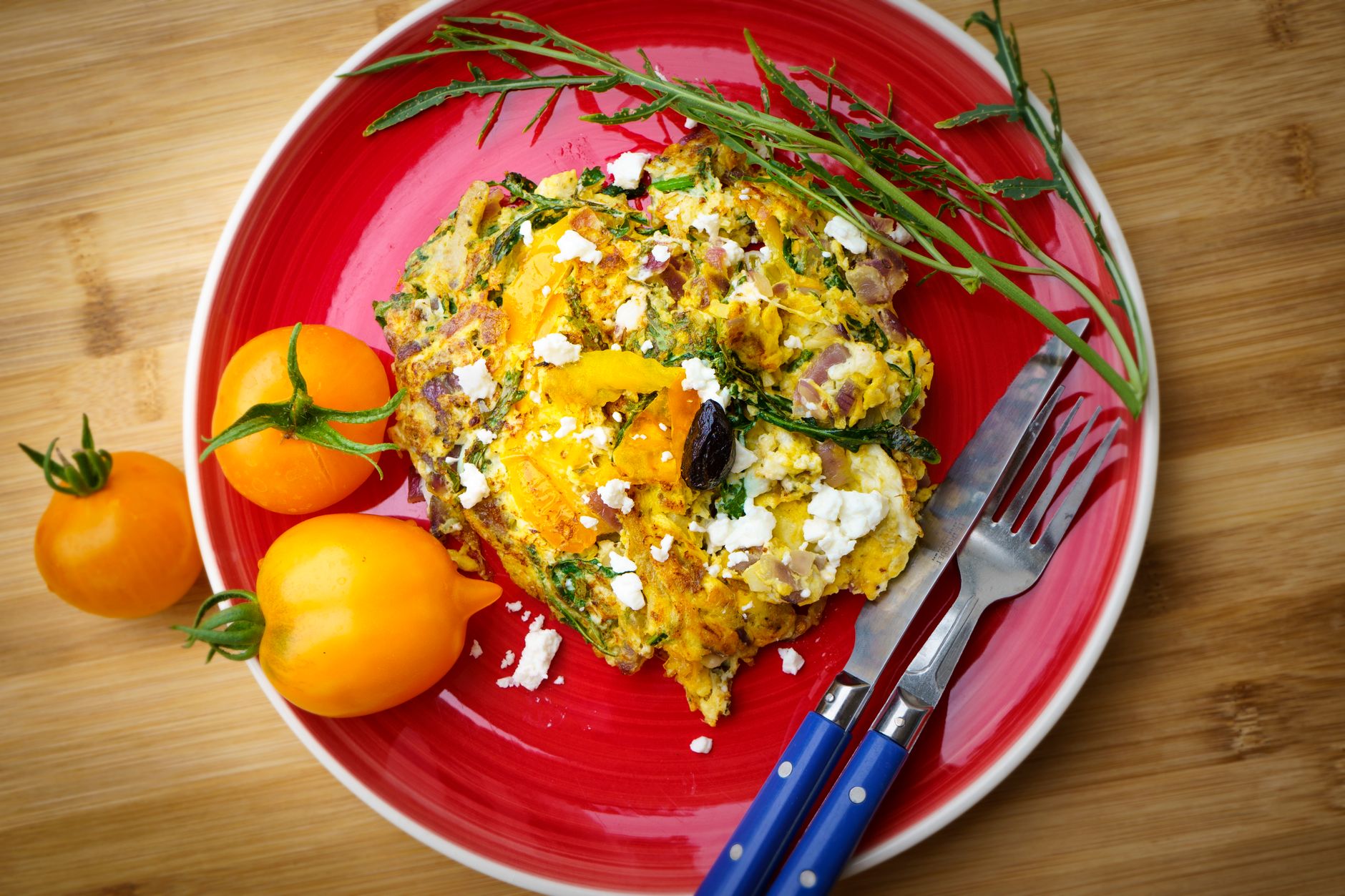
Photograph by mali maeder on Pexels
Ingredients
- 8 eggs
- 1/3 cup grated parmesan
- 2 tbsp olive oil
- 1 onion, sliced thin
- 1 zucchini, sliced
- Basil, salt, pepper
Method
-
1
Cook the onion and zucchini
Cook the onion slowly in the oil in a 10-inch ovenproof nonstick skillet for 12 minutes until sweet. Add the zucchini for 5 more.
-
2
Beat the eggs
Beat the eggs with the parmesan and season.
-
3
Cook low and slow
Pour over the vegetables, turn the heat to its lowest setting, and cook 15 minutes until only the center wobbles.
-
4
Finish under the broiler
Finish under a hot broiler for 2 minutes.
-
5
Serve warm
Serve warm rather than hot, which is how it is actually eaten.
Low heat, and patience
A frittata cooked fast is an omelette that went wrong. The lowest setting on your stovetop for fifteen minutes is not a suggestion — egg protein sets between roughly 144 and 158°F, and above that it contracts and squeezes out water, which is what makes rubbery eggs weep onto the plate.
You are looking for the edges and most of the center to be set with a slight wobble in the middle. It will finish setting under the broiler and again in the residual heat after it comes out.
Cook the vegetables first, properly
Twelve minutes on the onion is doing real work: it drives off water and browns the onion's sugars, which is where the sweetness in a good frittata comes from. Raw or barely softened vegetables release water into the eggs as they cook and you get a wet, loose set.
This applies to anything watery you add — mushrooms, spinach, zucchini all need to be cooked down and, in the case of spinach, actively squeezed.
The parmesan is structural
Cheese in the egg mixture rather than on top. It adds salt, glutamate and fat, and the fat coats the protein strands and interferes slightly with their contraction — which produces a more tender set. It is the same reason a splash of cream is often added, and parmesan does it while contributing flavor.
Serve it warm, not hot
This is how it is actually eaten in Italy, and it is not a compromise. Straight from the pan the texture is loose and the flavors are muted; twenty minutes later it has firmed to sliceable and the vegetables taste of themselves. It is also excellent cold the next day, which makes it one of the more useful things to cook deliberately in advance.
What it is worth nutritionally
17 g of protein and 5 g of carbohydrate a serving, which makes this one of the better low-carbohydrate main courses that does not depend on meat. Eggs carry choline, which most people are short of, and the yolks carry the fat-soluble vitamins — a good argument against the whites-only version.