Pierogi
Polish pierogi filled with potato, farmer cheese and fried onion. A soft dough made with warm water and a proper rest keeps them from tearing.
- 500
- kcal
- 16g
- protein
- 11g
- fat
- 83g
- carbs
- Prep
- 60 min
- Cook
- 10 min
- Serves
- 6
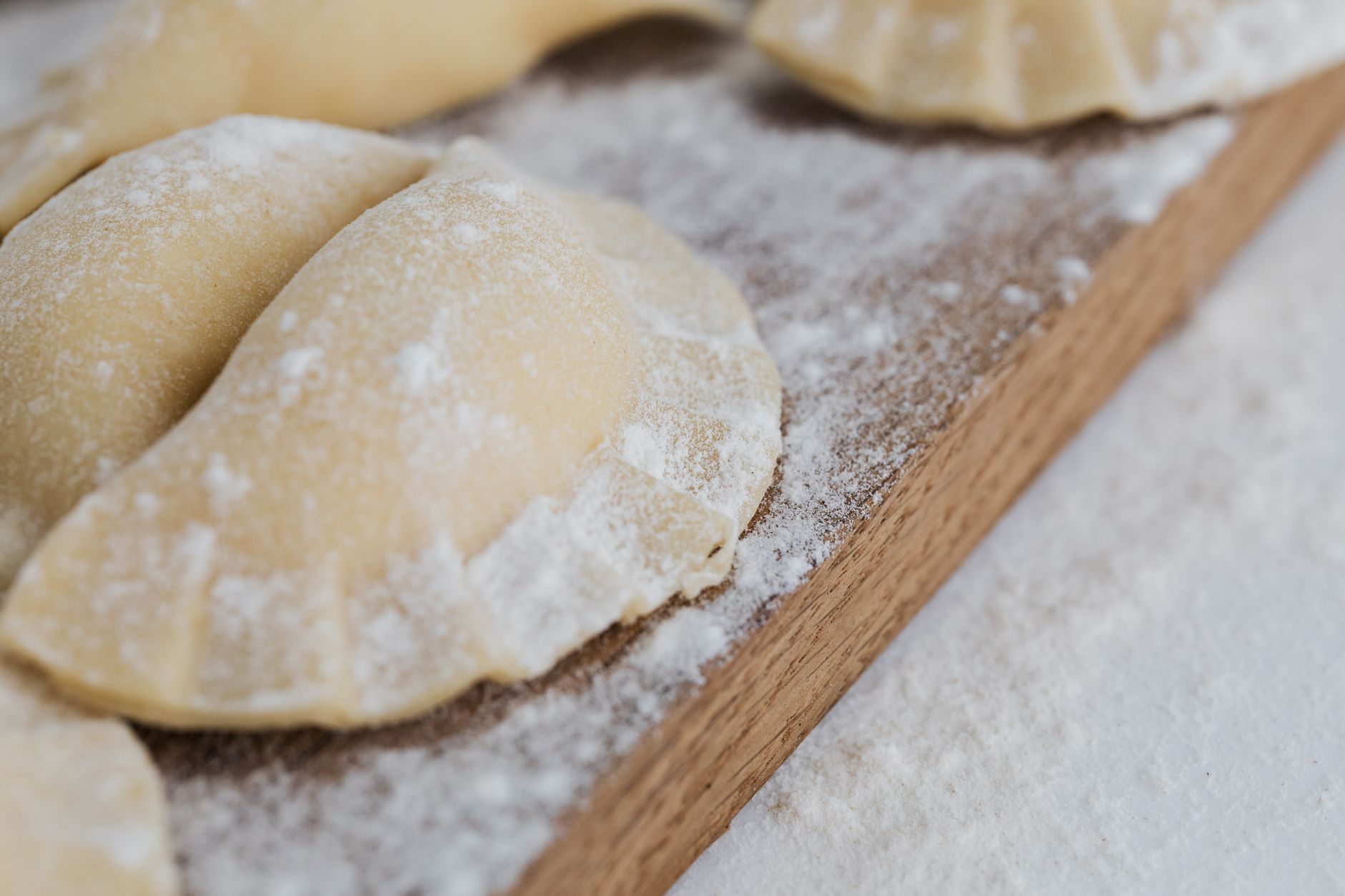
Photograph by https://kaboompics.com/ on Pexels
Ingredients
- 4 cups all-purpose flour
- 1 cup warm water
- 1 egg
- 2 tbsp sour cream
- 1 lb potatoes, boiled
- 7 oz farmer cheese
- 2 onions, one for the filling and one to serve
- 3 tbsp butter
- Kosher salt and black pepper
Method
-
1
Make and rest the dough
Mix the flour, water, egg, sour cream and 1 tsp salt to a soft dough. Knead 8 minutes, then rest covered for 30 minutes — this is not optional.
-
2
Make the filling
Fry one onion in 1 tbsp of the butter until golden and mash it with the potato and cheese. Season heavily; the filling tastes flat once wrapped.
-
3
Fill and seal
Roll the dough thin, cut circles, fill, and seal the edges firmly with dry fingers.
-
4
Boil
Boil in batches in well-salted water. They are done 90 seconds after they float.
-
5
Serve with fried onion
Serve with the second onion, fried in the rest of the butter.
The rest is not optional
Thirty minutes covered, minimum. Kneading develops gluten and leaves it tense; the dough will fight you and spring back every time you roll it, and pierogi rolled from unrested dough tear at the seams. Resting lets the gluten network relax and the flour finish hydrating, and the dough goes from fighting to cooperative.
The sour cream in the dough is there to shorten it slightly — the fat interferes with gluten development just enough to keep the wrapper tender rather than chewy.
Season the filling much more than seems right
This is the mistake almost everyone makes once. The filling is tasted on its own, seasoned to taste, then wrapped in unsalted dough and boiled in water — and it arrives at the table noticeably bland. Season it until it tastes slightly too salty by itself and it will be correct in the finished pierogi.
Frying the onion for the filling until genuinely golden, not merely translucent, is the other half of the flavor.
Sealing them
Dry fingers, and press firmly along the whole edge. Flour on the sealing surface is the enemy — it prevents the two sides bonding, and those are the ones that burst. If the edge has gone dry, a dab of water helps, but a fresh, slightly tacky edge seals better than a wet one.
Ninety seconds after they float
They rise when the filling heats and the air inside expands, and at that point the dough on top has not yet cooked. Ninety seconds more finishes it. Boiling them hard is a mistake; a vigorous boil knocks them against each other and splits the seams.
Fried afterward
Boiled pierogi are the traditional form. Boiled and then fried in butter until the outside blisters and browns is the better one, and it is what to do with leftovers the next day.
What they are worth nutritionally
500 kcal a serving with 83 g of carbohydrate — this is a carbohydrate-led dish and there is no version of it that is not. Of the 16 g of protein, about half comes from the flour and the rest from the farmer cheese and the egg. Serving them with a sharp salad rather than more butter is the realistic lever.