Pelmeni (Russian dumplings)
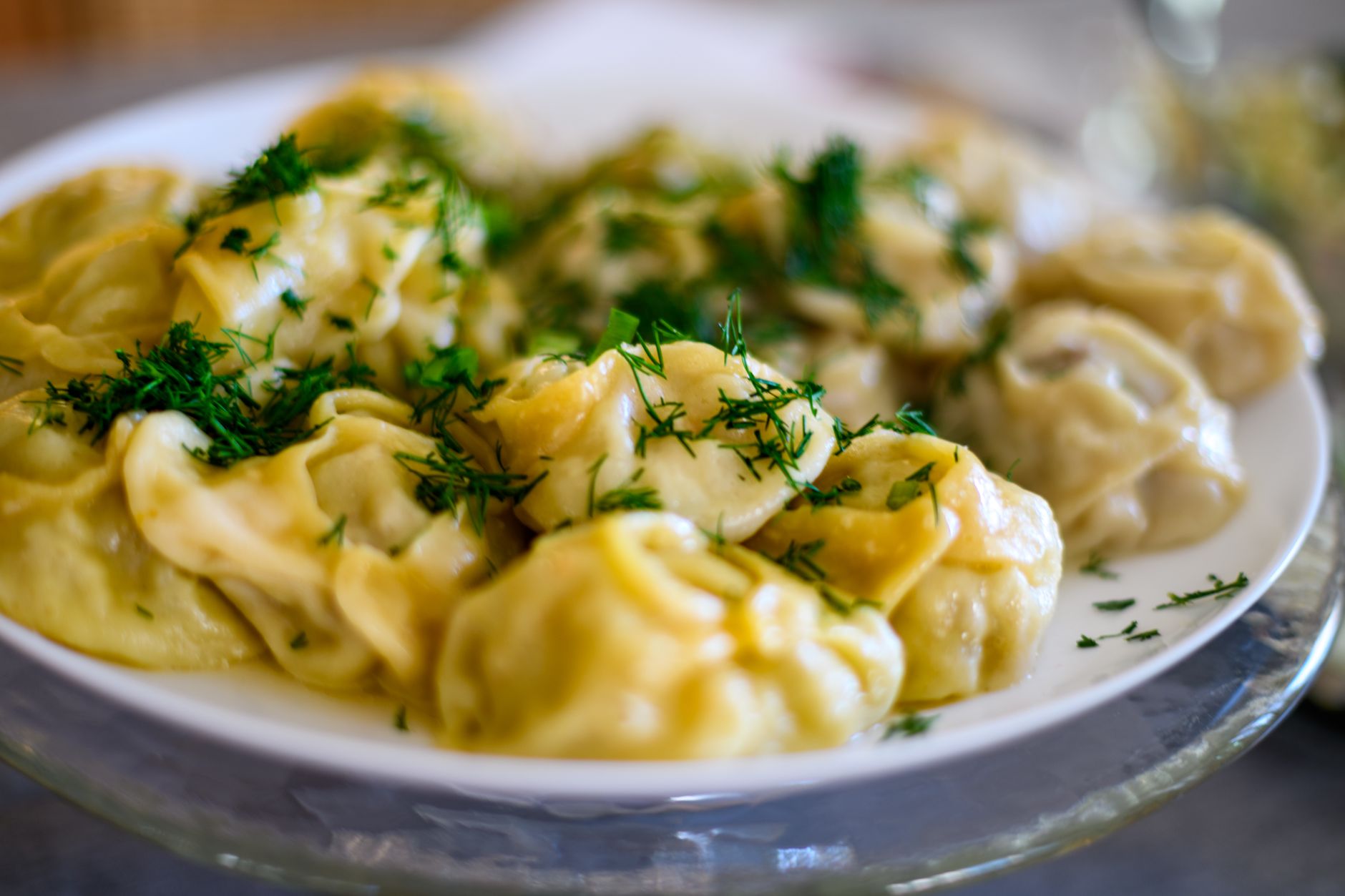
Homemade pelmeni, the Russian dumplings: thin dough around a juicy beef and pork filling, boiled in 5 minutes. How to fold and freeze them, and 21 g of protein a serving.
- 445
- kcal
- 21g
- protein
- 17g
- fat
- 49g
- carbs
- Prep
- 1 h 45 min
- Cook
- 35 min
- Serves
- 6
Photograph by Sergej ***** on Pexels
Ingredients
- 3 cups (375 g) all-purpose flour, plus more for rolling
- 1 large egg
- 2/3 cup (160 ml) cold water
- 2 tsp kosher salt, divided
- 8 oz (225 g) 85% lean ground beef
- 8 oz (225 g) ground pork
- 1 small onion, finely grated
- 1 clove garlic, finely grated
- 1/2 tsp black pepper
- 3 tbsp ice water
- 1 bay leaf, for the cooking water
- 1 tbsp butter
- Sour cream and chopped dill, to serve
Method
-
1
Make and rest the dough
Mix the flour with 1 tsp of the salt. Beat the egg with the cold water, stir it into the flour, and knead 8 to 10 minutes to a smooth, firm dough. It should feel stiffer than bread dough. Wrap it and rest 30 minutes.
-
2
Make the filling
Mix the beef, pork, onion, garlic, pepper, the rest of the salt and the ice water, and beat with a spoon or your hand for 1 to 2 minutes, until sticky. Refrigerate while the dough rests.
-
3
Roll and cut
Work with a quarter of the dough at a time and keep the rest covered. Roll it about 1/16 inch thin on a floured counter and cut 2 1/2-inch circles with a glass. Gather the scraps and roll them once more.
-
4
Fill and fold
Put a heaping teaspoon of filling on each circle. Fold it in half and pinch the edges firmly to seal, then bring the two corners together around your fingertip and pinch them. Set the pelmeni on a floured baking sheet. You should get about 90.
-
5
Boil
Bring a large pot of salted water to a boil with the bay leaf. Add about 25 pelmeni and stir gently so they do not stick. Once they float, cook 3 to 4 minutes more, until the filling is cooked through and reads 160°F. Lift them out with a slotted spoon and repeat.
-
6
Serve
Toss the hot pelmeni with the butter and serve with sour cream and dill. Freeze any you are not cooking on the baking sheet, then bag them.
What pelmeni are
Pelmeni are small Russian dumplings: a thin, firm dough wrapped around raw ground meat and onion, then boiled. They come from Siberia and the Urals, where families made hundreds at a time in winter and kept them frozen outside. The name is usually traced to the Finno-Ugric languages of the Urals, where it means "ear bread", for their shape. Today they are eaten across Russia, Ukraine, Belarus and Central Asia, and frozen pelmeni are sold in most Russian and Eastern European grocery stores in the US.
Pelmeni, pierogi and other dumplings
Pelmeni are often confused with Polish pierogi and Ukrainian vareniki, but they are different. Pierogi and vareniki are larger half-moons with cooked fillings, such as potato and cheese, sauerkraut or cherries. Pelmeni are small, almost always filled with raw meat, and the meat cooks inside the dough as they boil, so the filling stays juicy. The dough is also thinner and firmer. The closest relatives are Chinese wontons and Italian tortellini, which are folded the same way.
The filling
The classic Siberian filling is a mix of beef and pork. The pork gives fat and juiciness; beef alone makes a drier, firmer filling. Some cooks add ground lamb. Two small things make a big difference:
- Grate the onion instead of chopping it. Its juice spreads through the meat, with no crunchy pieces to tear the thin dough.
- Add ice water and beat the meat until it turns sticky. The water makes steam inside each dumpling and keeps the filling moist, and the beating helps it hold together as one piece.
The filling is raw pork and beef, so it has to be cooked to 160°F. Small pelmeni get there quickly, but cut one open from each batch the first time you make them. The filling should be gray all the way through, with no pink.
The dough
Pelmeni dough is firmer than pierogi dough, with less water, so it can be rolled very thin without tearing and holds its shape in the pot. It will feel stiff when you knead it. The 30-minute rest makes it much easier to roll. Keep the dough you are not working with covered, because it dries out quickly and then will not seal.
How to fold pelmeni
Cut circles about 2 1/2 inches wide with a glass or cutter, and put a heaping teaspoon of filling in the center of each. Fold the circle in half over the filling and pinch the edges together firmly to make a half-moon. Then bring the two corners together around the tip of your finger and pinch them, so the dumpling looks like a small round hat or an ear. A fork is not needed and does not seal them well.
It goes much faster with two people, which is how pelmeni have always been made. Russian kitchen shops also sell a pelmennitsa, a round mold with honeycomb holes. You lay one sheet of dough over it, drop filling in each hole, cover with a second sheet and roll over it with a rolling pin to cut and seal about three dozen pelmeni at once.
Cooking pelmeni, fresh or frozen
Use a big pot of water and salt it well. A bay leaf and a few black peppercorns in the water are traditional. Add the pelmeni one by one and stir gently right away so they do not stick to the bottom. Fresh pelmeni are done 3 to 4 minutes after they float. Frozen ones go straight into the water without thawing and need about 5 minutes after they float, or the time on the package for store-bought ones. Cook no more than about 25 at a time, so the water stays close to a boil.
Freezing them
Pelmeni are made to be frozen, and most people make a double batch. Set the uncooked pelmeni on a floured baking sheet, not touching, and freeze them for an hour until hard. Then move them to a freezer bag. They keep 3 months and cook from frozen. Frozen in a pile, they stick together into one block.
How to serve pelmeni
- With sour cream and butter: the most common way, with chopped dill and black pepper.
- With vinegar: a splash of white vinegar, or vinegar mixed with a little mustard, is how many Russians eat them.
- In broth: served in a bowl of the hot cooking liquid or in chicken broth, with dill. In a cold winter this is a meal on its own.
- Fried: fry boiled leftovers in butter until crisp and brown on both sides, or fry frozen ones in a covered skillet with a little water, like potstickers.
A bowl of borscht before them makes a full Eastern European dinner.
What they are worth nutritionally
A serving of about 15 pelmeni has around 445 kcal, with 21 g of protein, 17 g of fat and 49 g of carbohydrate. Like most dumplings, they are mostly dough: more than half of the calories come from the flour. Sour cream is not included, and a tablespoon of full-fat sour cream adds about 25 kcal. Using all 93% lean ground beef instead of the beef and pork mix saves about 65 kcal and 8 g of fat a serving, but the filling is drier, so add another tablespoon of ice water. Served in broth with a salad, a smaller portion of 10 pelmeni comes to about 300 kcal.