Ukrainian borscht
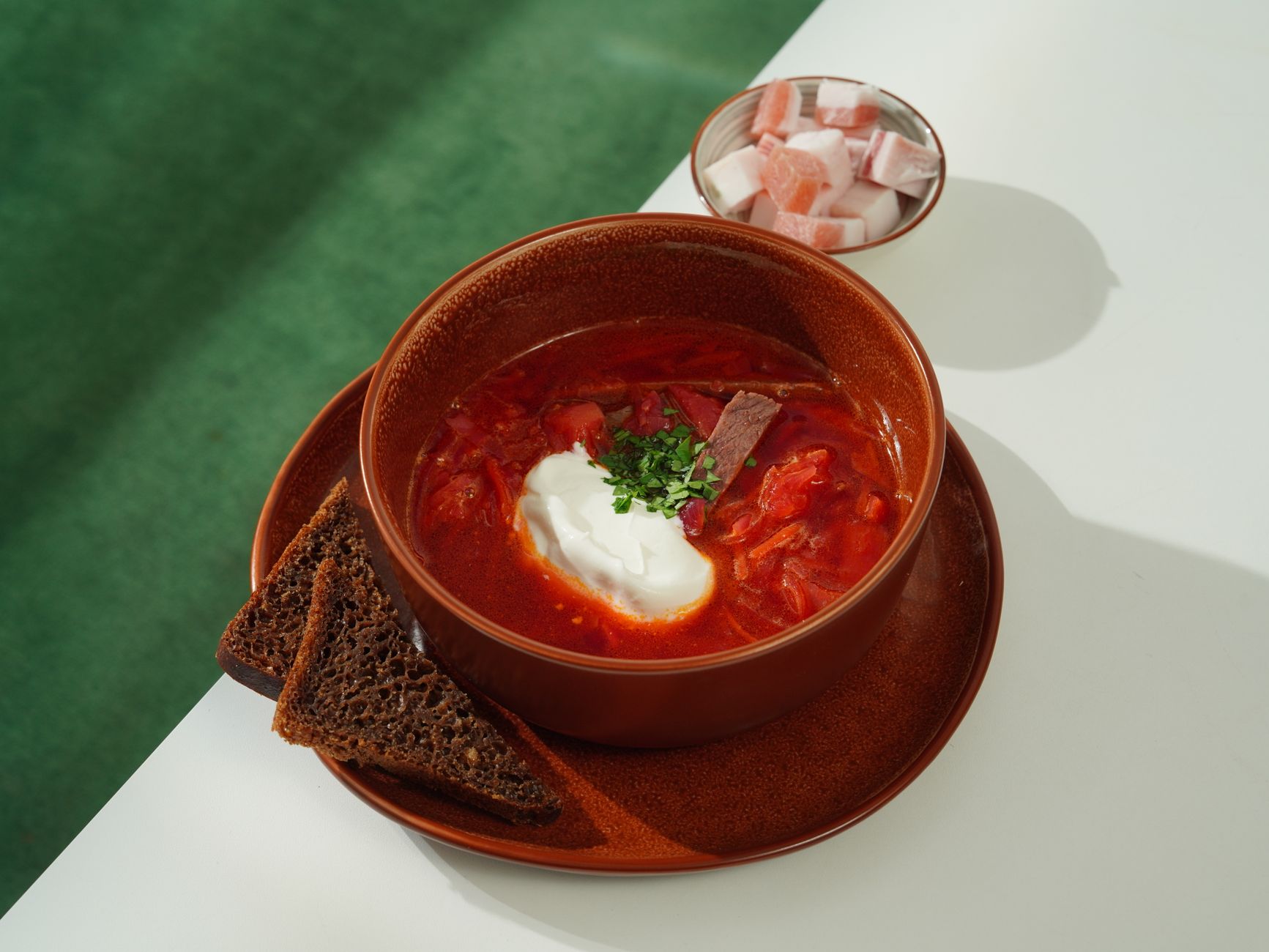
Ukrainian borscht with roasted beets, cabbage and slow-simmered beef shank. Most of the depth comes from roasting the beets rather than boiling them.
- 220
- kcal
- 14g
- protein
- 8g
- fat
- 24g
- carbs
- Prep
- 25 min
- Cook
- 165 min
- Serves
- 6
Ingredients
- 3 medium beets, scrubbed
- 1 lb bone-in beef shank, or 8 to 10 cups vegetable stock
- 1/2 head green cabbage, shredded
- 2 carrots, grated
- 2 potatoes, cubed
- 1 onion, diced
- 2 tbsp tomato paste
- 2 tbsp red wine vinegar
- 2 bay leaves
- 1 tbsp sunflower or olive oil
- Salt and black pepper
- Sour cream and dill, to serve
Method
-
1
Roast the beets
Wrap the beets in foil and roast at 400°F for 50 minutes, until a knife goes in without resistance. Cool, peel and grate.
-
2
Make the beef stock
Meanwhile simmer the beef in 10 cups of water with the bay leaves for 2 to 2 1/2 hours, until the meat falls from the bone, skimming the foam in the first ten minutes. Lift the meat out, shred it, and keep the stock.
-
3
Cook the soup base
Soften the onion and carrot in the oil, add the tomato paste and cook for two minutes until it darkens.
-
4
Add the potatoes and cabbage
Add the potatoes to the stock and boil for 8 minutes, then add the cabbage and the onion mixture. Simmer 10 minutes.
-
5
Add the beets and vinegar
Add the grated beets, the shredded meat and the vinegar. Adding the beets late is what keeps the color; the vinegar helps them hold it.
-
6
Rest and serve
Season with salt and pepper, take off the heat and leave 20 minutes before serving. Sour cream and dill at the table.
Why roasting the beets matters
Boiling beets leaches their sugar and their color into water you then throw away. Roasting concentrates both. It is the single change that separates a borscht that tastes of earth and sweetness from one that tastes faintly of nothing, and it costs you fifty unattended minutes in the oven while the stock simmers anyway.
The second color rule is timing, and it is chemistry rather than tradition. Betanin, the pigment in beets, breaks down with long heat, and holds up better in acid than in neutral liquid. Add the beets near the end, with the vinegar, and the soup stays deep red; simmer them from the start and you get a brownish stew that tastes fine and looks wrong.
Making it vegetarian
Swap the beef shank and water for 8 to 10 cups of a well-made vegetable stock and add a tablespoon of smoked paprika with the tomato paste. The smoke does some of the work the bone was doing. A can of white beans added with the cabbage brings the protein back up to about 7 g a serving.
Sour cream, and what it costs
A tablespoon of full-fat sour cream adds roughly 30 kcal and 3 g of fat. It is worth it: the fat carries flavor compounds the broth alone cannot, and the acidity plays against the sweetness of the beets. Greek yogurt does the same job for fewer calories and a sharper finish, though it will split if stirred into soup that is still boiling.
Keeping it
Borscht is better on the second day and better again on the third — the flavors are still combining while it sits. It keeps five days refrigerated and freezes well, though the potatoes turn slightly grainy on thawing. If you plan to freeze it, leave them out and add freshly boiled potato when you reheat.
What it is worth nutritionally
At 220 kcal and 14 g of protein a serving this is a genuinely filling main course, and the cabbage and beets between them supply a substantial amount of fiber. Beets are also one of the better dietary sources of nitrate, which the body converts to nitric oxide — the mechanism behind the modest blood pressure effects seen in beet juice trials. A bowl of soup is not a clinical dose, but it is not nothing either.