Shakshuka
Shakshuka: eggs poached in a spiced tomato and red pepper sauce, with feta and herbs. One skillet, 40 minutes, and the trick is a sauce thick enough to hold the eggs.
- 360
- kcal
- 19g
- protein
- 23g
- fat
- 20g
- carbs
- Prep
- 10 min
- Cook
- 30 min
- Serves
- 3
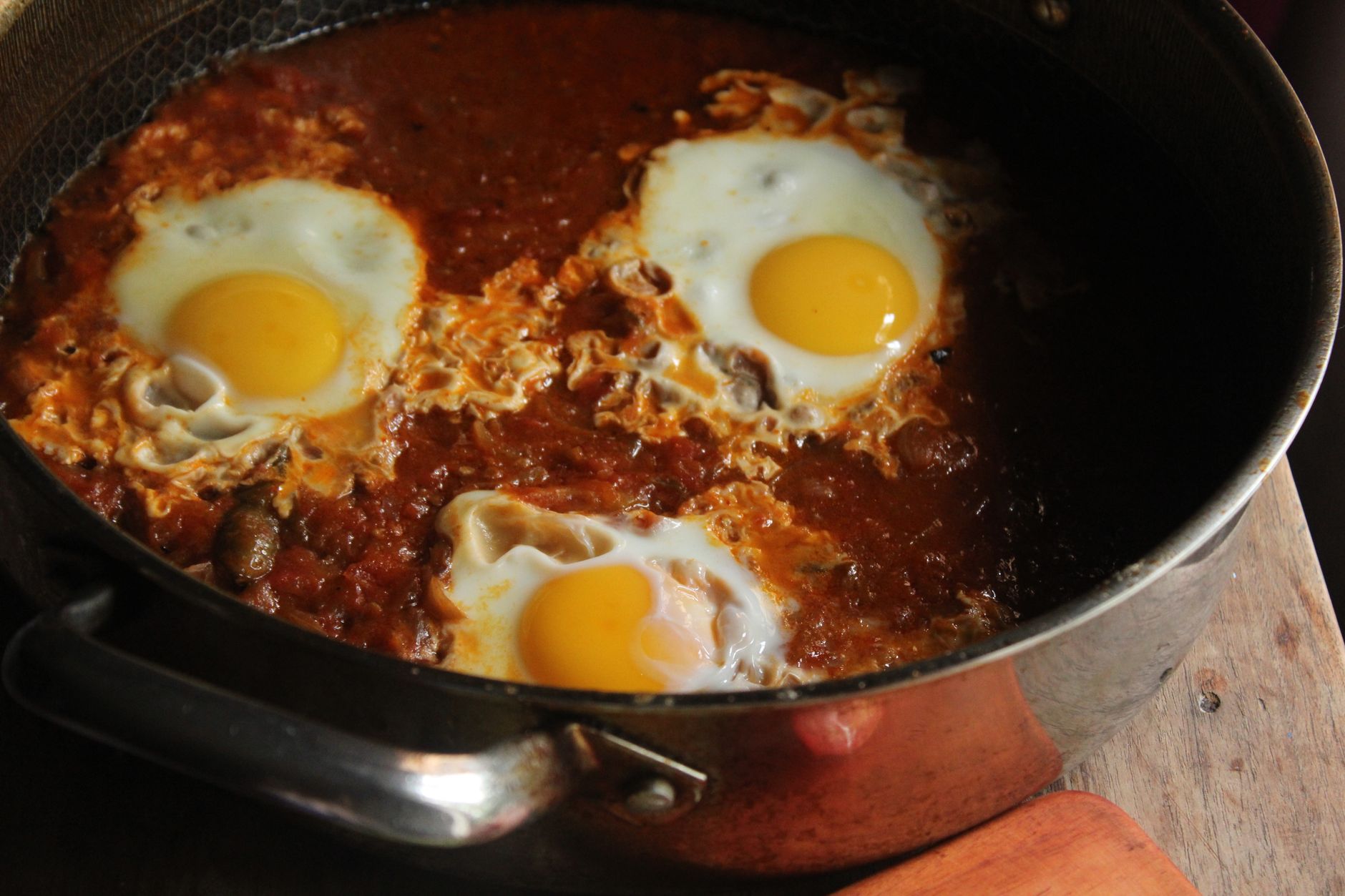
Photograph by Jahra Tasfia Reza on Pexels
Ingredients
- 2 tbsp olive oil
- 1 onion, diced
- 1 red bell pepper, diced
- 3 cloves garlic, sliced
- 1 tbsp tomato paste
- 1 tsp ground cumin
- 1 tsp sweet paprika
- 1/4 tsp cayenne or red pepper flakes, or to taste
- 1 can (28 oz) whole peeled tomatoes, crushed by hand
- 6 large eggs
- 2 oz (55 g) feta, crumbled
- Chopped cilantro or parsley, to serve
- Salt and black pepper
Method
-
1
Soften the vegetables
Cook the onion and bell pepper in the oil in a 12-inch skillet over medium heat for 8 minutes, until soft. Add the garlic, tomato paste and spices and cook 1 minute, until fragrant.
-
2
Simmer the sauce
Add the tomatoes with their juice and a good pinch of salt. Simmer 10 to 12 minutes, stirring now and then, until the sauce is thick enough that a spoon leaves a trench that holds for a second.
-
3
Add the eggs
Make 6 wells with the back of a spoon and crack an egg into each. Season the eggs with salt and pepper.
-
4
Cook covered
Cover and cook over low heat for 5 to 8 minutes, until the whites are set and the yolks still move. Spoon a little sauce over any whites that stay clear near the yolk.
-
5
Finish
Scatter with feta and herbs and serve from the pan, with bread for the sauce.
Where shakshuka comes from
Shakshuka is a North African dish, cooked across Tunisia, Libya, Algeria and Morocco, and brought to Israel by North African Jewish immigrants, where it became a national breakfast. The name is usually explained as coming from a word for "mixture". The basic idea, eggs poached in a spiced sauce of tomatoes and peppers, is shared with Italian eggs in purgatory and Mexican huevos ahogados. Turkish menemen is a scrambled cousin.
The sauce decides everything
The most common mistake is adding the eggs to a thin sauce. The eggs sink, the whites spread into the liquid, and you get a soup. The sauce is ready when you can drag a spoon through it and the trench holds for a second before closing. That usually takes 10 to 12 minutes of simmering after the tomatoes go in, longer with very juicy fresh tomatoes.
Canned whole peeled tomatoes, crushed by hand, give the best texture. Crushed tomatoes from a can work, but make a smoother, more uniform sauce. In summer, use about 2 1/2 pounds of ripe fresh tomatoes, chopped, and simmer a few minutes longer.
Cooking the eggs right
The whites closest to the yolk set last. By the time they are firm, the yolk is often hard too. Three things help:
- Make deep wells, so each egg sits in its own pocket of sauce.
- Cover the pan. The steam cooks the tops of the eggs.
- Spoon sauce over the whites, not the yolks, if they are slow to set.
Take the pan off the heat when the yolks still look a little liquid. They keep cooking in the hot sauce, especially at the table. For firm yolks, cook 2 to 3 minutes longer.
Variations
- Green shakshuka: leave out the tomatoes and peppers and cook down a pound of spinach, kale, chard and leeks with cumin, garlic and a splash of cream before adding the eggs.
- With harissa: stir 1 to 2 tablespoons of harissa paste into the sauce in place of the cayenne.
- With chickpeas: add a drained can of chickpeas to the sauce. That makes it more of a full dinner and adds about 5 g of protein a serving.
- With merguez: brown a few sliced merguez or other spicy sausages before the onion.
Make ahead
The sauce keeps 4 days in the fridge and 3 months in the freezer, and it tastes better the next day. Reheat it in the skillet until it simmers, then add the eggs. Cooked eggs do not reheat well, so only cook as many as you will eat.
What to serve it with
Bread for the sauce: pita, challah or a crusty loaf. A salad of cucumber, tomato and parsley is the usual side in Israel. For a lower-carbohydrate meal, skip the bread and serve it with a spoonful of Greek yogurt or tzatziki.
What it is worth nutritionally
A serving of two eggs with sauce has about 360 kcal, with 19 g of protein, 23 g of fat and 20 g of carbohydrate, including about 5 g of fiber. Bread is not included: a slice of crusty bread adds about 100 to 150 kcal. Cooked tomatoes are a good source of lycopene, which the body absorbs better from cooked tomatoes with some fat than from raw ones. The dish is vegetarian and, without the bread, gluten-free.