Sourdough bread
An easy sourdough bread recipe: one loaf, four ingredients, an overnight cold proof and a Dutch oven. Most of the time is the dough working on its own.
- 170
- kcal
- 6g
- protein
- 1g
- fat
- 34g
- carbs
- Prep
- 40 min
- Cook
- 45 min
- Serves
- 12
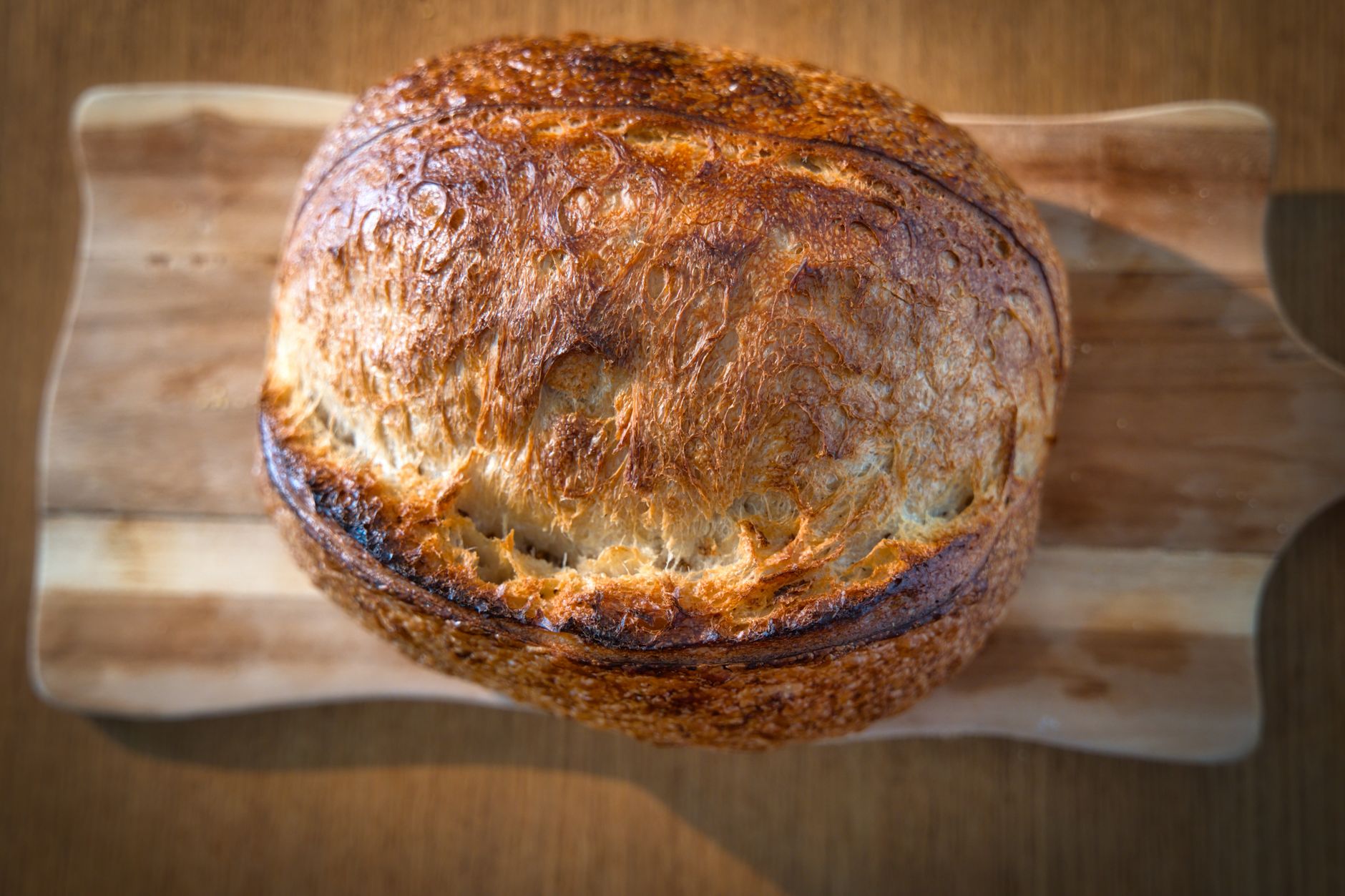
Photograph by Travel with Lenses on Pexels
Ingredients
- 4 cups (500 g) bread flour
- 1 1/2 cups (350 g) water
- 1/2 cup (100 g) active starter
- 2 tsp (10 g) salt
Method
-
1
Autolyse the flour
Mix flour and water only, and leave 45 minutes. This hydrates the flour and does a good deal of the kneading for you.
-
2
Add starter and salt
Add the starter and salt, and work them through.
-
3
Stretch and fold
Over the next 4 hours, fold the dough over itself four times, an hour apart.
-
4
Shape and cold-proof
Shape, then cold-proof in the fridge for 12 to 18 hours.
-
5
Heat the pot
Put a Dutch oven with its lid in the oven and heat it to 480°F for 45 minutes.
-
6
Score
Turn the cold dough out onto parchment and slash the top with a razor blade or very sharp knife, about 1/2 inch deep.
-
7
Bake in a covered pot
Lower the dough into the hot pot on its parchment. Bake covered for 20 minutes, then uncovered for 25 more, until deep brown.
-
8
Cool before slicing
Cool completely before cutting. Cutting hot bread ruins the crumb.
The autolyse does the kneading for you
Mixing flour and water alone and leaving it for 45 minutes before adding anything else is the least effortful step in baking and one of the most useful. During that rest the flour hydrates fully and enzymes begin breaking down proteins and starches; gluten starts forming without any mechanical work at all.
The salt is held back deliberately — it tightens gluten and slows enzyme activity, so adding it later lets the autolyse do its job first.
Folds instead of kneading
Four sets of stretch-and-folds an hour apart, rather than ten minutes of kneading. Each fold aligns the gluten strands and traps a little air, and the hour between lets fermentation continue undisturbed. The dough visibly changes across the four sets: slack and sticky at the first, smooth and springy by the last.
Reading the dough, not the clock
Bulk fermentation times in recipes are approximations, because fermentation rate roughly doubles for every 15°F. A dough that takes four hours at 75°F takes about six and a half at 64°F. Look for the dough to have risen by around 50%, feel airy, and hold a dome when you tilt the bowl. In a cold kitchen this takes considerably longer than any recipe says.
The cold proof
Twelve to eighteen hours in the fridge does three things: it develops flavor through slow acid production, it firms the dough so it holds its shape and scores cleanly, and it makes the whole schedule fit around a normal day. It is the step that makes home sourdough practical.
Steam, and why the pot
The covered pot traps the dough's own moisture for the first twenty minutes. Steam keeps the crust flexible so the loaf can expand fully — the oven spring — and it gelatinizes the surface starch, which is what produces the glossy, crackling crust. Uncovering for the last stretch dries and colors it.
Do not cut it hot
The crumb is still setting as it cools and starch retrogradation is still happening. Cutting a hot loaf gives you a gummy, compressed slice and lets steam escape that would otherwise stay in the bread. Two hours minimum.
What it is worth nutritionally
170 kcal a slice with 6 g of protein. The long fermentation also breaks down phytate, which otherwise blocks some absorption of iron, zinc and magnesium. White bread flour has little phytate to begin with, so the benefit is larger if you swap some of it for whole wheat flour. See iron-rich foods for why phytate reduction is worth having.