Tzatziki sauce
Easy tzatziki sauce with thick Greek yogurt, grated cucumber, garlic, dill and olive oil. Salting and squeezing the cucumber keeps it thick, never watery.
- 100
- kcal
- 6g
- protein
- 7g
- fat
- 4g
- carbs
- Prep
- 25 min
- Serves
- 8
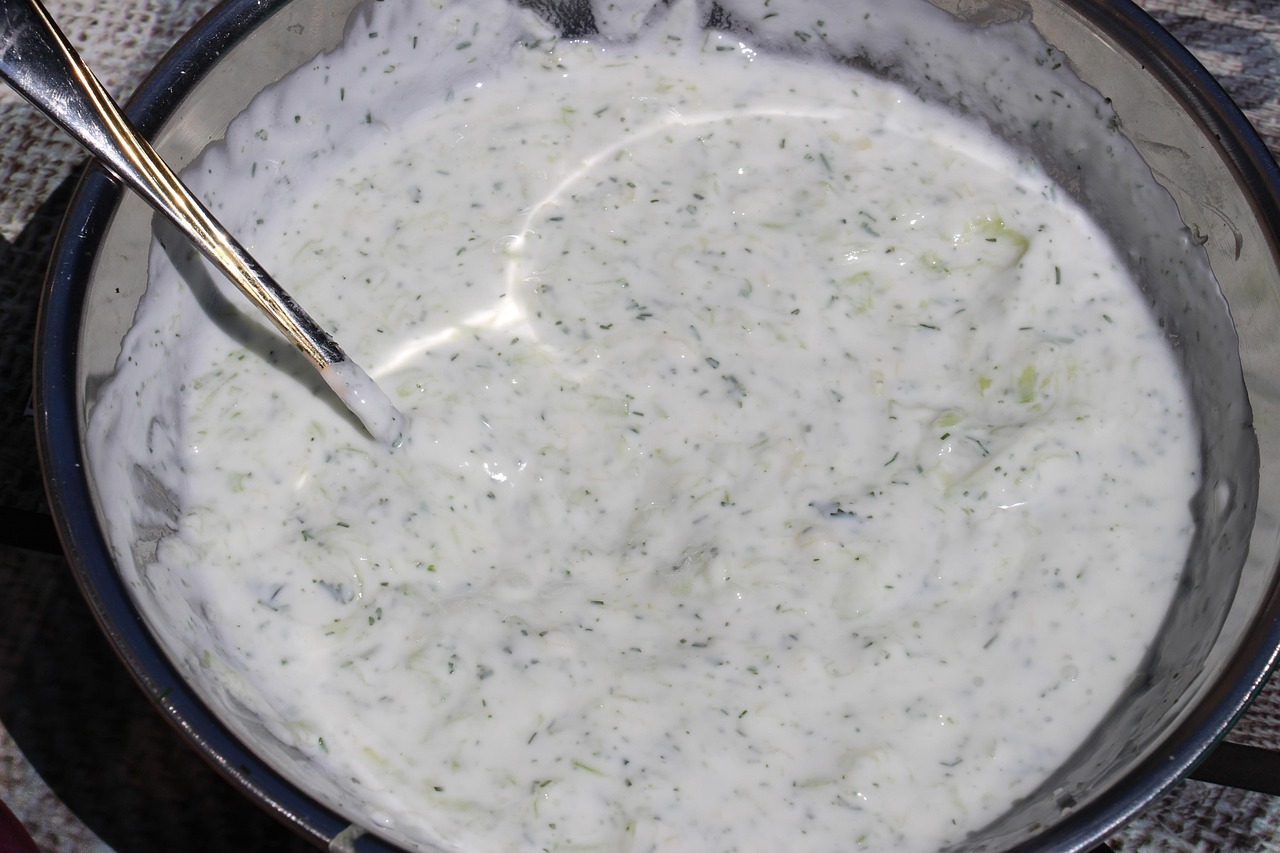
Photograph by Jill_J_Jenkins on Pixabay
Ingredients
- 2 cups (500 g) whole-milk Greek yogurt
- 1 English cucumber (about 12 oz)
- 1/2 tsp kosher salt, plus more to taste
- 2 cloves garlic, finely grated
- 1 tbsp lemon juice or red wine vinegar
- 2 tbsp extra-virgin olive oil, plus more to serve
- 2 tbsp chopped fresh dill, or 1 tbsp chopped mint
Method
-
1
Salt the cucumber
Grate the cucumber, skin and all, on the large holes of a box grater. Toss it with the salt in a strainer and leave 15 minutes.
-
2
Squeeze it dry
Gather the cucumber in a clean kitchen towel and wring it hard over the sink. You should lose close to half a cup of liquid.
-
3
Mellow the garlic
Stir the grated garlic into the lemon juice (or vinegar) and leave it for 5 minutes while you get the yogurt ready. The acid takes the harshest edge off.
-
4
Mix
Stir the cucumber, the garlic mixture, the olive oil and the dill into the yogurt. Taste and add salt.
-
5
Chill before serving
Refrigerate at least 30 minutes so the garlic spreads through. Serve with a thread of olive oil on top.
Why tzatziki sauce goes watery, and how to stop it
Cucumber is about 95% water, and salt pulls that water out whether you want it to or not. If you stir raw grated cucumber straight into yogurt, the salt in the sauce draws the water out overnight and you open the container to a thin pool on top. Salting the cucumber first and wringing it out in a towel gets that water out before it can reach the yogurt. It is the one step that separates tzatziki that holds its shape on a gyro from tzatziki that runs off the plate.
Grate the cucumber rather than dicing it. Grated cucumber spreads through the sauce and gives up its water easily. Diced cucumber keeps its water and releases it slowly into the sauce over the next day.
Which yogurt to use
Whole-milk Greek yogurt, and it makes a bigger difference than any other ingredient. The fat carries the garlic and rounds off the tang, and strained yogurt is thick enough to take the oil and lemon without loosening. Nonfat Greek yogurt works but tastes sharper and a little chalky; add another tablespoon of olive oil to make up for it. If all you have is regular plain yogurt, start with about 4 cups and strain it in a strainer lined with cheesecloth or a coffee filter, in the fridge, for 2 to 3 hours, until you have about 2 cups.
Garlic: less than you think, and let it sit
Raw garlic keeps getting stronger for hours after it is mixed in, so tzatziki that tastes balanced at the counter can be fierce the next morning. Two cloves for two cups of yogurt is a moderate amount. Letting the grated garlic sit in the lemon juice first softens its bite. The thirty-minute chill matters for the same reason: it gives the garlic time to spread evenly instead of landing in hot spots.
Dill or mint
Dill is the usual choice in American Greek restaurants. Many cooks in mainland Greece leave herbs out entirely, and mint is the norm in the Turkish and Cypriot versions of the sauce. All of them are right. If you only have dried herbs, use about 1 teaspoon of dried dill or dried mint.
What to eat it with
- Grilled or broiled meat: souvlaki, lamb chops, chicken thighs, or gyros in pita.
- Falafel, instead of or next to tahini sauce.
- Raw vegetables as a dip. It is far lighter than a sour-cream ranch dip.
- Roasted potatoes or salmon, where it works as a cold sauce against something hot.
Keeping it
Four days in a covered container in the fridge. A little liquid may still collect on top; stir it back in rather than pouring it off, since that is flavor. Tzatziki does not freeze well: the yogurt turns grainy and the cucumber goes limp when it thaws.
What it is worth nutritionally
A serving (about 1/3 cup) is about 100 kcal with 6 g of protein. Most creamy dips get nearly all their calories from fat. Strained yogurt adds real protein, so tzatziki gives you 6 g a serving alongside the fat. About half of that fat is the olive oil, so you can cut it back if calories matter to you, and the sauce will still hold together.