Egg nutrition facts: what is in one egg, white vs yolk, and the cholesterol question
One large egg has about 72 calories and 6.3 g of protein, plus choline, selenium and vitamin D. Egg nutrition facts by size, white vs yolk, and what the evidence now says about cholesterol.
November 11, 2026 · 8 min read

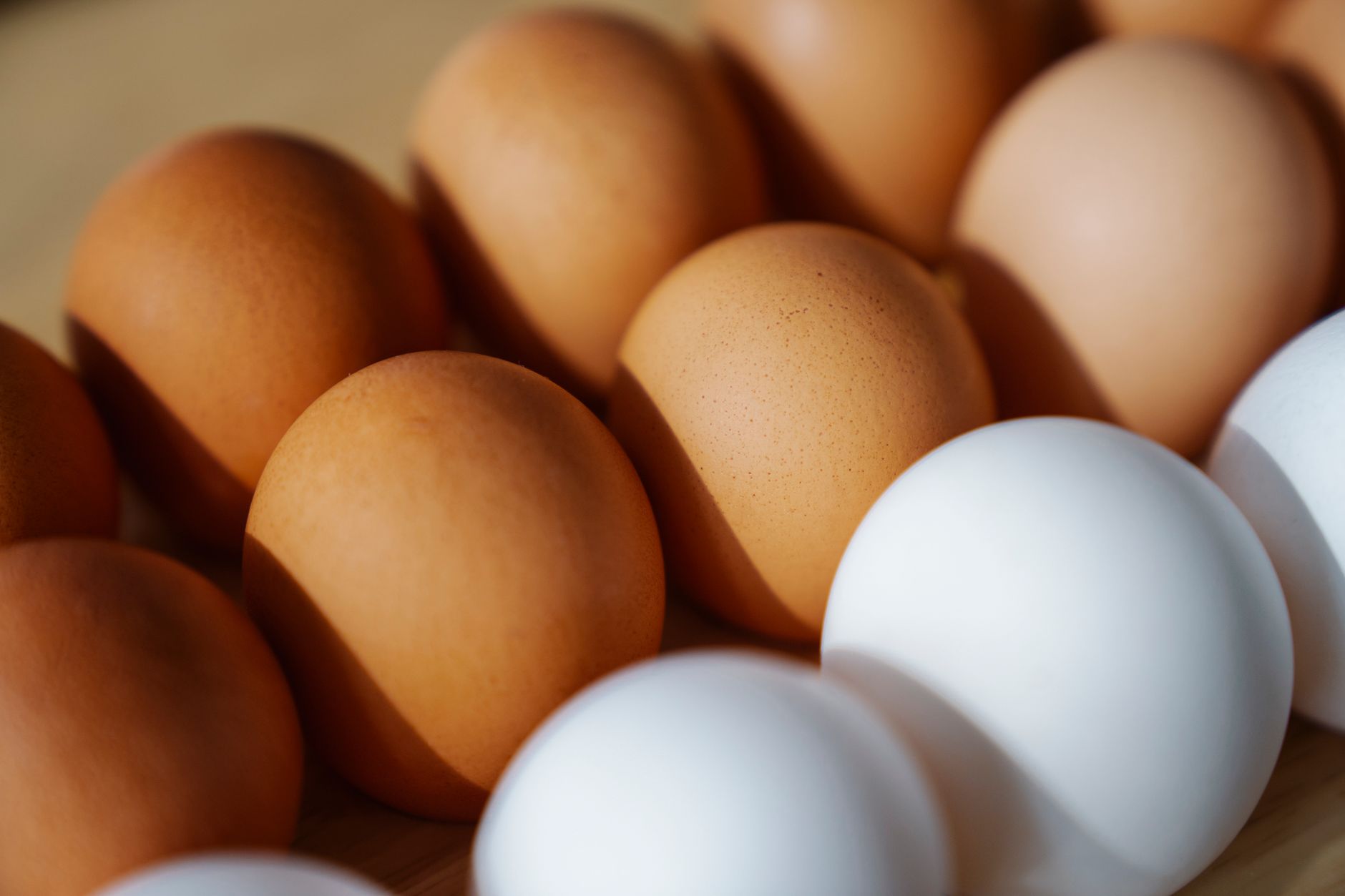
Photograph by Jahra Tasfia Reza on Pexels
One large egg, about 50 grams out of the shell, contains roughly 72 calories and 6.3 grams of protein. For the calories, that is one of the most complete foods in a supermarket: high-quality protein, most of the B vitamins, choline, selenium and a little vitamin D, all for under a hundred calories, in a package that costs well under a dollar.
The reason eggs need a page of their own is the yolk, and specifically its cholesterol, which kept eggs on a warning list for decades. The evidence on that has moved, and it is worth knowing where it actually landed.
Egg nutrition facts: one large egg
A large raw egg (50 g) contains roughly:
- 72 calories.
- 6.3 g of protein, with all the essential amino acids in proportions close to what the body needs.
- 4.8 g of fat, of which about 1.6 g is saturated; the rest is mostly monounsaturated and polyunsaturated.
- Under half a gram of carbohydrate and no fiber.
- About 186 mg of cholesterol, all of it in the yolk.
- About 147 mg of choline, roughly a quarter of the 550 mg Daily Value. Eggs are one of the richest common sources.
- About 15 mcg of selenium, more than a quarter of the Daily Value, plus useful riboflavin, vitamin B12 and vitamin A.
- About 1 mcg of vitamin D, a small amount, though eggs are one of the few foods that have any. It is not enough to matter much on its own.
Egg calories and protein by size
US eggs are graded by weight per dozen, so the sizes are standardized. USDA's figures:
| Size | Weight without shell | Calories | Protein |
|---|---|---|---|
| Small | 38 g | about 54 | 4.8 g |
| Medium | 44 g | about 63 | 5.5 g |
| Large | 50 g | about 72 | 6.3 g |
| Extra large | 56 g | about 80 | 7.0 g |
| Jumbo | 63 g | about 90 | 7.9 g |
Recipes in the US, including all of ours, assume large eggs unless they say otherwise. Brown and white eggs are nutritionally the same; shell color depends on the breed of hen.
Egg white vs yolk
The two parts of an egg are almost different foods.
- The white of a large egg (about 33 g) has about 17 calories and 3.6 g of protein, with almost no fat and no cholesterol.
- The yolk (about 17 g) has about 55 calories and 2.7 g of protein, along with nearly all the fat, all the cholesterol, nearly all the choline, and all of the vitamin D, vitamin A and lutein.
So the white provides a little more than half the protein and under a quarter of the calories. That makes egg whites useful when you want to add protein without calories, which is covered in detail on the page about egg white protein. But throwing away the yolk throws away most of what makes an egg nutritionally interesting, and for most people there is no longer a strong reason to do it.
Eggs and cholesterol: what the evidence says now
For decades, US guidelines capped dietary cholesterol at 300 mg a day, which a two-egg breakfast nearly used up. The 2015 Dietary Guidelines dropped that number, because the evidence linking cholesterol in food to cholesterol in blood turned out to be weaker than assumed. The 2020–2025 edition still advised keeping dietary cholesterol as low as possible within a healthy eating pattern, but without a specific number.
What the research shows, as fairly as it can be summarized:
- Dietary cholesterol raises LDL cholesterol modestly on average, and much less than saturated fat does. The effect varies a lot between people: some barely respond, others respond noticeably.
- In large studies of healthy people, up to about one egg a day has not been linked to higher heart disease risk. A 2020 analysis of three large US cohorts plus a meta-analysis came to that conclusion.
- The findings are not unanimous. A 2019 analysis of six US cohorts did find a small association between egg intake and cardiovascular disease, and some studies find a stronger association in people with type 2 diabetes.
- What comes with the eggs matters. Two eggs with bacon, sausage and buttered white toast is a different meal from two eggs with vegetables and whole-grain bread, and older studies often could not separate them.
The American Heart Association's 2019 advisory said that one egg a day can be part of a healthy diet for healthy people, and that older adults with normal cholesterol can eat up to two. For blood cholesterol, saturated fat across the whole diet remains the bigger lever than the eggs themselves.

How many eggs a day is healthy?
For most healthy adults, one or two eggs a day is consistent with current evidence and guidelines. There is no good data showing that larger amounts are dangerous, but there is not much showing they are safe over decades either, so going well beyond that every day is outside what has been studied.
More caution makes sense if you have high LDL cholesterol, type 2 diabetes or existing heart disease. In those cases, a few whole eggs a week, with egg whites used to stretch them, is a common compromise, and it is worth asking your doctor or dietitian what fits your numbers.
Calories in boiled, fried and scrambled eggs
- Hard-boiled or poached: effectively the same as raw, about 72 to 78 calories for a large egg. Nothing is added.
- Fried: about 90 calories for a large egg fried in a little fat, and more if the pan is generous with oil or butter.
- Scrambled: about 90 calories per large egg with a splash of milk and some butter; restaurant scrambled eggs are often much richer.
- An omelette: depends almost entirely on the filling. A plain three-egg French omelette made with butter is about 340 calories.
Cooking also matters for protein. Cooked egg protein is digested much more completely than raw egg protein; one small study using labeled eggs found about 90% of cooked egg protein was digested and absorbed, against about 50% of raw. Raw eggs also carry a small risk of salmonella, and raw egg white contains avidin, a protein that binds biotin. That only matters with large amounts of raw whites over time, but it is one more reason to cook eggs, or use pasteurized eggs for anything eaten raw. US food-safety guidance is to cook eggs until both the white and the yolk are firm. A runny yolk carries a small salmonella risk, which matters most for people who are pregnant, older or immunocompromised; for them, firm yolks or pasteurized eggs are the safe choice.
Are eggs good for weight loss?
Eggs are filling for their calories, mostly because of the protein. Several studies have found that an egg breakfast leads to eating less later in the day than a bagel breakfast of the same calories, though the effect on long-term weight is smaller than the headlines suggested.
The practical point is that two eggs give about 13 grams of protein for about 145 calories, which makes them an easy way to move breakfast toward a protein target. Our protein calculator gives a daily figure, and the list of high-protein foods shows where eggs sit against the others: lower per serving than meat or Greek yogurt, but good for the calories and the price.

Ways to eat more eggs without thinking about it
The easiest egg habit to keep is one that is already cooked. A tray of egg muffins with vegetables, ham and cheese covers a week of breakfasts and reheats in under a minute. Hard-boiled eggs keep for a week in the fridge, and eight of them become a lighter egg salad made mostly with Greek yogurt instead of mayonnaise.
For dinner, eggs stretch vegetables further than people expect. A zucchini frittata needs no technique at all, and shakshuka, eggs poached in a spiced tomato and pepper sauce, turns a can of tomatoes and six eggs into a meal for three.
The honest summary
A large egg is about 72 calories and 6 grams of protein, with choline, selenium, B vitamins and a little vitamin D. The cholesterol in the yolk matters less than was believed for decades, and for healthy people an egg or two a day fits within current evidence. If your LDL is high or you have diabetes, eggs are not banned, but they are worth discussing with someone who knows your numbers.