Banana calories: how many are in one, by size, and what ripening changes
A medium banana has about 105 calories and 27 g of carbs, but an extra-large one is closer to 135. Banana calories by size, the full nutrition facts, and why ripeness changes the sugar, not the calories.
November 11, 2026 · 7 min read
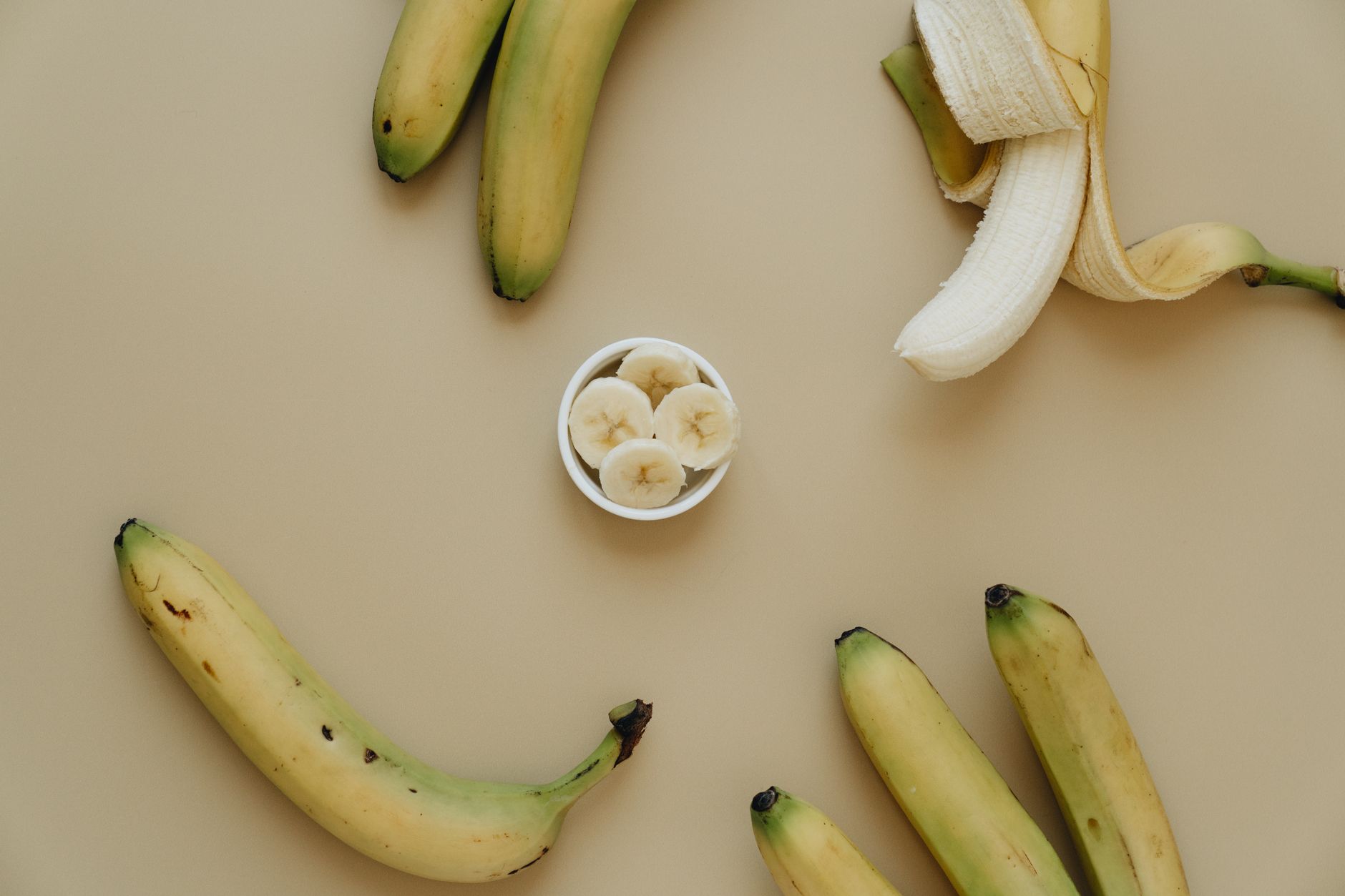
A medium banana, 7 to 8 inches long and about 118 grams without the peel, contains roughly 105 calories. That is the number most labels and apps use, and it is a reasonable one, but bananas vary in size more than people assume, and the difference between a small one and an extra-large one is nearly double.
Per 100 grams a banana is about 89 calories. Almost all of that is carbohydrate: a banana has very little fat and very little protein, so its calorie count is really a carbohydrate count wearing a different label.
How many calories in a banana, by size
USDA measures bananas by length, peeled weight in brackets. These are the figures it gives:
| Size | Length | Peeled weight | Calories | Carbs |
|---|---|---|---|---|
| Extra small | under 6 in | 81 g | about 72 | 18 g |
| Small | 6 to 7 in | 101 g | about 90 | 23 g |
| Medium | 7 to 8 in | 118 g | about 105 | 27 g |
| Large | 8 to 9 in | 136 g | about 121 | 31 g |
| Extra large | 9 in or more | 152 g | about 135 | 35 g |
Some other common portions:
- One cup of sliced banana (150 g) is about 134 calories.
- One cup of mashed banana (225 g) is about 200 calories. Our banana bread uses about one and a half cups in a loaf.
- Half a medium banana, the usual amount sliced over oatmeal or cereal, is about 53 calories.
- Banana chips are a different food. They are usually fried in coconut oil and sweetened, and one ounce is about 145 calories, more than a whole fresh banana in a handful.
Bananas in a single bunch can easily span two rows of that table. If you track closely, weighing one peeled banana once tells you which row of the table your usual bunch belongs to.
Banana nutrition facts
One medium banana (118 g) contains roughly:
- 27 g of carbohydrate, of which about 14 g is sugar and 3 g is fiber.
- 1.3 g of protein and well under half a gram of fat.
- About 420 mg of potassium, around 9% of the 4,700 mg Daily Value.
- About 0.4 mg of vitamin B6, roughly a quarter of the Daily Value, which is the nutrient a banana is genuinely strong in.
- About 32 mg of magnesium and around 10 mg of vitamin C.
The 3 grams of fiber is a little over a tenth of the 28-gram Daily Value. Bananas are a respectable source, not an outstanding one; raspberries, pears and most beans do more, as the list of high-fiber foods shows.
Are bananas high in potassium?
They are a good source, and they are the food most people name first, but they are nowhere near the top. A medium baked potato with its skin has more than twice the potassium of a medium banana, and a cup of cooked spinach has about twice as much. Half a medium avocado roughly matches a whole banana. The full ranking is on the page about potassium-rich foods.
The reputation probably comes from convenience: a banana is the easiest potassium-containing food to eat without cooking or a plate. That is a real advantage, but it means that if you are trying to raise your potassium intake, bananas alone will not get you there. You would need about eleven a day to reach the Daily Value from bananas.
The opposite case matters too. People with chronic kidney disease, and people taking ACE inhibitors, ARBs or potassium-sparing diuretics, are sometimes told to limit potassium. For them, bananas are one of the foods a dietitian will usually ask about first, and the advice they get from their own care team takes priority over any general list.
How ripeness changes a banana
A green banana and a spotty brown one have about the same number of calories. What changes is what form the carbohydrate is in.
An unripe banana stores most of its carbohydrate as starch, and a good part of that is resistant starch: starch that escapes digestion in the small intestine and is fermented by bacteria in the colon instead, behaving more like fiber than like sugar. As the banana ripens, enzymes convert that starch into sugar. By the time it is yellow with brown spots, most of the starch is gone and the sugar content has risen accordingly. That is why ripe bananas taste sweeter, why they mash easily, and why overripe ones make the best banana bread.
For blood sugar, this means a slightly green banana raises glucose more slowly than a very ripe one. Bananas on average have a moderate glycemic index, around 50, and less-ripe bananas test lower. The difference is real but not dramatic, and portion size matters more than ripeness.
How many carbs in a banana?
About 27 grams in a medium one, which after subtracting the 3 grams of fiber leaves about 24 grams of net carbs. That is roughly the same carbohydrate as a slice and a half of bread.
So bananas do not fit a strict ketogenic diet, where the daily carbohydrate limit is often 20 to 30 grams; one banana would use the whole allowance. On a moderate low-carb diet, half a banana is easier to fit.
For people with diabetes, bananas are not forbidden. The American Diabetes Association treats fruit as part of a healthy eating pattern. The practical points are portion and pairing: a small banana rather than an extra-large one, eaten with something that contains protein or fat, such as yogurt or peanut butter, rather than alone on an empty stomach.
Is a banana good for weight loss?
A banana is about 105 calories, filling for its size, portable and does not need preparation. As a replacement for a granola bar, a pastry or a bag of chips, it is a good swap. It is not a food that causes weight loss by itself, and nothing about bananas burns fat.
The useful framing is the same as with any food: what is it replacing? A banana instead of a 250-calorie muffin saves about 150 calories. A banana added to a breakfast you were eating anyway is 105 more. Bananas are also easy to eat quickly and in quantity, especially in smoothies, where two or three can disappear into one glass without anyone noticing.
If you are counting, the calorie calculator will give you a daily target, and a medium banana is about 5% of a typical 2,000-calorie day.
Ways to use bananas
- Sliced over oatmeal or yogurt, which adds sweetness so you can use less sugar or syrup. The high-protein overnight oats work well topped this way.
- Mashed into baking, where very ripe bananas replace some of the sugar and fat in quick breads and muffins.
- Frozen, peeled and in chunks, for smoothies or blended into a soft-serve style dessert.
- With peanut butter, which adds protein and fat and makes the snack last longer.
To keep bananas from ripening too fast, store them away from other fruit, since they produce ethylene gas and also respond to it. Once ripe, refrigerating them darkens the peel but keeps the inside firm for several more days.
The honest summary
A medium banana has about 105 calories, 27 grams of carbs and 3 grams of fiber. It is a good source of vitamin B6 and a decent source of potassium, though not the best one. It is neither a weight-loss food nor a food to avoid. It is a convenient fruit whose main nutritional decision is size, and the size difference between bananas in the same bunch can be larger than the difference between a banana and an apple.