Syrniki (farmer cheese pancakes)
Syrniki, the Ukrainian farmer cheese pancakes: thick, golden patties of tvorog bound with one egg and a little flour, fried in butter and served with sour cream and jam. How to make them with American cottage cheese too.
- 290
- kcal
- 22g
- protein
- 13g
- fat
- 21g
- carbs
- Prep
- 20 min
- Cook
- 20 min
- Serves
- 4
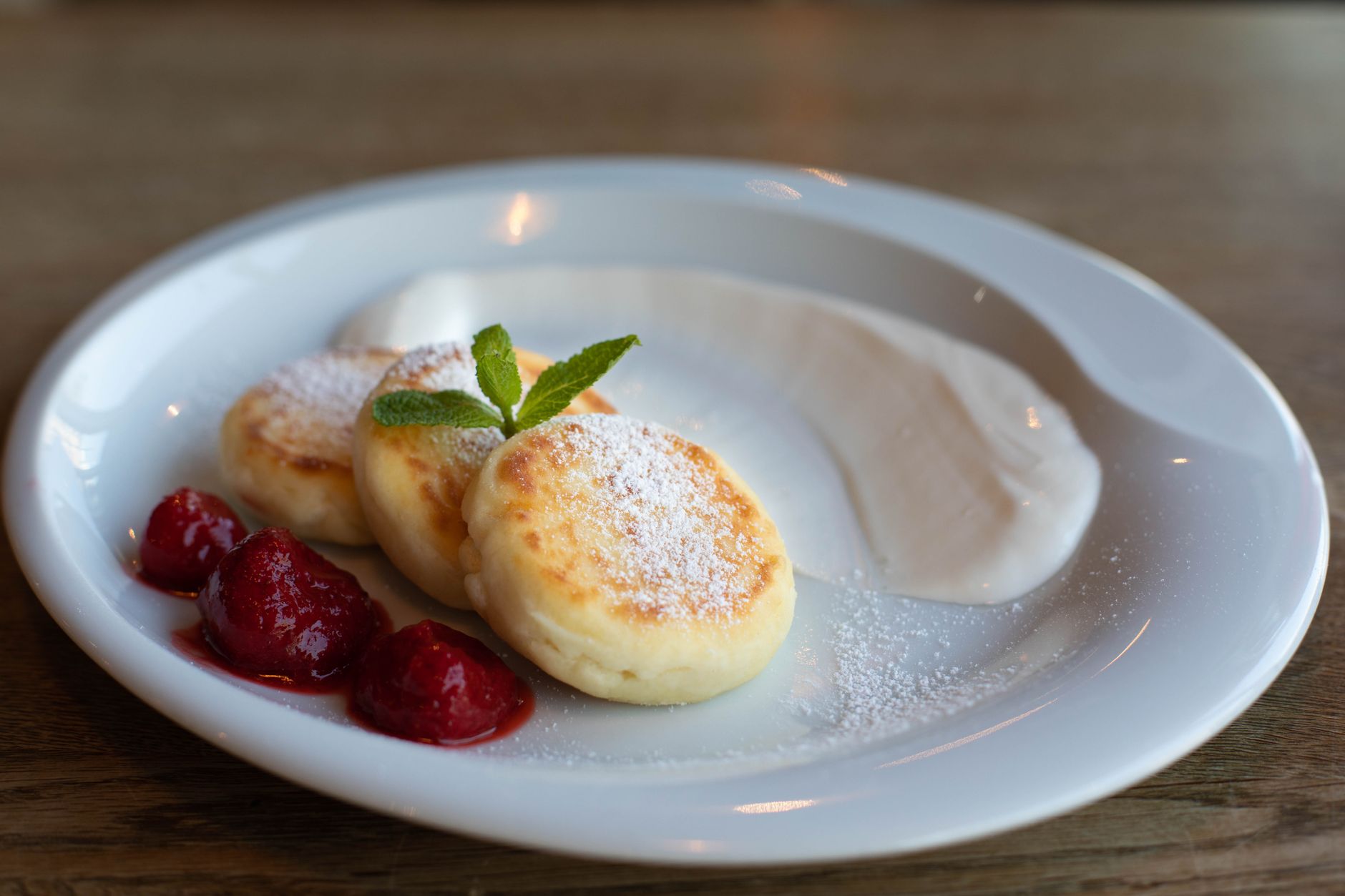
Photograph by Valeria Boltneva on Pexels
Ingredients
- 1 lb (450 g) farmer cheese or tvorog, or 24 oz (680 g) small-curd 4% cottage cheese drained overnight (see notes)
- 1 large egg
- 2 tbsp sugar
- 1/4 tsp kosher salt
- 1/2 tsp vanilla extract
- 1/3 cup (45 g) all-purpose flour, plus about 1/4 cup (30 g) for shaping
- 1 tbsp neutral oil and 1 tbsp butter, for frying
- Sour cream and jam, to serve
Method
-
1
Smooth the cheese
If the cheese feels wet, wrap it in a clean kitchen towel and squeeze out what you can. Push it through a sieve with a spoon, or mash it hard with a fork, until no large curds are left.
-
2
Mix the dough
In a bowl, whisk the egg, sugar, salt and vanilla. Add the cheese and stir until even, then stir in the 1/3 cup of flour. The dough should be soft and a little sticky but hold a shape when you scoop it.
-
3
Rest the dough
Leave it 10 minutes so the flour absorbs moisture. It firms up noticeably and becomes much easier to shape.
-
4
Shape the patties
Spread the shaping flour on a plate. With floured hands, roll heaping 2 tablespoons of dough (about 45 g) into a ball, set it in the flour and press it into a patty about 2 1/2 inches wide and 3/4 inch thick. Turn it to coat, and straighten the sides with the flat of a knife. You should get 12.
-
5
Fry the first side
Heat the oil and butter in a large skillet over medium heat until the butter foams. Fry the syrniki, in batches if needed, 3 to 4 minutes, until deep golden underneath.
-
6
Flip and finish
Turn them, lower the heat to medium-low, cover the pan and cook 3 to 4 minutes more, until golden and the centers are set and hot. Pressed gently in the middle, they should feel springy, not soft.
-
7
Serve warm
Drain briefly on paper towels and serve warm with sour cream and jam.
What syrniki are
Syrniki are small, thick pan-fried patties made from fresh farmer cheese, bound with an egg and a little flour. They are a standard breakfast in Ukraine, where they are called syrnyky (сирники), and are just as common in Russia, Belarus and elsewhere in Eastern Europe. In American recipes they often appear as Russian or Ukrainian cottage cheese pancakes. The name comes from syr, cheese. In Ukrainian, syr still means this soft fresh curd cheese; in Russian the fresh cheese is called tvorog, and syr means aged cheese.
"Pancake" is a loose translation. There is no batter, and nothing spreads in the pan. The dough is soft enough to roll into balls in floured hands. The patties come out golden and slightly crisp outside, and inside tender, moist and faintly tangy, closer to a baked cheesecake than to anything from a griddle.
The cheese is the whole recipe
Syrniki need a fresh, dry, crumbly cheese. Everything else in the bowl is there to hold it together.
- Tvorog or farmer cheese. This is the right one. Eastern European delis sell it as tvorog, and many American supermarkets stock it as farmer cheese in the dairy case, often in a block or a tub next to the ricotta. It is drier and firmer than cottage cheese and crumbles rather than sliding. Any fat level works. Full-fat makes the most tender syrniki; very low-fat ones can turn dry and rubbery.
- Cottage cheese. It works, but only once you have drained it. See the next section.
- Ricotta. It is too wet and too fine. Even drained, ricotta syrniki spread in the pan and need so much flour that they turn doughy.
Some farmer cheese is wetter than others. If yours leaves a damp patch when you press it onto a paper towel, squeeze it in a kitchen towel before you start. Pushing it through a sieve takes 2 minutes and gives the smoothest syrniki, with no white flecks of curd. Mashing it with a fork leaves a slightly rougher texture that many people prefer.
How to make syrniki with cottage cheese
American cottage cheese is curds in a creamy dressing, and that dressing is the problem. Mixed in as it comes, it makes a dough too wet to shape. It needs most of that liquid gone first:
- Line a sieve with a double layer of cheesecloth or a thin, clean kitchen towel and set it over a bowl. Tip in 24 oz (680 g) of small-curd 4% cottage cheese.
- Gather the cloth around the cheese, set a small plate on top, and put a heavy can on the plate.
- Refrigerate overnight, at least 8 hours. A cup or more of liquid ends up in the bowl.
- Weigh what is left. You need about 1 lb (450 g). It should be firm enough to crumble. If it still feels wet, squeeze the cloth hard by hand.
- Push it through a sieve, then use it as farmer cheese.
Small-curd cottage cheese drains better than large-curd. Full-fat drains better than nonfat, which holds its water stubbornly. Drained cottage cheese makes slightly softer, saltier syrniki than tvorog does, so taste the dough and leave out the salt if it already seems salty.
Flour or semolina
Both are traditional, and every family has its preference. Flour makes softer, more delicate syrniki. Semolina makes them a little firmer and more cake-like, with a fine grain, and they hold their shape better in the pan.
- Semolina: use 1/3 cup (55 g) of fine semolina, or farina such as Cream of Wheat, in place of the flour in the dough, and rest the dough 20 minutes instead of 10 so the grains soften. Coat the patties in flour or semolina.
- Half and half: a common compromise, and a good one.
- Gluten-free: rice flour or a cup-for-cup gluten-free blend works in the same amount. Oat flour works too, and makes them slightly denser.
Use as little flour as the dough will take. Syrniki made with too much taste of flour and come out heavy; syrniki made with too little are hard to shape but always taste better. If you have to choose, add more flour to the plate you shape them on rather than to the dough.
Why syrniki fall apart or spread
- The cheese was too wet. This causes nearly every failure. Drain and squeeze it before you add more flour.
- Too much egg. One large egg holds 1 lb of cheese. A second egg makes the dough wetter, so it needs more flour, and the syrniki come out heavier and more likely to puff and then sink.
- The dough did not rest. Fresh from mixing, the dough is sticky. Ten minutes later it handles easily.
- The heat was too high. The outside burns before the middle sets. Brown the first side over medium heat, then cover and finish over medium-low.
- They were too thin or too wide. A thick patty, 3/4 inch, keeps the middle moist and the shape round.
Fry one syrnik first. If it spreads, work another tablespoon of flour into the dough and try again.
What to serve with syrniki
In Ukraine, syrniki almost always come with smetana, a thick, rich sour cream, and something sweet: jam (cherry and apricot are classics), honey, or sweetened condensed milk. American sour cream is thinner and tangier than smetana. Full-fat sour cream or crème fraîche comes closest. Plain Greek yogurt is a lighter swap. Fresh berries work well too.
Common additions to the dough:
- Raisins: about 1/3 cup, soaked in hot water for 10 minutes and patted dry. This is the most traditional addition.
- Lemon zest: from half a lemon. It makes them taste less of dairy and more like cheesecake.
- Less sugar: cut it to 1 tbsp, or leave it out and serve them savory, with sour cream and dill.
Keeping and freezing
Cooked syrniki keep 3 days in the fridge. Reheat them in a dry skillet over low heat, covered, for a few minutes a side. The microwave makes them rubbery.
They freeze best raw. Shape and coat the patties, freeze them on a parchment-lined tray until hard, then move them to a freezer bag. They keep up to 2 months. Fry them from frozen over medium-low heat, covered, 5 to 6 minutes a side, until the centers are hot.
What they are worth nutritionally
A serving of 3 syrniki has about 290 kcal, with 22 g of protein, 13 g of fat and 21 g of carbohydrate. Those figures are for low-fat farmer cheese, about 5 percent fat; full-fat farmer cheese or drained 4 percent cottage cheese adds roughly 40 to 80 kcal and 5 to 9 g of fat a serving. Most of that protein comes from the farmer cheese, which is mostly casein, the slow-digesting milk protein, much like cottage cheese; our cottage cheese nutrition guide compares the fat levels. About 55 kcal a serving is frying fat, and frying in a nonstick pan with half the oil and butter cuts it by about 25 kcal. Toppings are not included: 2 tablespoons of sour cream add about 60 kcal, and a tablespoon of jam about 50. For a flourless breakfast with similar protein, see our blender cottage cheese pancakes with oats. Farmer cheese also goes into the filling of Polish pierogi.