Sweet potato calories: by size and cooking method, and how it compares with a white potato
A USDA medium sweet potato, baked, has about 103 calories, but a typical 7-oz supermarket one is closer to 180. Sweet potato calories by size and cooking method, its vitamin A, and why boiled beats baked for blood sugar.
November 11, 2026 · 7 min read
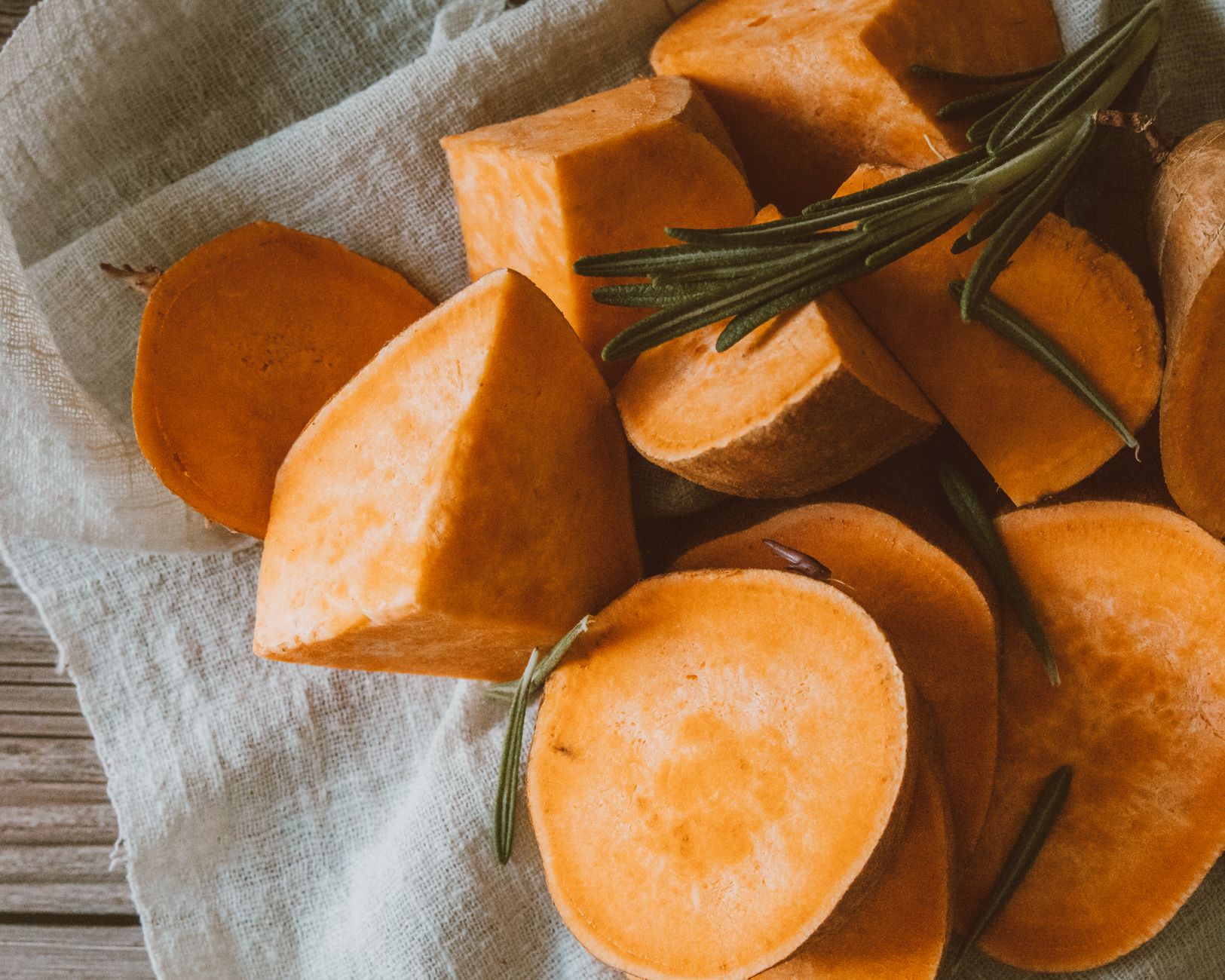
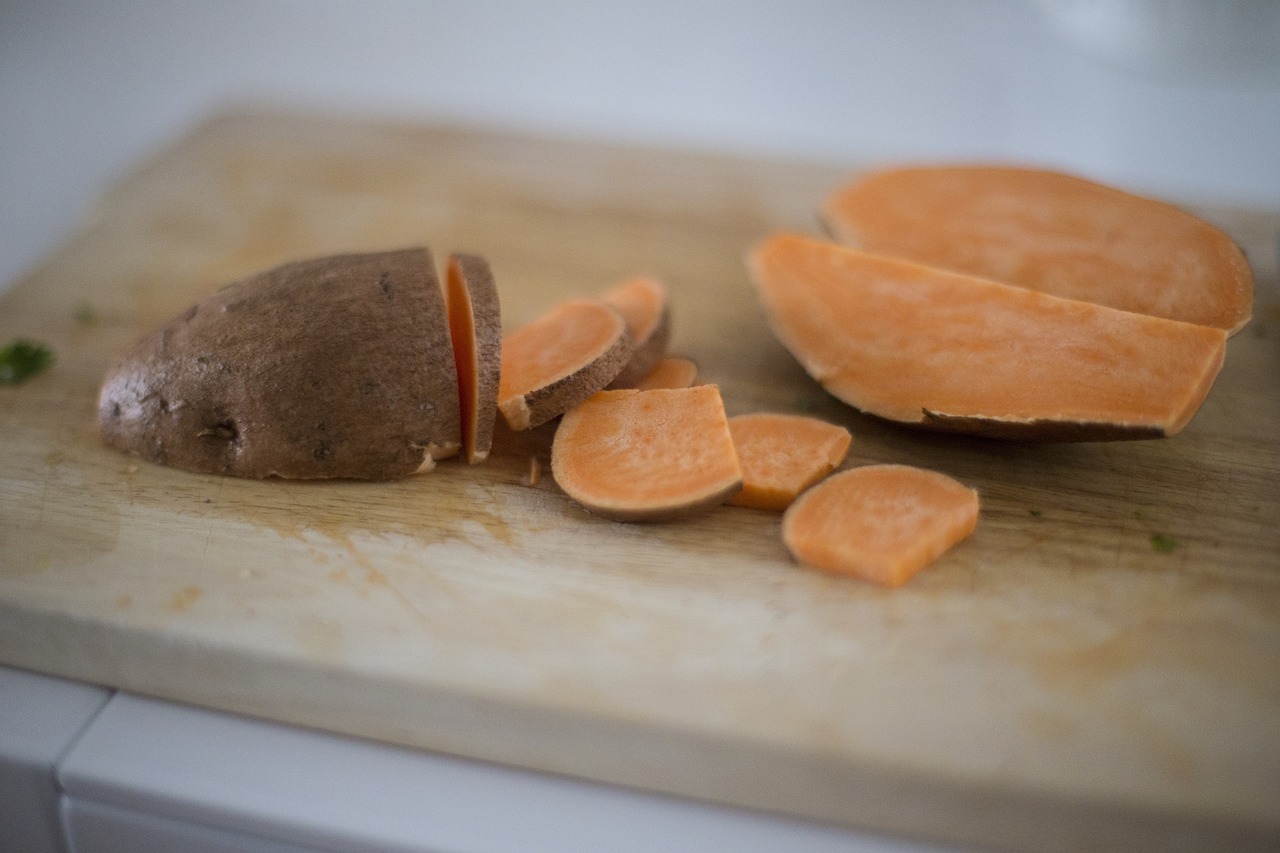
Photograph by Jess Loiterton on Pexels
A medium sweet potato, baked in its skin, contains about 103 calories by USDA's measure. That figure is accurate for the potato USDA is describing, which is 2 inches across and 5 inches long. Many sweet potatoes in US supermarkets are bigger, 7 to 9 ounces raw, and one of those baked is nearer 170 to 220 calories.
Per 100 grams, baked sweet potato is about 90 calories, almost the same as a baked white potato. What is different about sweet potatoes is not the calories but what comes with them: very large amounts of beta-carotene, a bit more fiber, and a blood sugar response that depends heavily on how they are cooked.
Sweet potato calories by size
Figures for sweet potato baked in its skin, eaten with the skin, with nothing added:
- Small (about 60 g cooked): about 54 kcal.
- USDA medium (114 g cooked, 2 by 5 inches): about 103 kcal and 24 g of carbohydrate.
- Large (about 180 g cooked): about 162 kcal.
- A typical supermarket sweet potato of 7 oz (200 g) raw: about 170 to 180 kcal once baked. This is the size our baked sweet potato recipe uses.
- One cup of cubed baked sweet potato (about 200 g): about 180 kcal.
If you want to be exact, weigh it raw: raw sweet potato is about 86 calories per 100 grams, and that figure stays put whatever happens in the oven.
Calories by cooking method
The sweet potato itself barely changes in calories when cooked. What changes the number is water, which baking removes and boiling adds, and fat, which some methods add a lot of.
- Baked in the skin: about 90 kcal per 100 g. Baking concentrates it as water evaporates.
- Boiled, without the skin: about 76 kcal per 100 g, because it absorbs a little water.
- Mashed: one cup of plain boiled, mashed sweet potato is about 250 kcal, because a cup holds a lot of potato once the air is gone. Butter, milk and sugar come on top.
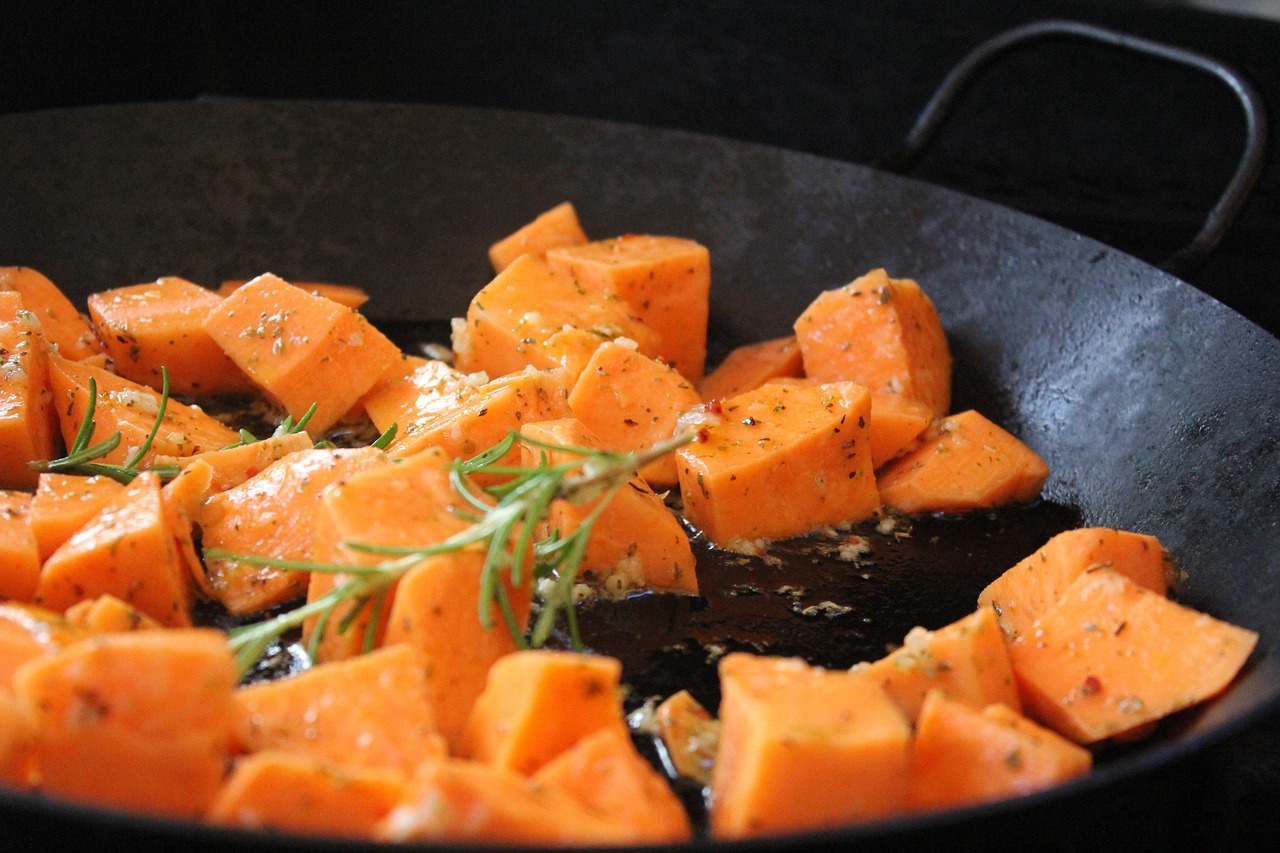
- Roasted cubes or homemade oven fries: the potato plus whatever oil you use. One tablespoon of oil is about 120 kcal, so a pound of sweet potatoes tossed in a tablespoon of oil adds about 30 kcal per serving of four.
- Deep-fried sweet potato fries: they absorb oil like regular French fries, and per serving they are in the same range. Sweet potato fries are not a lighter version of French fries.
- Sweet potato casserole: the classic, with brown sugar, butter and marshmallows, is closer to dessert than to a vegetable. Our lighter sweet potato casserole keeps it at about 305 kcal a serving, under half the classic, with a maple and pecan crumble.
Sweet potato nutrition facts
A USDA medium sweet potato (114 g), baked in its skin, contains roughly:
- 103 calories and 24 g of carbohydrate, of which about 4 g is fiber and 7 g is sugar.
- 2.3 g of protein and almost no fat.
- About 1,100 mcg of vitamin A, as beta-carotene, which is more than the full 900 mcg Daily Value from one modest-sized potato.
- About 540 mg of potassium, roughly 12% of the 4,700 mg Daily Value.
- Useful vitamin C, vitamin B6 and manganese.
The vitamin A figure is the standout. Orange sweet potatoes are among the richest sources of beta-carotene of any common food, along with carrots, pumpkin and butternut squash. Beta-carotene is fat-soluble, so eating sweet potato with a little fat, a pat of butter or a drizzle of olive oil, improves how much you absorb. It is converted to vitamin A only as the body needs it, so it does not cause the vitamin A toxicity that high-dose supplements can. Eating a lot of it every day can turn the skin slightly orange, a harmless condition called carotenemia that fades when intake drops.
The skin adds some fiber of its own, so eating it raises the count a little. The page on high-fiber foods puts sweet potato in context with the rest.
Sweet potato vs white potato
They are less different than their reputations. Per 100 grams baked with the skin:
| Sweet potato | White potato | |
|---|---|---|
| Calories | about 90 | about 93 |
| Carbohydrate | 21 g | 21 g |
| Fiber | 3.3 g | 2.2 g |
| Sugar | 6.5 g | about 1 g |
| Protein | 2 g | 2.5 g |
| Potassium | about 475 mg | about 535 mg |
| Vitamin A | about 960 mcg | almost none |
So calories and total carbohydrate are about the same. The sweet potato wins clearly on vitamin A and a little on fiber; the white potato has more potassium and less sugar. Both are good foods. The difference between a baked potato and fries, of either kind, is much larger than the difference between the two potatoes. White potatoes are one of the strongest entries on the list of potassium-rich foods, and sweet potatoes are not far behind.
One note on names: in US supermarkets, "yams" are almost always orange-fleshed sweet potatoes. True yams are a different plant, with white, starchy flesh and rough bark-like skin, and are mostly sold in international markets.
Sweet potatoes and blood sugar
This is where cooking method matters most. Sweet potato's glycemic index varies widely depending on how it is prepared. Boiled sweet potato usually tests in the medium range, about 63 in the international GI tables, while baked and roasted sweet potato tests high, in some studies close to glucose itself. One study of Jamaican varieties comparing methods measured boiled sweet potato in the mid-40s and baked above 90.
The reason is the starch. Long dry heat in the oven breaks starch down and converts some of it to maltose, which is why baked sweet potatoes taste so sweet and syrupy and why they raise blood sugar quickly. Boiling gelatinizes the starch but converts less of it. Cooling cooked sweet potato also forms some resistant starch, which slightly blunts the response when it is eaten cold or reheated.
For people managing blood sugar, the practical options are boiling or steaming rather than baking, eating a moderate portion, keeping the skin on, and eating sweet potato with protein and some fat rather than alone.
Are sweet potatoes good for weight loss?
They can help in the same way any whole, fibrous starch does: they are filling for their calories, and a baked sweet potato is a better side than most of what it might replace. A 7-ounce sweet potato at about 180 calories, with chicken or beans and a vegetable, is a satisfying meal well within most targets. The calorie calculator will tell you how it fits your day.
What works against weight loss is the toppings. Butter, brown sugar, maple syrup and marshmallows can easily double or triple the calories of the potato itself, and fried sweet potato fries are as calorie-dense as any other fries.
The honest summary
A USDA medium sweet potato, baked, is about 103 calories, and the bigger ones you actually buy are closer to 180. Calorie for calorie it is about equal to a white potato, with far more vitamin A and slightly more fiber. If blood sugar matters to you, boil it rather than bake it, keep the skin, and pay more attention to what goes on top than to the potato.