Chicken breast protein: raw vs cooked, per 4 oz, per breast, and vs thigh
Cooked chicken breast has about 31 g of protein per 100 g; raw, about 22.5 g. The difference is water, and mixing the two up is a common chicken breast protein tracking mistake.
November 11, 2026 · 6 min read
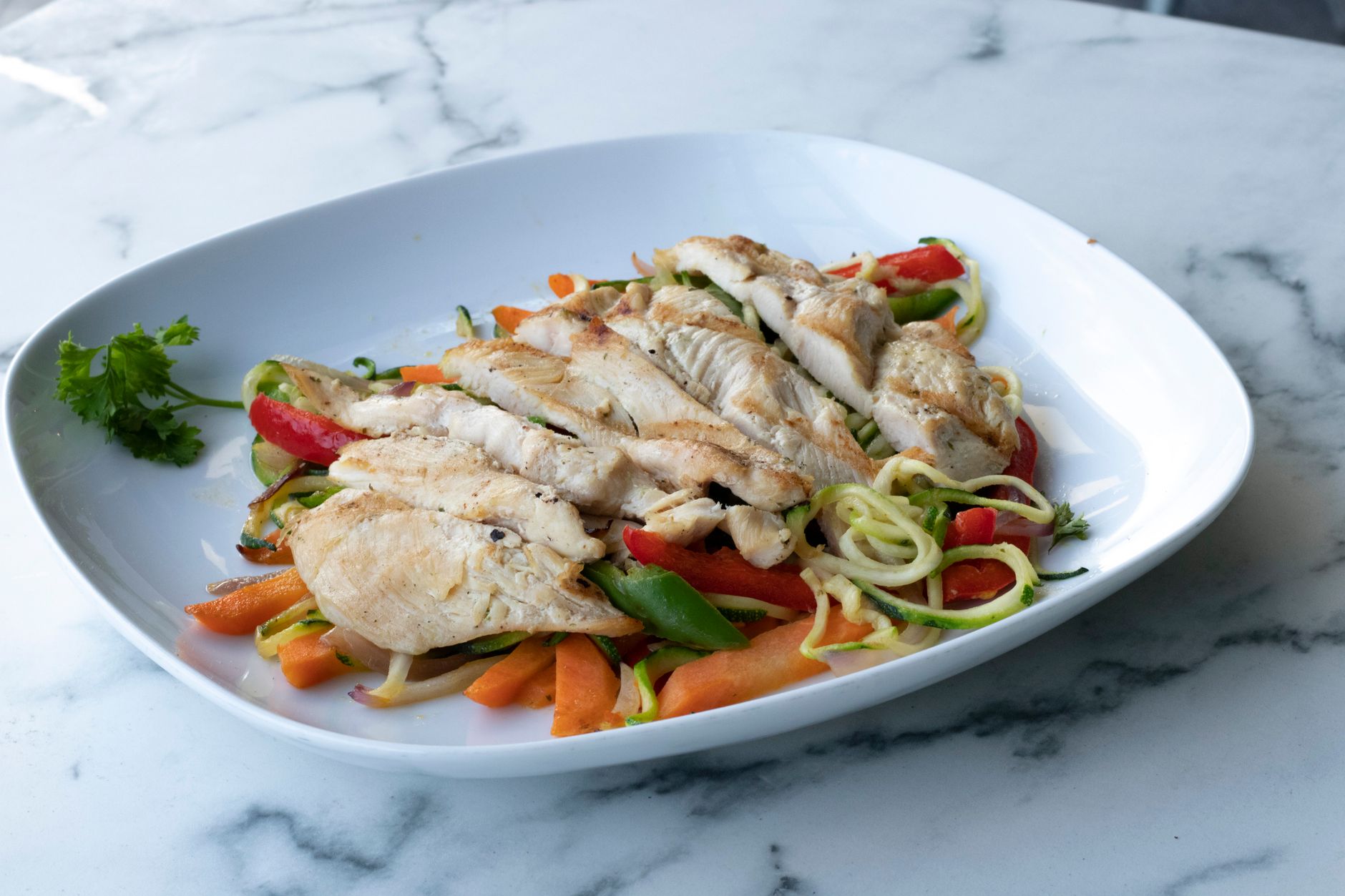
Photograph by Biel Heinrich on Pexels
Cooked, boneless, skinless chicken breast contains about 31 grams of protein per 100 grams. Raw, the same chicken contains about 22.5 grams per 100 grams. Both figures are correct, and the gap between them is the reason so many people's protein tracking is off by a quarter.
Nothing is lost when chicken cooks except water. A breast that weighs 100 grams raw weighs roughly 75 grams cooked and still holds the same 22.5 grams of protein, so per gram of cooked meat the protein looks higher. The mistake is weighing chicken one way and logging it the other.
How much protein in chicken breast, raw vs cooked
USDA figures for boneless, skinless breast meat:
| Portion | Protein | Calories | Fat |
|---|---|---|---|
| 100 g raw | 22.5 g | about 120 | 2.6 g |
| 100 g cooked (roasted) | 31 g | about 165 | 3.6 g |
| 4 oz (113 g) raw | 25 g | about 136 | 3 g |
| 4 oz (113 g) cooked | 35 g | about 187 | 4 g |
| 3 oz (85 g) cooked | 26 g | about 140 | 3 g |
Calories rise by the same proportion as protein, for the same reason: water leaves, everything else stays.
The raw and cooked weight problem
Most nutrition apps offer both "chicken breast, raw" and "chicken breast, cooked", and most labels on packaged chicken give raw figures, because that is what is in the package. The two common errors:
- Weighing cooked chicken and logging it as raw. 150 grams of cooked breast logged as raw gives you 34 grams of protein when you actually ate about 46. You undercount.
- Weighing raw chicken and logging it as cooked. 200 grams of raw breast logged as cooked gives you 62 grams of protein when it really contained 45. You overcount, and you overcount calories too.
Either is fine as long as you are consistent. Weighing raw is more reliable, because the raw weight does not change with how long the chicken was cooked; a breast cooked until dry loses more water than one pulled at 165°F, so cooked weights drift. If you cook a batch for the week, the simplest method is to weigh it raw, weigh it again cooked, and divide.
The rough rule: 4 ounces raw becomes about 3 ounces cooked.
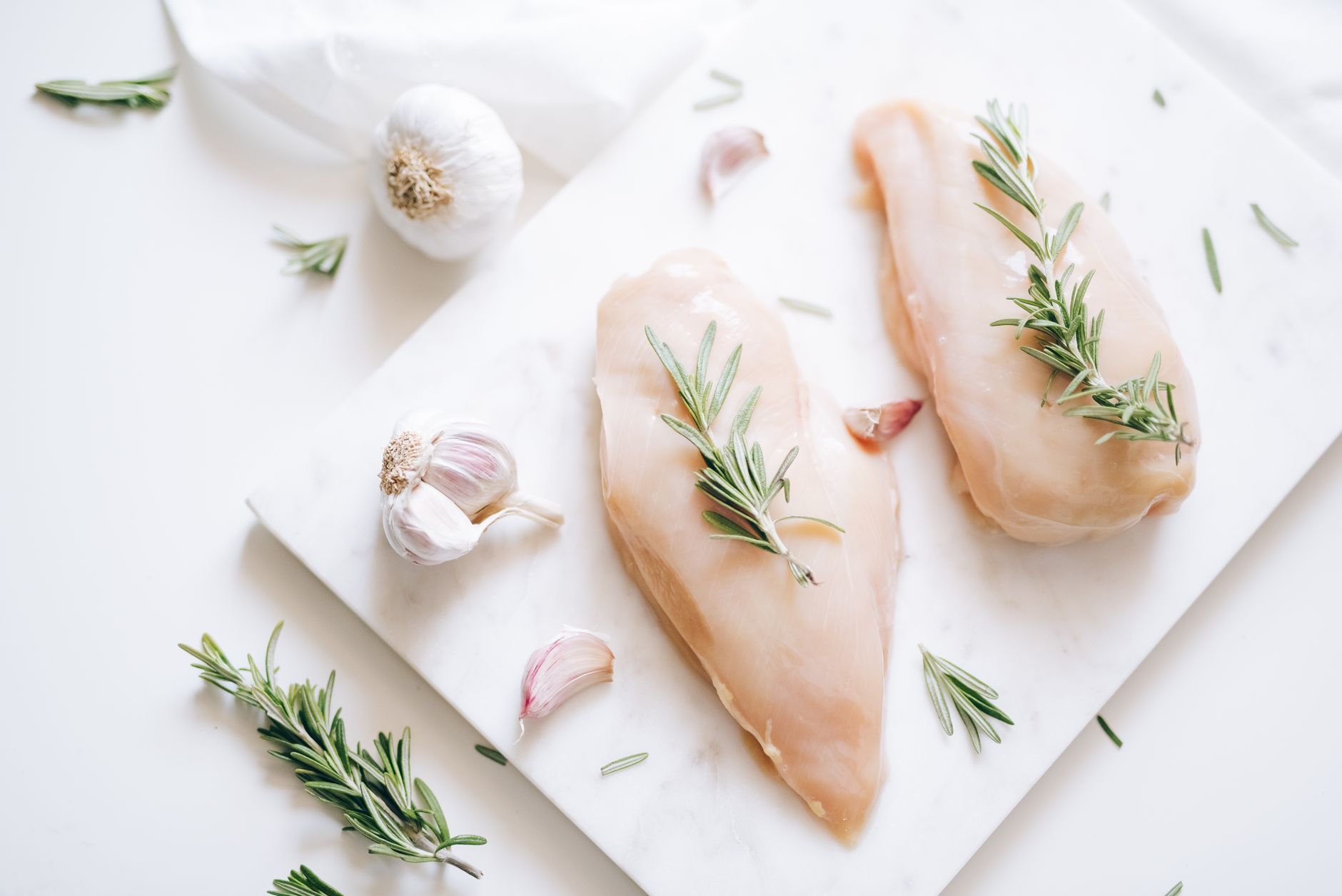
How much protein in one chicken breast?
It depends on the breast, and chicken breasts have grown. USDA's reference "half breast" is about 172 grams cooked, which gives about 53 grams of protein and about 285 calories. Many supermarket breasts are larger than that; a single raw breast of 10 or 12 ounces is common.
A workable estimate: every ounce of raw breast has about 6.4 grams of protein, and every ounce of cooked breast has about 8.8. An 8-ounce raw breast, then, holds roughly 51 grams of protein, enough for most people's protein at two meals rather than one.
Chicken breast calories, skin on or off
Skin is where most of the fat in a chicken breast is. Roasted breast with the skin left on has about 197 calories, 30 grams of protein and 8 grams of fat per 100 grams, compared with 165 calories and under 4 grams of fat without it. The protein barely changes; the fat roughly doubles.
That difference is modest for one meal and adds up for someone eating chicken daily. A good compromise is to cook with the skin on, which keeps the meat moist, and remove it before eating. Most of the fat leaves with it.
Other things change calories more than the skin does: breading and frying, which can double them, and sauces. A breaded, fried chicken cutlet is closer to 250 or 300 calories per 100 grams, depending on how much oil the coating absorbs.
Chicken breast vs chicken thigh
Boneless, skinless thigh meat, roasted, has about 26 grams of protein, 209 calories and 11 grams of fat per 100 grams. So per 100 grams cooked, breast has about 5 grams more protein and about 45 fewer calories.
That makes breast the leaner choice, and the better one when calories are tight. Thigh is more forgiving to cook, stays juicy in soups and braises, and is often cheaper; it is still a high-protein food by any measure. Our chicken noodle soup uses thighs for that reason, while the white chicken chili simmers whole breasts in the broth and shreds them, which gives about 40 grams of protein a bowl.
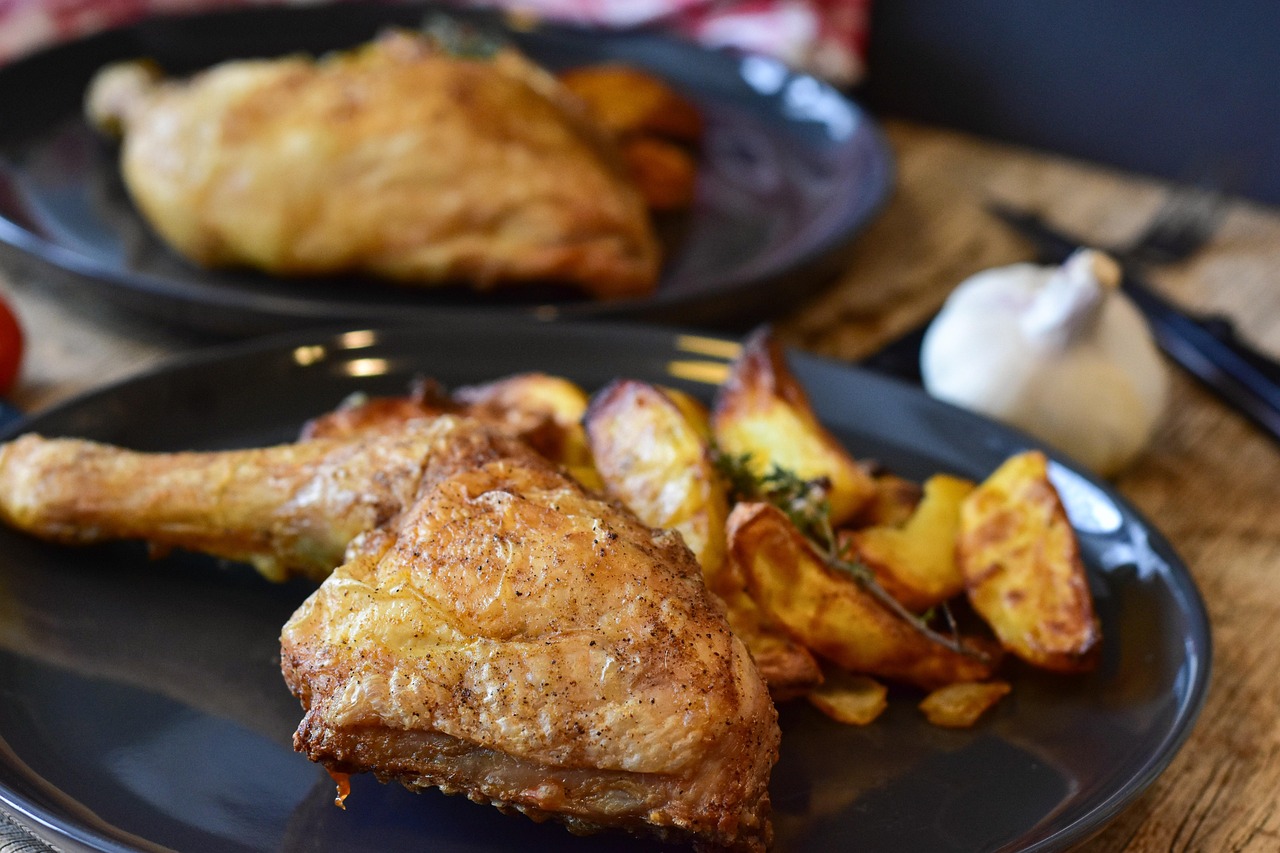
How much chicken do you need to hit a protein target?
The RDA for protein is 0.8 grams per kilogram of body weight, a minimum for sedentary adults. People who train, are trying to lose fat while keeping muscle, or are over about 65 often benefit from more, commonly somewhere between 1.0 and 1.6 grams per kilogram. The protein calculator will work out a number for you.
For a 160-pound person aiming at 1.2 g/kg, the target is about 87 grams a day. Some examples of what that means in chicken, using cooked weights:
- 4 ounces cooked (a little larger than a deck of cards) gives 35 grams, about 40% of that target.
- Two 4-ounce portions, at lunch and dinner, give 70 grams, with eggs, yogurt or beans covering the rest.
- Eating all of it from chicken would take about 10 ounces of cooked breast a day, which is possible but repetitive.
Most people find it easier to spread protein across several foods than to rely on one. The list of high-protein foods shows the others, and Greek yogurt and cottage cheese are the easiest additions at breakfast.
What else is in chicken breast
Chicken breast is not just protein. A 100-gram cooked portion provides a large share of the Daily Value for niacin and vitamin B6, a good amount of selenium and phosphorus, and smaller amounts of B12, zinc and iron. It has no fiber and essentially no carbohydrate.
Two label details matter. "Enhanced" or "plumped" chicken has been injected with a salt solution, which can raise sodium several times over; the label has to say so. Rotisserie chicken is often seasoned the same way. Neither changes the protein, but both matter for anyone watching salt.
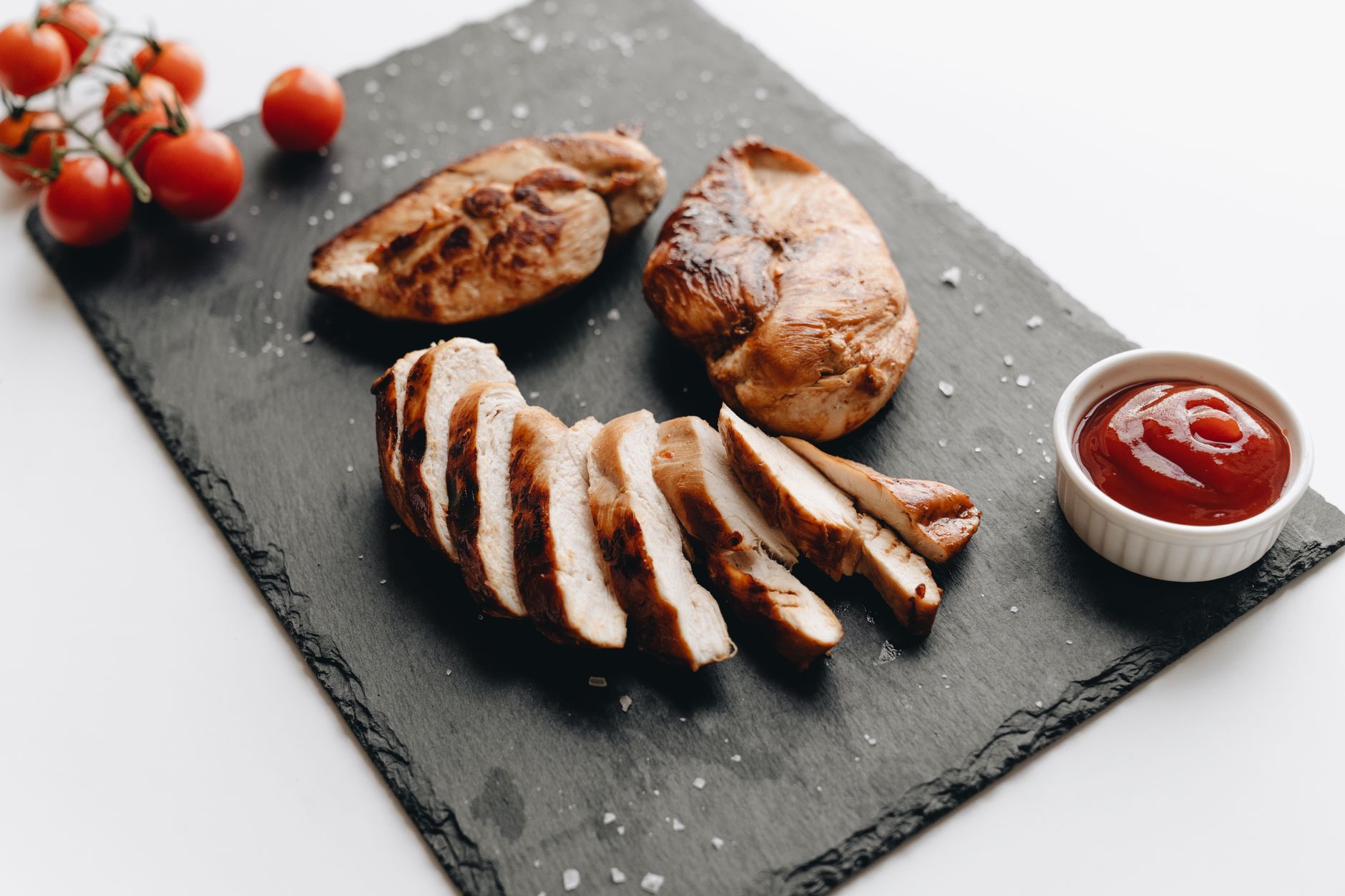
Keeping chicken breast from drying out
The reason people get tired of chicken breast is usually overcooking. Breast meat has little fat to protect it, and the difference between juicy and dry is a few degrees. Cook it to 165°F in the thickest part and take it off the heat right away; pounding it to an even thickness first helps it cook evenly. Brining in salted water for 30 minutes to a few hours also helps it hold moisture.
Shredded leftovers work well in soups and casseroles, which is why an easy chicken pot pie can be built entirely from leftover or rotisserie chicken.
The honest summary
Chicken breast has about 31 grams of protein per 100 grams cooked and about 22.5 grams per 100 grams raw. The protein is the same; only the water changes. Pick one way of weighing, stick to it, and log it as the matching entry. Remove the skin if calories matter, and choose thigh when flavor or price matters more than the last few grams of fat.