Vegan minestrone soup
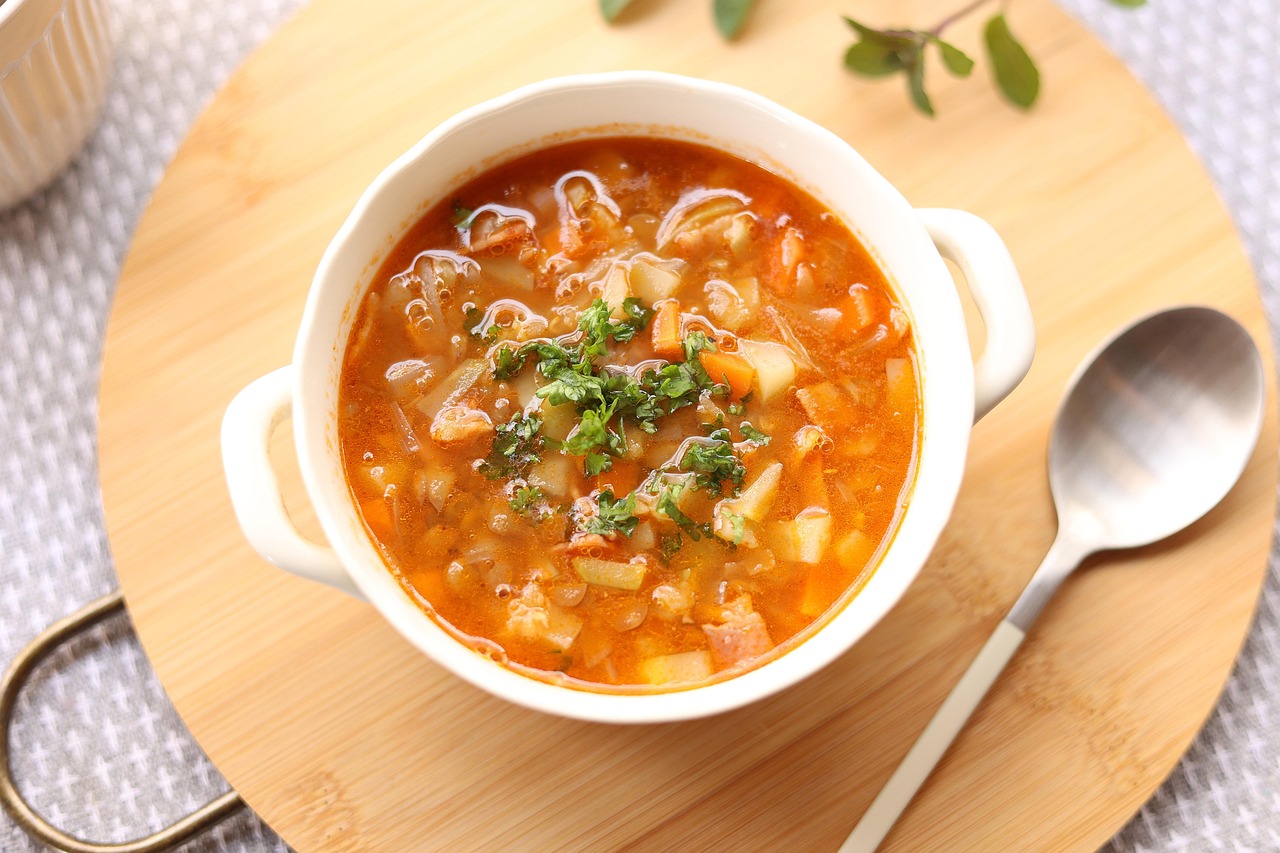
Vegan minestrone soup with two cans of cannellini beans, vegetables and small pasta. Tomato paste and white miso stand in for the Parmesan rind. 10 g of protein a bowl.
- 245
- kcal
- 10g
- protein
- 5g
- fat
- 40g
- carbs
- Prep
- 20 min
- Cook
- 50 min
- Serves
- 6
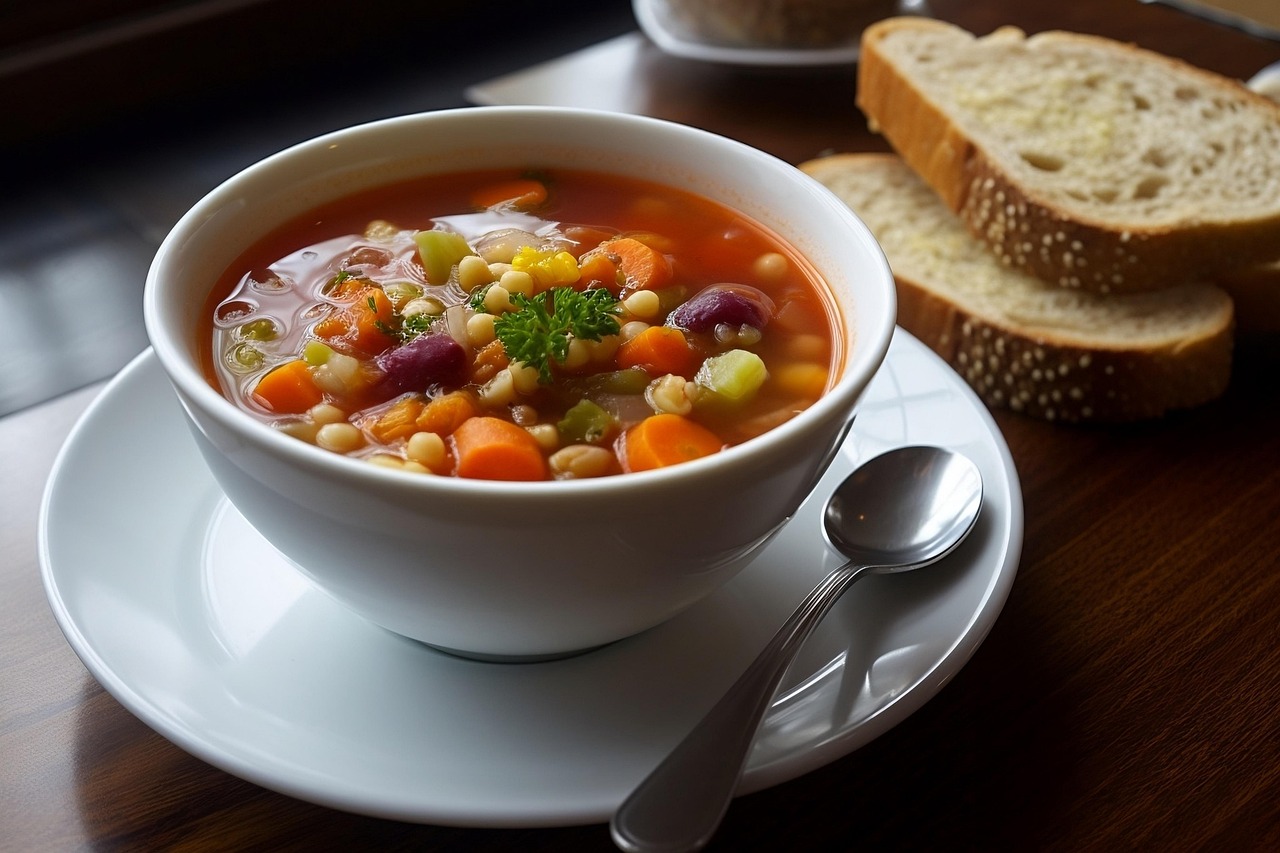
Photograph by CrafterChef on Pixabay
Ingredients
- 2 tbsp olive oil, plus more to serve
- 1 onion, diced
- 2 carrots, diced
- 2 ribs celery, diced
- 3 cloves garlic, sliced
- 1 tbsp tomato paste
- 1 can (14.5 oz) diced tomatoes
- 6 cups low-sodium vegetable broth
- 2 cans (15 oz each) cannellini beans, drained and rinsed
- 1 zucchini, diced
- 2 cups chopped kale or savoy cabbage
- 3/4 cup (about 125 g) ditalini or other small dried pasta, egg-free
- 1 tbsp white miso
- Salt and black pepper
- Fresh basil, to serve
Method
-
1
Cook the soffritto
Cook the onion, carrot and celery in the oil over medium-low heat for 10 minutes, until soft and just starting to color. Add the garlic for the last minute.
-
2
Brown the tomato paste
Stir in the tomato paste and cook 1 to 2 minutes, until it darkens to brick red and starts to stick to the pot.
-
3
Cook down the tomatoes
Raise the heat to medium, add the diced tomatoes and cook 8 to 10 minutes, scraping the bottom of the pot, until most of the liquid has cooked off.
-
4
Simmer
Add the broth and one can of beans, bring to a boil, and simmer gently for 15 minutes.
-
5
Add the vegetables and pasta
Add the second can of beans, the zucchini, greens and pasta. Simmer 8 to 10 minutes, stirring now and then, until the pasta is tender. Add a splash of water if the soup gets too thick.
-
6
Finish with miso
Take the pot off the heat. Whisk the miso into a ladle of the hot broth until smooth, then stir it back into the soup. Season with salt and pepper and serve with basil and a little olive oil.
Is minestrone vegan?
Not usually as cooked at home. Most minestrone gets two animal ingredients that are easy to miss: a Parmesan rind simmered in the broth, and grated Parmesan on top. Many recipes also use chicken broth, and some start with pancetta. Everything else in the pot, the vegetables, beans, tomatoes and dried pasta, is vegan already. This recipe swaps out those few ingredients and adds a second can of beans, so it is fully vegan and still a filling bowl. Our classic minestrone is the version with the rind.
Parmesan is also a problem for vegetarians, not just vegans: traditional Parmigiano-Reggiano is made with animal rennet. So this soup is the vegetarian minestrone too.
What replaces the Parmesan rind
The rind is there for savory depth, the taste of glutamates, which a pot of vegetables and water otherwise lacks. Two ingredients do that job here:
- Tomato paste, browned. Cooking a tablespoon of paste in the oil until it darkens concentrates its glutamates and gives the broth a deeper, rounder base.
- White miso, at the end. Miso is fermented soybean paste and one of the richest plant sources of glutamate. Stirred in off the heat, it makes the broth taste seasoned and full without tasting of miso. Boiling it hard dulls its flavor, which is why it goes in last. Check the label: some miso is made with barley, and some is sold premixed with dashi, a fish stock, so choose one without dashi, and one labeled gluten-free if that matters.
If you want more, simmer 2 or 3 dried porcini or shiitake mushrooms, or a 3-inch piece of kombu, in the broth and lift them out before serving. A spoonful of nutritional yeast in each bowl gives a cheesy note in place of grated Parmesan.
Is the pasta vegan?
Most dried pasta sold in the US is made from durum wheat semolina and water, with no egg, but check the label. Fresh pasta and egg noodles do contain egg. For a gluten-free soup, use rice, a gluten-free pasta, or skip the pasta and add a diced potato with the broth.
Why two cans of beans
Without Parmesan on top, a bowl of minestrone loses a few grams of protein. The second can of cannellini beans puts it back, and then some, and makes the soup thicker. One can goes in early so some beans break down and thicken the broth; the other goes in at the end so they stay whole. Red kidney or borlotti beans work just as well, and chickpeas are good too. Beans are also the main reason this soup fits a vegan diet as a full meal and not a starter.
Toppings without cheese
- Dairy-free pesto. Blend basil, olive oil, garlic, pine nuts or walnuts and a pinch of salt. Leave out the cheese, or use nutritional yeast in its place.
- Olive oil and black pepper. A thread of good olive oil is the most traditional finish of all. Each teaspoon adds about 40 kcal.
- Toasted bread. Rub a slice with garlic and lay it in the bowl, or serve it on the side.
Keeping it
Up to four days in the fridge, and it tastes better on the second day. The pasta keeps absorbing broth, so loosen leftovers with water or broth as you reheat. It freezes well for up to three months; for the best texture, freeze it without the pasta and add freshly cooked pasta when you reheat. Our vegetable soup is another vegan option that freezes well.
What it is worth nutritionally
A bowl of about 1 3/4 cups has about 245 kcal, with 10 g of protein, 5 g of fat and 40 g of carbohydrate, including about 7 g of fiber. Most of the protein and fiber come from the beans. That is slightly more protein than the classic recipe with its single can of beans and Parmesan, with less fat. If you top it with nutritional yeast, choose a fortified one: unfortified brands are not a reliable source of vitamin B12, which vegans need from fortified foods or a supplement. Our guide to vitamin B12 foods explains why.