Red wine braised beef
Braised beef chuck in red wine, cooked low in the oven for three hours until it falls apart. Browning the beef properly is where the flavor comes from.
- 480
- kcal
- 43g
- protein
- 28g
- fat
- 8g
- carbs
- Prep
- 20 min
- Cook
- 180 min
- Serves
- 6
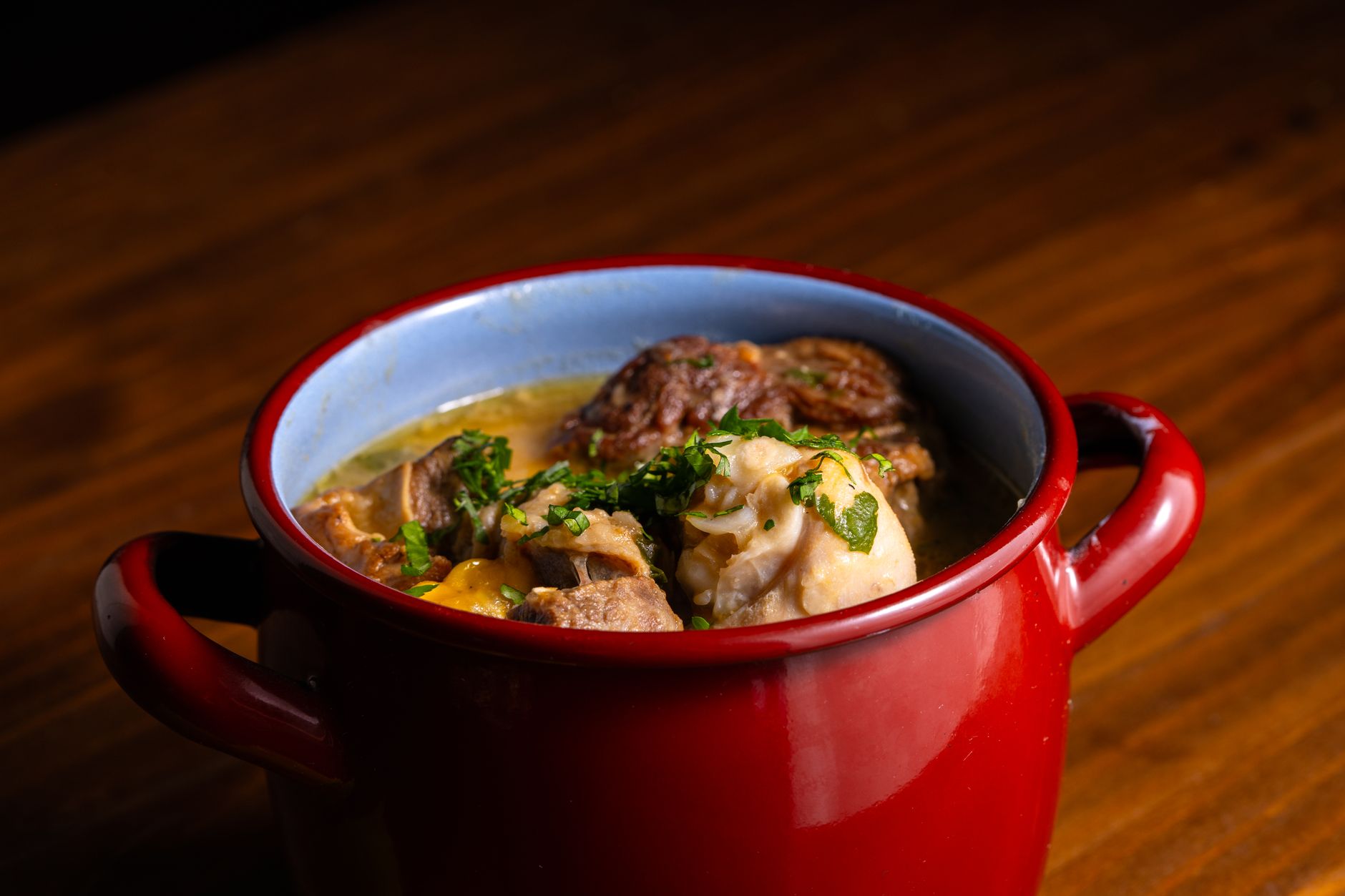
Photograph by Nano Erdozain on Pexels
Ingredients
- 3 lb beef chuck, cut into large pieces
- 2 tbsp neutral oil
- Salt and black pepper
- 2 onions, sliced
- 2 carrots, chunked
- 3 cloves garlic
- 2 tbsp tomato paste
- 2 cups beef stock
- 1 cup red wine
- 2 bay leaves, a sprig of thyme
Method
-
1
Heat the oven
Heat the oven to 300°F.
-
2
Brown the beef
Dry the beef thoroughly, season it with salt and pepper, and brown it hard in batches in the oil in a large ovenproof Dutch oven. Crowding the pan steams it and costs you the flavor.
-
3
Cook the vegetables
Soften the onions and carrots in the same pan, add the garlic and tomato paste, cook two minutes.
-
4
Deglaze with wine
Deglaze with the wine and reduce by half, scraping the base.
-
5
Add the stock and herbs
Return the beef, add stock to come halfway up, and the herbs.
-
6
Braise in the oven
Cover and cook in the oven for 2 1/2 to 3 hours, until a fork twists in the meat without effort.
-
7
Rest and finish the sauce
Rest 20 minutes. Skim the fat, reduce the sauce if it needs it.
The browning is the dish
If you take one thing from this recipe it is that browning the meat properly is not a preliminary step you can rush — it is where most of the flavor is created. The Maillard reaction produces hundreds of aromatic compounds that simply do not exist in unbrowned meat, and no amount of subsequent simmering generates them.
Two rules make it work. Dry the beef thoroughly with paper towel, because water on the surface has to boil off before the surface can get past 212°F and start browning. And work in batches with space between the pieces: crowding the pan drops the temperature and traps steam, and you end up with gray meat and a sad pan.
Why chuck, and why not tenderloin
Chuck is full of collagen, which is exactly what you want. Over three hours at a low temperature that collagen converts to gelatin, which is what gives a braise its body and what makes the meat feel succulent rather than merely soft. A lean, tender cut has little collagen to convert; braised, it just dries out and shreds.
This is why an expensive cut makes a worse braise than a cheap one, which is one of the more satisfying facts in cooking.
Temperature and time
300°F in the oven rather than a simmer on the stovetop. Oven heat surrounds the pot evenly and holds a gentle temperature without attention; a stovetop heats from below and tends to boil, and a boiling braise tightens muscle fibers and squeezes moisture out. You are looking for the occasional lazy bubble, nothing more.
The fork test beats the clock. When a fork twists in the meat with no resistance it is ready, and that might be two and a half hours or three and a half depending on the animal.
The day-after rule
This is better the next day, and meaningfully so. Cooling lets the meat reabsorb liquid, the fat solidifies on top and can be lifted off cleanly, and the flavors settle. If you have the option, cook it a day ahead deliberately rather than as damage control.
What it is worth nutritionally
About 43 g of protein a serving, and around 28 g of fat — less if you chill the braise and lift the fat off the top. Beef is one of the best sources of heme iron, absorbed at several times the rate of the iron in plants, and of zinc and B12. See iron-rich foods for why that absorption difference matters.