Easy beef stew
Easy beef stew with chuck, potatoes and carrots: browned, then cooked low in a Dutch oven until a fork slides in. 35 g of protein a bowl, plus slow cooker and Instant Pot times.
- 490
- kcal
- 35g
- protein
- 21g
- fat
- 35g
- carbs
- Prep
- 25 min
- Cook
- 3 h
- Serves
- 6
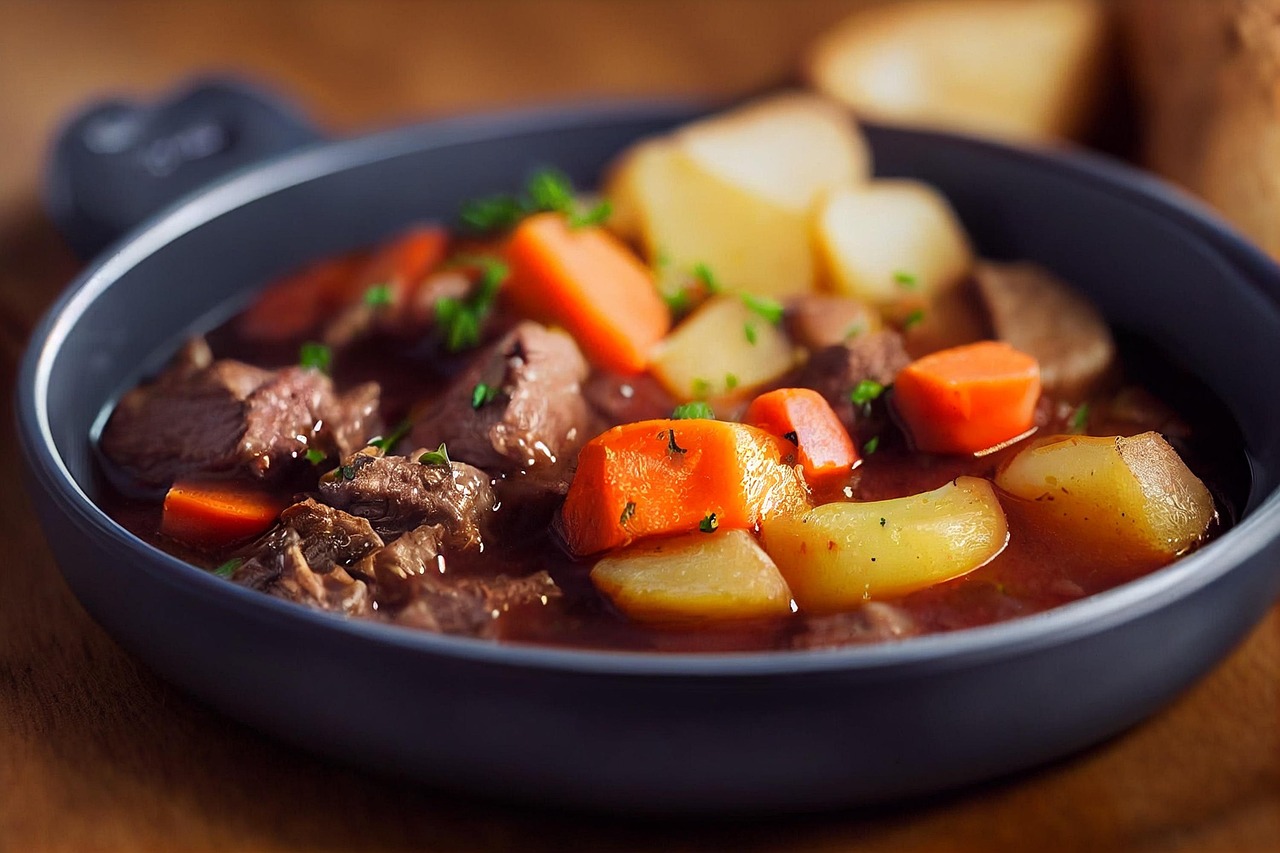
Photograph by Hansuan_Fabregas on Pixabay
Ingredients
- 2 lb (900 g) boneless beef chuck roast, trimmed and cut in 1 1/2-inch cubes
- 2 tsp kosher salt, divided
- 1 tsp black pepper
- 2 tbsp all-purpose flour
- 2 tbsp neutral oil, divided
- 1 large onion, chopped
- 3 cloves garlic, minced
- 2 tbsp tomato paste
- 1 cup (240 ml) dry red wine, or more beef broth
- 3 cups low-sodium beef broth
- 1 tbsp Worcestershire sauce
- 1 tsp dried thyme
- 2 bay leaves
- 1 1/2 lb (680 g) Yukon Gold potatoes, cut in 1 1/2-inch chunks
- 4 carrots, cut in 1-inch pieces
- 2 ribs celery, cut in 1-inch pieces
- 1 cup frozen peas
- 2 tbsp chopped fresh parsley
Method
-
1
Season and flour the beef
Heat the oven to 325°F. Pat the beef dry, season it with 1 1/2 tsp of the salt and the pepper, and toss it with the flour.
-
2
Brown it in batches
Heat 1 tbsp of the oil in a Dutch oven over medium-high heat. Brown the beef in 2 or 3 batches, without crowding, 2 to 3 minutes a side, until it is deep brown. Move each batch to a plate and add the rest of the oil when the pot looks dry.
-
3
Build the base
Lower the heat to medium, add the onion and cook 5 minutes, scraping up the browned bits. Add the garlic and tomato paste and stir 1 to 2 minutes, until the paste darkens. Pour in the wine and simmer 3 to 4 minutes, scraping the bottom, until it has reduced by about half.
-
4
Braise the beef
Add the broth, Worcestershire, thyme and bay leaves, and return the beef with its juices. Bring to a simmer, cover, and cook in the oven for 1 1/2 hours.
-
5
Add the vegetables
Stir in the potatoes, carrots, celery and the rest of the salt. Cover and cook 1 hour more, until the beef and potatoes are both tender when pierced with a fork.
-
6
Finish
Take out the bay leaves. Stir in the peas and leave the pot on the stove, off the heat, for 5 minutes to warm them. Taste for salt and scatter with parsley.
The best beef for beef stew
Chuck. It comes from the shoulder, which works hard, so it is full of connective tissue. After two or three hours of slow, wet heat that collagen melts into gelatin: the meat turns tender and the liquid thickens. Lean cuts such as sirloin or round have little collagen, so the same treatment leaves them dry and tough. They are better seared quickly.
Buy a whole chuck roast and cut it yourself, rather than a tray marked "stew meat". Those trays are often offcuts of several cuts, lean and fatty together, and the pieces finish at different times: some fall apart while others are still chewy. Beef stew from a chuck roast cooks evenly. Trim off the thick outside fat and any hard silverskin, and cut it into 1 1/2-inch cubes. Smaller pieces dry out before they turn tender.
Why brown, flour and reduce
- Brown in batches. Crowded meat steams in its own juice and turns gray instead of brown. The brown crust is where most of the stew's flavor comes from, and it is worth the 15 minutes.
- Toss in flour first. Two tablespoons on the beef help it brown and then thicken the liquid as it cooks, so there is no gravy to make at the end. For a gluten-free stew, skip the flour and stir 1 tbsp cornstarch mixed with 2 tbsp cold water into the stew for the last 5 minutes, and check the Worcestershire and broth labels.
- Cook the tomato paste. A minute or two in the pot takes away its raw, tinny taste and deepens the color of the stew.
Dutch oven or stovetop
The oven heats the pot evenly from all sides, so the stew does not catch on the bottom and needs no stirring. That is why the recipe uses a Dutch oven at 325°F. On the stovetop it works just as well: keep the lid on, the heat at the lowest setting that keeps a few lazy bubbles breaking the surface, and stir every 30 minutes, scraping the bottom. A hard boil tends to make the meat dry and stringy. The times are the same either way.
Beef stew in the slow cooker
Brown the beef and make the base on the stove first, because a slow cooker never gets hot enough to brown anything. Put the potatoes, carrots and celery in the bottom of a 6-quart slow cooker, where they sit in the most heat, and the beef and liquid on top. Use 2 cups of broth instead of 3, since a slow cooker loses almost no liquid to evaporation. Cook on low for 8 hours or on high for 4 to 5. Stir in the peas for the last 10 minutes.
Low is better for the beef. High gets the meat to temperature faster and it can turn stringy, while low gives the collagen more time to melt.
Instant Pot beef stew
Brown the beef on Sauté in batches, then make the base in the pot as written, scraping the bottom well: browned bits left stuck there can trigger the burn warning. Add the beef, 2 cups of broth, the Worcestershire, thyme and bay leaves, and cook at high pressure for 25 minutes. Release the pressure quickly, add the potatoes, carrots and celery, and cook 4 to 5 minutes more at high pressure, then let the pressure release naturally for 5 minutes. Stir in the peas on Keep Warm for 5 minutes. Cooking the vegetables for the full time with the beef turns them to mush.
Guinness beef stew and Irish stew
Replace the red wine with one 14.9-oz can of Guinness Draught, or another dry stout, and use 2 cups of broth instead of 3. Stout adds a roasted, slightly bitter edge that the tomato paste and carrots balance; add 1 tsp of brown sugar if it tastes too bitter at the end. This is the pub-style stew most Americans mean by Irish beef stew. The traditional Irish stew is something else: lamb or mutton, potatoes and onions, simmered in water or stock, usually with no beer and often without browning the meat at all.
Ground beef stew
For a quick weeknight version, brown 1 1/2 lb of 90% lean ground beef instead of the chuck and drain the fat. Sprinkle the 2 tbsp flour over it and stir for 1 minute, then make the base as written, add the broth and vegetables, and simmer, covered, for 25 to 30 minutes, until the potatoes are tender. It is not the same dish, since ground beef never turns silky, but it is ready in 45 minutes.
Keto beef stew
Leave out the potatoes, flour and peas, and use 1 lb of radishes, halved, in place of the potatoes. After an hour in the stew they lose their bite and turn mild and tender, closer to potatoes than you would expect. Thicken the stew with 1/2 tsp xanthan gum whisked into the hot liquid at the end. That brings it to about 400 kcal and 12 g of carbohydrate a bowl, about half of it from the carrots and onion; use half the carrots to go lower.
Beef stew with mashed potatoes
Leave the potatoes out of the stew and serve it over mashed potatoes instead. Simmer the finished stew uncovered for 10 minutes so it is thick enough to sit on the mash rather than run off it. Egg noodles and rice work the same way.
Keeping it
Beef stew is better the next day. As it cools, the fat rises and sets, so you can lift it off the top, and the flavors blend. It keeps 4 days in the fridge and 3 months in the freezer, though potatoes turn slightly grainy when frozen. To freeze it, you can also leave them out and add freshly boiled ones when you reheat.
What it is worth nutritionally
A bowl of about 2 cups has about 490 kcal, with 35 g of protein, 21 g of fat and 35 g of carbohydrate, including about 5 g of fiber. Chuck is a good source of easily absorbed iron and one of the best sources of zinc in an ordinary diet; our article on iron-rich foods explains why the iron in beef is absorbed so much better than the iron in plants. For the same chuck cooked as one piece, see our pot roast; for a stew built on sweet paprika and slowly cooked onions, try Hungarian goulash.