Homemade tomato soup
Homemade tomato basil soup from canned tomatoes, roasted in the pot until sweet and blended smooth with a splash of cream. 190 kcal a bowl, and made for grilled cheese.
- 190
- kcal
- 4g
- protein
- 12g
- fat
- 17g
- carbs
- Prep
- 10 min
- Cook
- 40 min
- Serves
- 6
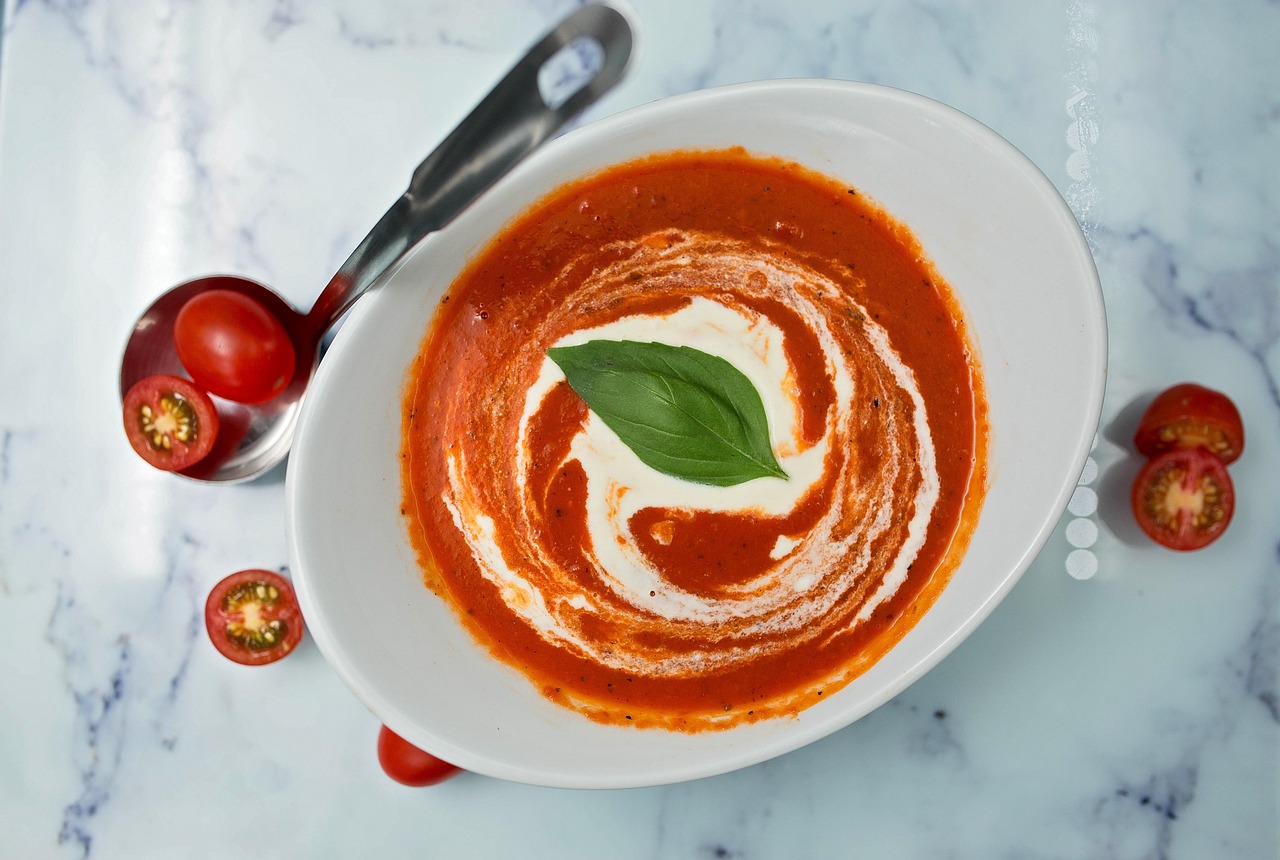
Photograph by MyHomeSelection on Pixabay
Ingredients
- 2 tbsp olive oil
- 1 tbsp butter
- 1 onion, diced
- 1 carrot, diced
- 4 cloves garlic, sliced
- 2 tbsp tomato paste
- 2 cans (28 oz each) whole peeled tomatoes
- 2 cups low-sodium vegetable or chicken broth
- 1 tsp sugar, only if the tomatoes are sharp
- 1/3 cup heavy cream
- 1/2 cup fresh basil leaves, plus more to serve
- Salt and black pepper
Method
-
1
Soften the vegetables
Cook the onion and carrot in the oil and butter in a large pot over medium heat for 8 to 10 minutes, until soft and just starting to brown. Add the garlic for the last minute.
-
2
Toast the tomato paste
Stir in the tomato paste and cook 2 minutes, until it turns from bright red to brick red and starts to stick to the pot.
-
3
Simmer
Add the tomatoes with their juice, crushing them with a spoon, and the broth and a good pinch of salt. Simmer uncovered for 25 minutes, stirring now and then.
-
4
Blend
Take the pot off the heat and add the basil. Blend until completely smooth with an immersion blender, or in batches in a blender with the lid vented.
-
5
Finish
Stir in the cream and warm through without boiling. Taste, and add salt, pepper and the sugar if it tastes sharp. Serve with torn basil and a little olive oil.
Why canned tomatoes, even in season
Most of the year, canned whole tomatoes taste better than fresh ones. They are picked ripe and packed within hours, while supermarket tomatoes are picked green so they survive shipping. Whole peeled tomatoes are the best of the canned kinds: they are usually packed from better fruit than diced or crushed, and diced tomatoes often contain calcium chloride, which keeps the pieces firm and stops them breaking down in a soup. San Marzano-style tomatoes are sweeter and less acidic, but any good brand of whole peeled tomatoes works.
In late summer, when tomatoes are cheap and ripe, use about 4 pounds of fresh ones. Halve them, roast them cut side up at 425°F for 40 minutes, and add them to the pot in place of the cans.
Where the depth comes from
Tomato soup can taste thin and sharp, like warm tomato juice. Two steps fix that. Cooking the onion and carrot until they start to brown adds sweetness without sugar. Cooking the tomato paste until it darkens and sticks to the pot caramelizes it, and gives the whole pot a deeper, rounder flavor; our minestrone cooks its tomatoes down for the same reason. Do not skip either one to save five minutes.
The sugar is a correction, not an ingredient. Tomatoes vary a lot in acidity from can to can, so taste the soup after blending and only add it if the soup still tastes sharp.
Creamy tomato soup
This is already a creamy tomato soup. Its body comes from blending, and the cream just rounds it out. Three things make it creamier without adding more fat. Blend it longer than seems necessary, a full 2 minutes in a countertop blender, so no flecks of tomato or onion remain. Add the cream off the heat, and never boil the soup after it goes in. And use heavy cream rather than milk or half-and-half. Tomatoes are acidic, and the lower the fat in the dairy, the more likely it is to curdle in the soup. If you want to use milk, warm it first and stir it in slowly off the heat.
Tomato bisque
A bisque was originally a French shellfish soup, smooth and rich with cream. In American restaurants, tomato bisque now means a tomato soup that is smoother and creamier than usual, often with a splash of sherry. To make this recipe a bisque:
- Use 1 cup of heavy cream in place of the 1/3 cup.
- Add 2 tbsp of dry sherry with the tomatoes, if you like.
- Blend until very smooth, then push the soup through a fine sieve for a velvety finish.
The extra cream brings a bowl to about 280 kcal and 22 g of fat. Half-and-half in place of all the cream gives a lighter bisque at about 215 kcal a bowl; stir it in off the heat so it does not curdle.
Crock pot tomato soup
Do the first two steps on the stove, so the onion, carrot and tomato paste brown. Then put them in the slow cooker with the tomatoes, broth and salt and cook on low for 6 hours or on high for 3. Add the basil, blend, and stir in the cream at the end. Because a slow cooker loses so little liquid, the soup comes out thinner. Use 1 cup of broth instead of 2, or leave the lid off on high for the last 30 minutes.
Lighter or richer
- Without cream: leave it out and the soup drops to about 150 kcal a bowl. It is still good, just brighter and less velvety.
- With Greek yogurt: whisk 1/2 cup of plain Greek yogurt with a ladleful of the hot soup, then stir it in off the heat. Boiling it after that will make it curdle.
- Higher in protein: blend in a drained can of white beans with the tomatoes. That adds about 3 g of protein and 2 g of fiber a bowl, and makes the soup thicker and creamier without any cream.
- Cold and raw: in summer, blend raw tomatoes with olive oil instead, as in our keto gazpacho.
- Vegan: use olive oil in place of the butter, vegetable broth, and a few tablespoons of full-fat coconut milk or a handful of soaked cashews blended in with the tomatoes.
Tomato soup and grilled cheese
The pairing is an American classic for good reason: the acidity of the soup cuts through the cheese and butter. It does change the meal, though. A typical grilled cheese, made with two slices of bread, two ounces of cheddar and butter on the outside, adds around 400 to 500 kcal, more than twice what the soup has. For a lighter version, use one slice of whole-grain bread, an ounce of sharp cheese (sharp cheddar gives more flavor per ounce) and a light brush of oil, and toast it open-faced under the broiler. A slice of sourdough holds up best.
Keeping it
Four days in the fridge and three months in the freezer. Freeze it before adding the cream if you can, and stir the cream in when you reheat it: soups with cream sometimes separate a little when they thaw. A quick whisk brings them back together.
What it is worth nutritionally
A 1 1/2-cup bowl has about 190 kcal, with 4 g of protein, 12 g of fat and 17 g of carbohydrate, including about 4 g of fiber. That is a first course or a light lunch, not a full meal; pair it with a sandwich, a salad with some protein, or a chickpea salad. Cooked tomatoes are one of the best sources of lycopene, and the oil in the pot helps the body absorb it. Canned tomatoes and broth are both salty, so use low-sodium broth and taste before adding salt. The soup is vegetarian with vegetable broth, and gluten-free.