Hummus without tahini
Hummus without tahini from two cans of chickpeas, olive oil, lemon, garlic and cumin. Simmering the chickpeas first makes it smooth. Sesame-free swaps, Greek yogurt and nut butters too.
- 150
- kcal
- 4g
- protein
- 9g
- fat
- 14g
- carbs
- Prep
- 10 min
- Cook
- 20 min
- Serves
- 8
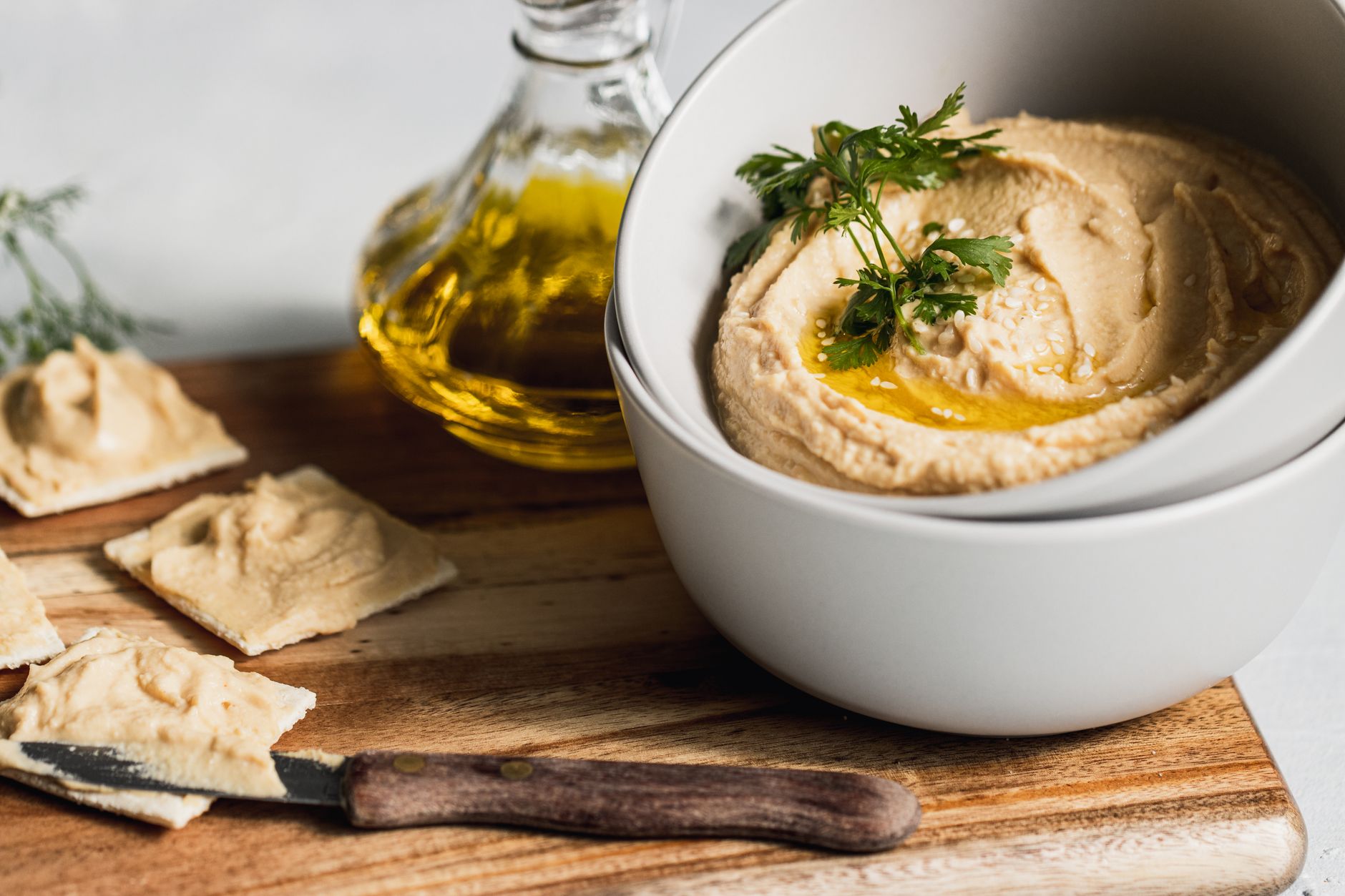
Photograph by Anna Pyshniuk on Pexels
Ingredients
- 2 cans (15 oz each) chickpeas
- 1/2 tsp baking soda
- 1/4 cup (55 g) extra-virgin olive oil, plus more to serve
- 1/4 cup (60 ml) lemon juice, from about 1 1/2 lemons
- 1 to 2 cloves garlic
- 1/2 tsp ground cumin
- 3/4 tsp kosher salt, plus more to taste
- 3 to 5 tbsp ice water
- Paprika or chopped parsley, to serve
Method
-
1
Simmer the chickpeas
Drain and rinse the chickpeas. Put them in a pot with the baking soda and water to cover by an inch, and simmer 20 minutes, until they are very soft and the skins slip off. Skim off the skins that float up.
-
2
Rinse and drain
Drain the chickpeas in a colander and rinse them under warm water to wash off the baking soda. Shake them dry.
-
3
Mellow the garlic
Pulse the garlic with the lemon juice in a food processor until finely chopped, then leave it 5 to 10 minutes while the chickpeas drain. The acid takes the harshest edge off the garlic.
-
4
Blend
Add the warm chickpeas, cumin and salt and process 1 minute, scraping down the sides once. With the motor running, pour in the olive oil.
-
5
Loosen with ice water
Still with the motor running, add the ice water a tablespoon at a time and keep processing 2 to 3 minutes more, until the hummus is pale and smooth.
-
6
Season and serve
Taste for salt, lemon and garlic. Spread it in a bowl, make a well with the back of a spoon, and fill it with olive oil and a pinch of paprika or parsley.
What tahini does, and what replaces it
Tahini is ground sesame seeds. In classic hummus it does three jobs: it gives the nutty, slightly bitter depth, a lot of the creaminess, and the fat that carries the garlic and lemon. Take it out and you need something to do all three.
This recipe uses extra-virgin olive oil for the fat and the richness, cumin for some of the warm, toasty flavor, and very soft chickpeas for the creaminess. It tastes brighter and lighter than tahini hummus, more lemon and garlic, less earthy. No one will mistake it for the original, but it is a good dip in its own right. It is vegan and sesame-free as written, as long as the ingredients are (see the sesame allergy section).
For the classic version, with plenty of tahini and dried chickpeas, see our hummus from dried chickpeas.
Why the chickpeas get simmered first
Canned chickpeas are cooked, but not soft enough for a smooth dip. Without tahini to smooth things over, that matters even more: blended straight from the can, they make a grainy paste. Twenty minutes of simmering with a little baking soda fixes it. The baking soda raises the pH of the water, which breaks down the skins and the cell walls, so the chickpeas turn very soft and many skins float off. Skim them as they rise.
- Rinse well afterward. Leftover baking soda tastes soapy.
- Blend them warm. Warm chickpeas blend smoother than cold ones.
- Add ice water at the end. It lightens the color and the texture, the same trick that works in tahini hummus.
- A food processor or a blender. A food processor is easiest. A high-speed blender gives the smoothest result but needs a little more water to keep the blades moving.
If you start with dried chickpeas, cook them until they fall apart, as in our guide to how to cook chickpeas, and skip the simmering step. You need about 3 cups of cooked chickpeas.
Hummus without tahini for a sesame allergy
Many people look for this recipe because of a sesame allergy. Since January 1, 2023, sesame has been one of the major food allergens that packaged foods sold in the US must declare on the label. Most store-bought hummus contains tahini, so making it at home is the simplest way to be sure.
The recipe as written contains no sesame. For someone with an allergy, a few things are still worth checking:
- The labels of everything you use, including the chickpeas and the spices. Spice blends sometimes contain sesame. Plain ground cumin should not, but check.
- "May contain" warnings. These are voluntary in the US, so a product without one is not guaranteed to be free of cross-contact. If the allergy is severe, contact the maker.
- Swaps. Toasted sesame oil, sesame seeds as a garnish and any "tahini-style" sauce are all sesame. Sunflower seed butter, below, is the usual sesame-free replacement, but check that it was not made on shared equipment.
Hummus with Greek yogurt
For a creamier, tangier dip, replace the olive oil in the recipe with 1/2 cup (120 g) of plain Greek yogurt and 1 tbsp of olive oil. Add the yogurt after the chickpeas are blended smooth, and process only until combined. Leave out most of the ice water, since the yogurt is already loose.
It is no longer vegan, and it keeps only 3 to 4 days in the fridge. With 2% Greek yogurt it comes to about 115 kcal and 6 g of protein a serving, against 150 kcal and 4 g for the olive oil version.
With sunflower seed butter, peanut butter or almond butter
A seed or nut butter comes closest to the texture of tahini, because it is the same kind of thing: a ground, fatty paste. Use 1/3 cup, cut the olive oil to 2 tbsp, and buy an unsweetened one with no added sugar.
- Sunflower seed butter is the most neutral and the usual choice for a sesame allergy. It can turn the hummus faintly green after a few hours. That is a harmless reaction between a compound in sunflower seeds and the baking soda; rinsing the chickpeas well and using enough lemon juice limits it.
- Peanut butter works but tastes clearly of peanuts. A smooth natural one is best. Peanuts are a major allergen too, so do not serve it as a safe option without saying so.
- Almond or cashew butter is mild and creamy. Cashew butter makes a very smooth dip.
Any of them brings the hummus to about 180 kcal and 6 g of protein a serving.
Making it taste more like classic hummus
- Toast the cumin. Warm it in a dry pan for 30 seconds before adding it. It gives more of the roasted flavor tahini usually brings.
- A few drops of toasted sesame oil, if there is no allergy and you simply have no tahini. Half a teaspoon is enough; more is overpowering.
- Use aquafaba, the liquid from the can, in place of some of the ice water if you skip the baking soda simmer. It makes the hummus a little creamier. Taste it first, since it is salty.
- Season at the end. Without tahini, hummus needs more lemon and salt than you expect. Add both a little at a time and taste.
Keeping it
It keeps 4 days in the fridge in a covered container, with a thin layer of olive oil on top to stop the surface drying out. It firms up when cold, so leave it out for 20 minutes and stir before serving. It freezes well for up to 3 months; thaw it overnight in the fridge and stir in a spoonful of water or olive oil if it looks dry. The Greek yogurt version does not freeze well.
What it is worth nutritionally
A serving, about 1/3 cup, has around 150 kcal, with 4 g of protein, 9 g of fat and 14 g of carbohydrate, about 4 g of it fiber. That is fewer calories than tahini hummus, which has about 175 kcal and 7 g of protein a serving, because the 1/4 cup of olive oil replaces 2/3 cup of tahini. The fat is mostly the monounsaturated fat of olive oil. Most of the sodium comes from the salt you add and what is left in canned chickpeas; for ways to cut it, see the low-sodium section of our classic hummus. Raw vegetables are the lightest thing to eat it with; pita and chips usually add more calories than the hummus. It also goes well with falafel.