Tuna salad without mayo
Tuna salad without mayo, bound with mashed ripe avocado, lemon and a teaspoon of olive oil, with celery, red onion and pickles. 16 g of protein and 165 kcal a serving, plus every other mayo substitute.
- 165
- kcal
- 16g
- protein
- 9g
- fat
- 6g
- carbs
- Prep
- 10 min
- Serves
- 3
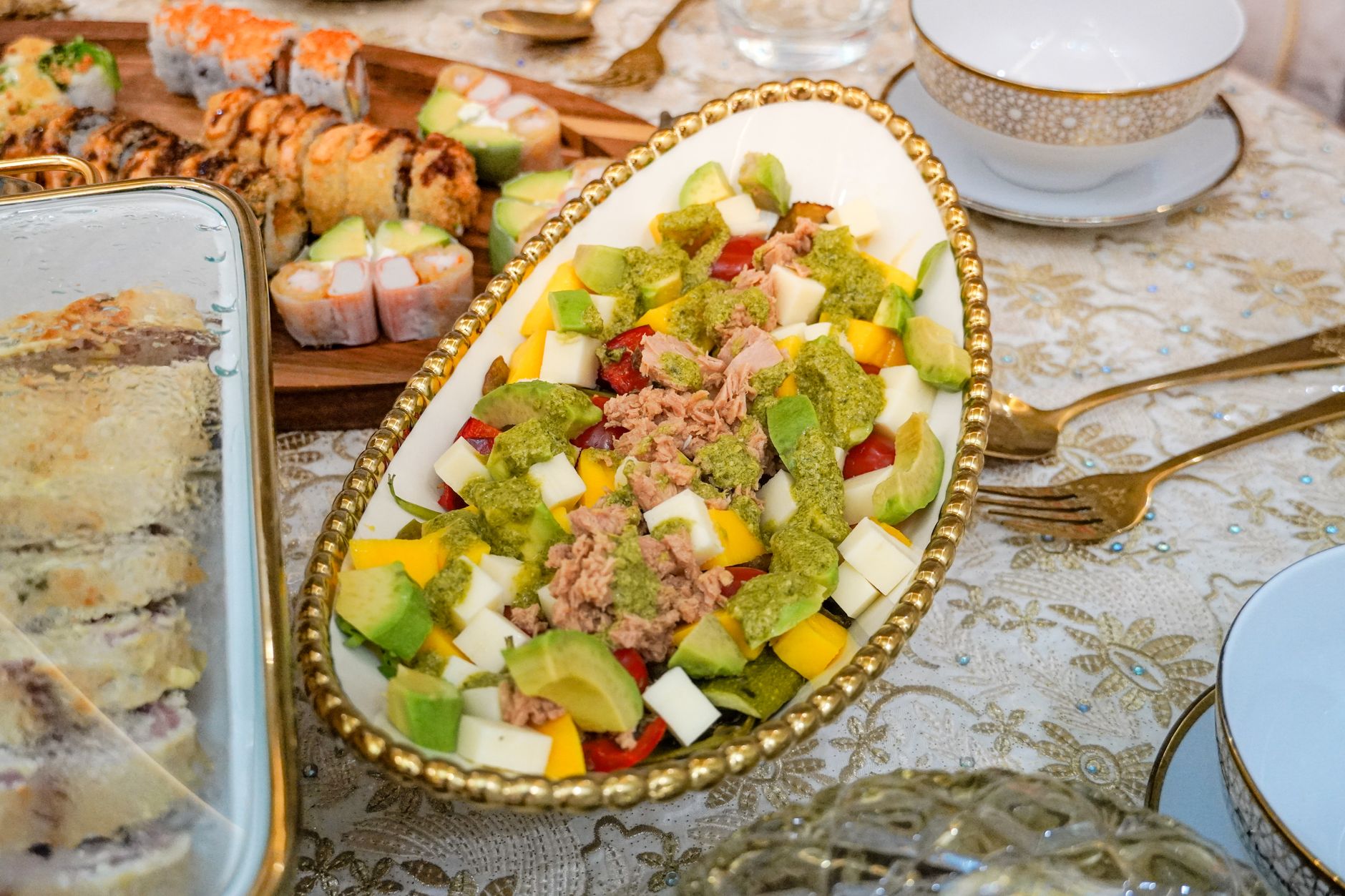
Photograph by nabil atiche on Pexels
Ingredients
- 2 cans (5 oz each) chunk light or skipjack tuna in water, well drained
- 1 medium ripe Hass avocado, about 5 oz (140 g) flesh
- 2 tbsp lemon juice
- 1 tsp extra-virgin olive oil
- 1 tsp Dijon mustard
- 1 rib celery, finely diced
- 2 tbsp finely chopped red onion
- 2 tbsp finely chopped dill pickle, or 1 tbsp capers, rinsed
- 1 tbsp chopped fresh dill or parsley
- Salt and black pepper
Method
-
1
Drain the tuna well
Tip the tuna into a strainer and press it with the back of a spoon until no more water comes out.
-
2
Mash the avocado
Scoop the avocado into a bowl and mash it with a fork with the lemon juice, olive oil and mustard until it is mostly smooth, with a few small lumps.
-
3
Mix
Add the tuna, celery, onion, pickle and dill. Flake the tuna with a fork as you fold everything together, leaving some pieces large.
-
4
Season and serve
Add pepper, then taste before adding salt: the tuna and pickles are already salty. Serve right away on whole-grain bread, in lettuce cups or with crackers.
Avocado instead of mayo
This tuna salad without mayo uses a mashed ripe avocado to do the mayonnaise's job. Avocado is creamy enough to bind the tuna and fatty enough to make it taste rich, and a squeeze of lemon and a teaspoon of olive oil loosen it into something close to a dressing. There is no mayonnaise and no yogurt in it, so it also suits anyone avoiding eggs or dairy.
The trade-off is that the avocado browns, so this is a tuna salad to make and eat on the same day. If you need one that keeps for a week of lunches, the substitutes below include versions that last 3 days.
Choosing and mashing the avocado
- Ripe, not overripe. A ripe Hass avocado gives slightly when you press it near the stem. Rock-hard ones will not mash; ones with brown, stringy flesh taste sour and turn the salad gray.
- Mash it with the lemon first. The acid slows the browning from the start and seasons the avocado evenly, so the tuna does not taste flat in some bites and sour in others.
- Leave a few lumps. Fully smooth avocado makes a pasty salad. A fork gives a better texture than a blender.
- One medium avocado per 2 cans. Less and the salad is dry; more and it tastes of guacamole rather than tuna salad.
Substitutes for mayo in tuna salad
Every substitute here is given for 2 cans (5 oz each) of drained tuna, which makes 3 servings. The tuna alone is about 65 kcal and 15 g of protein a serving; each figure below is what the binder adds to that.
- Avocado (this recipe): 1 medium avocado, mashed with 2 tbsp lemon juice. Creamy and rich, a little green in taste. Adds about 75 kcal, 7 g of fat and 3 g of fiber a serving. Best eaten the same day.
- Greek yogurt: 1/2 cup of plain 2% Greek yogurt. Thick, tangy and the closest to deli tuna salad. Adds about 35 kcal, 5 g of protein and 1 g of fat a serving, and keeps 3 days. Our tuna salad with Greek yogurt is built this way, with a spoonful of mayonnaise for flavor that you can simply leave out.
- Hummus: 1/3 cup of plain hummus, thinned with 1 tbsp lemon juice. Thick, nutty and garlicky, slightly grainy. Adds about 45 kcal, 2 g of protein and 3 g of fat a serving. Homemade hummus is smoother and less salty than most store-bought.
- Olive oil and lemon: 2 tbsp extra-virgin olive oil whisked with 2 tbsp lemon juice. Not creamy at all: the tuna stays flaky, like a Mediterranean salad. Adds about 80 kcal and 9 g of fat a serving. Our chickpea and tuna salad uses this dressing.
- Cottage cheese: 1/2 cup of 2% cottage cheese, blended or mashed smooth, or it stays lumpy. Mild and creamy. Adds about 30 kcal, 4 g of protein and 1 g of fat a serving. It is salty, so add no salt until you have tasted it.
- Mustard: 2 tbsp Dijon mustard loosened with 1 tbsp olive oil and 1 tbsp lemon juice. Sharp and loose rather than creamy, best in a wrap or on greens. Adds about 50 kcal and 5 g of fat a serving, and plenty of sodium.
Two binders can be mixed. Half avocado and half Greek yogurt, for example, browns more slowly than avocado alone and is less tangy than yogurt alone.
How long avocado tuna salad keeps
Honestly, not long. The cut surface of avocado starts to brown within an hour or two, and by the next day the whole salad has turned a dull olive color. Browned avocado is safe to eat if the salad has been in the fridge, but it looks unappetizing and tastes slightly bitter.
To slow it down:
- Use the full 2 tbsp of lemon juice, mashed into the avocado before anything else goes in.
- Press plastic wrap directly onto the surface of the salad, so no air touches it, and refrigerate.
- Pack it in a container it fills to the top, with as little air space as possible.
With those, it will hold well enough for the next day's lunch, but no longer. Like any tuna salad, it should not sit out of the fridge for more than 2 hours. Do not freeze it.
Why drain the tuna so hard
Water left in the can thins any mayo substitute, and avocado and yogurt both thin faster than mayonnaise does. Pressing the tuna in a strainer with the back of a spoon gets out much more water than tipping the can over the sink. The salad stays creamy and holds together in a sandwich.
How to serve it
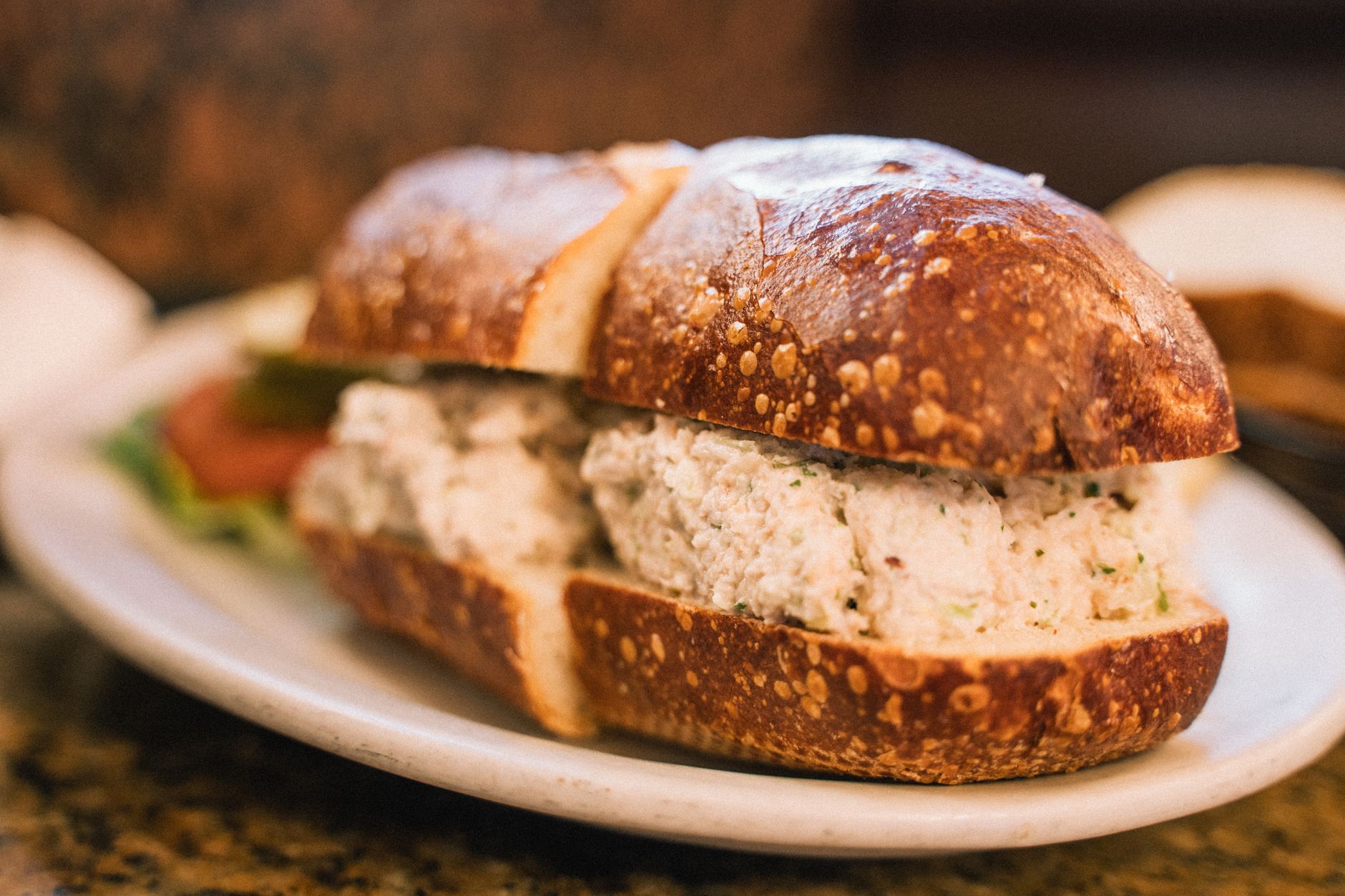
- On toast or in a sandwich: whole-grain bread with sliced tomato and a few leaves.
- In lettuce cups, romaine or butter lettuce, for a low-carb lunch.
- Stuffed into a hollowed tomato or a halved bell pepper.
- With cucumber slices, celery sticks or crackers as a snack.
What it is worth nutritionally
A serving, a third of the recipe, has about 165 kcal, with 16 g of protein, 9 g of fat and 6 g of carbohydrate, including about 3 g of fiber. Most of the fat is from the avocado, and most of it is monounsaturated, the same kind as in olive oil. Compared with a deli tuna salad made with 1/2 cup of mayonnaise, at about 330 kcal a serving, it has half the calories and some fiber. Bread is not included: two slices of whole wheat bread add about 160 kcal. The salad is low-carb and gluten-free. For more on the fats avocado brings, see healthy fats; to see how much protein a lunch like this covers, try the protein calculator.