Chickpea and tuna salad
Chickpea and tuna salad made with real canned tuna, cucumber, cherry tomatoes and parsley in a lemon-olive oil dressing. No mayo, 16 g of protein and 5 g of fiber a serving.
- 215
- kcal
- 16g
- protein
- 9g
- fat
- 18g
- carbs
- Prep
- 15 min
- Serves
- 4
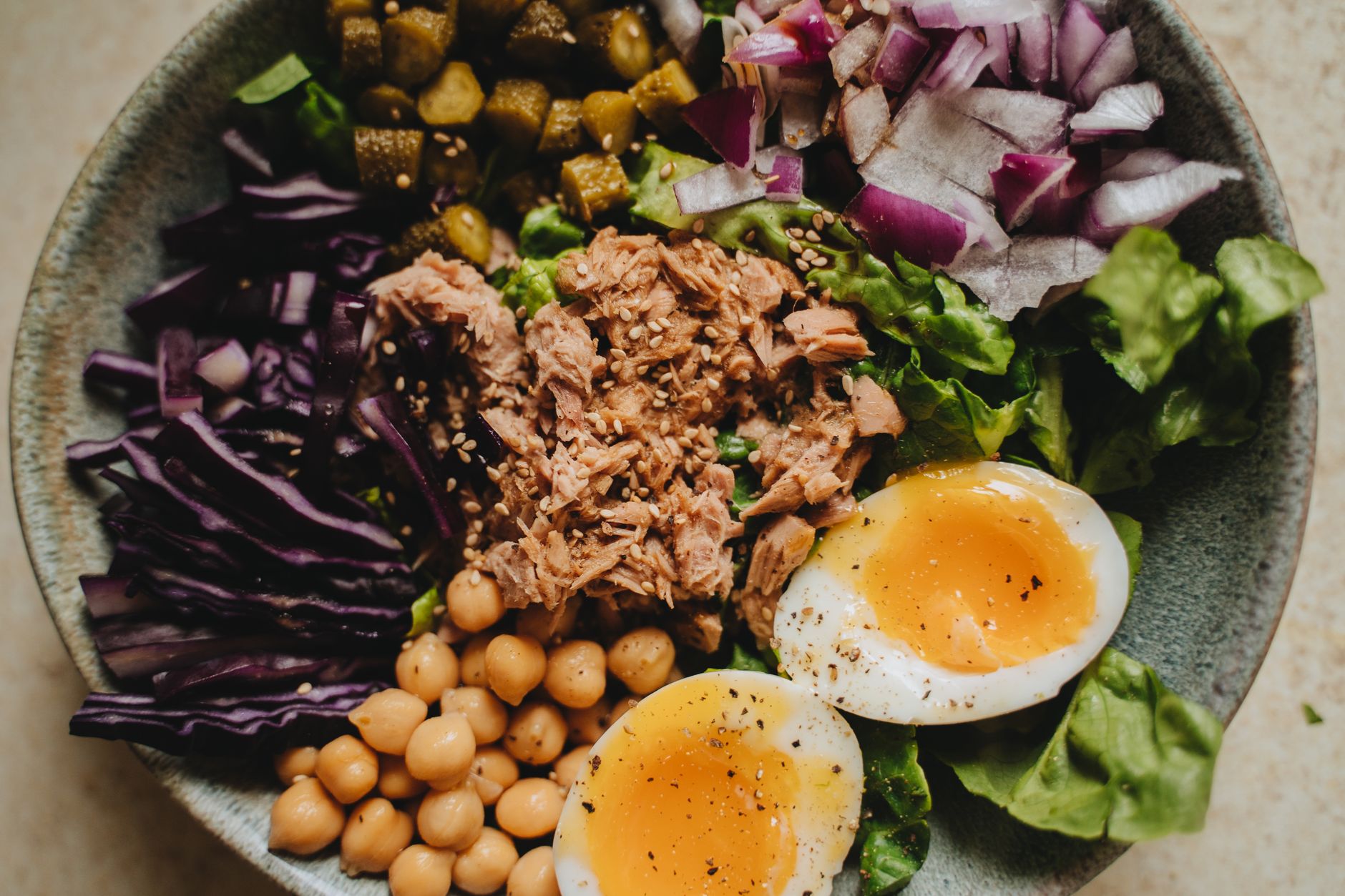
Photograph by Alesia Kozik on Pexels
Ingredients
- 2 cans (5 oz each) chunk light or skipjack tuna in water, well drained
- 1 can (15 oz) chickpeas, drained and rinsed
- 2 tbsp extra-virgin olive oil
- 3 tbsp lemon juice
- 1 tbsp red wine vinegar
- 1 tsp Dijon mustard
- 1 small clove garlic, finely grated
- 1/2 tsp dried oregano
- 1/4 red onion, finely diced
- 1/2 English cucumber, diced
- 1 cup (150 g) cherry tomatoes, halved
- 2 tbsp capers, rinsed
- 1/3 cup chopped parsley
- Salt and black pepper
Method
-
1
Make the dressing
Whisk the olive oil, lemon juice, vinegar, mustard, garlic, oregano and a pinch of salt in a large bowl.
-
2
Marinate the chickpeas
Add the chickpeas and red onion to the dressing, stir, and leave them while you get the rest ready, about 10 minutes.
-
3
Drain the tuna well
Tip the tuna into a strainer and press it with the back of a spoon to squeeze out as much water as you can.
-
4
Toss
Add the cucumber, tomatoes, capers and parsley, then the tuna in large flakes. Fold gently so the tuna stays in pieces.
-
5
Season and serve
Taste before adding salt, since the tuna and capers are already salty. Add pepper and more lemon if you like, and serve on greens, in a pita or on its own.
Real tuna, not chickpea "tuna"
This chickpea tuna salad uses two cans of real tuna and a can of chickpeas, tossed in lemon and olive oil. Some recipes with the same name are vegan: mashed chickpeas seasoned to taste like tuna salad, with no fish in them at all. This is not one of those. Here the chickpeas sit next to the tuna and stretch two cans into four filling servings, with 5 g of fiber each.
It started as a variation on our tuna salad with Greek yogurt, and it turned out to be a different salad: no creamy dressing, more vegetables, and closer to a Mediterranean bean salad than to a sandwich filling.
Why the chickpeas go in the dressing first
Canned chickpeas taste of very little, and tuna is salty and strong, so on their own the chickpeas taste dry and bland. Ten minutes in the lemon dressing with the red onion gives them time to soak some of it up, and the acid softens the onion so it stops tasting harsh. It is the same step as in our chickpea salad.
Rinse the chickpeas well. The liquid in the can, aquafaba, is starchy and salty, and it clouds the dressing. If you cook dried chickpeas instead, 1 1/2 cups cooked is one can; how to cook chickpeas covers soaking and timing.
Which tuna, and oil-packed or water-packed
Chunk light tuna, usually skipjack, is the default here: it is cheaper and lower in mercury than solid white albacore. There is more on choosing tuna, and on how often to eat it, in our tuna salad notes.
Tuna packed in olive oil suits this salad especially well, because there is no mayonnaise to add richness. If you use it, drain it but do not press it, and cut the olive oil in the dressing to 1 tbsp. A serving then has about 30 to 40 kcal more than with tuna in water. Whichever you use, break it into large flakes and fold it in last, so it stays in pieces instead of turning to paste.
No mayo, and how to make it creamy anyway
The dressing is lemon juice, red wine vinegar, olive oil and a little Dijon mustard, which helps it cling to the chickpeas. Capers and parsley do the work that pickles and celery do in a deli tuna salad.
If you want it creamy, stir 1/4 cup of plain Greek yogurt into the dressing. It adds about 15 kcal and 2 g of protein a serving and makes it easier to pile into a sandwich. For a creamy tuna salad with no mayonnaise and no chickpeas, our tuna salad without mayo uses mashed avocado.
How to serve it
- On greens: a quarter of the bowl over a couple of handfuls of arugula or romaine, with an extra squeeze of lemon, is a full lunch.
- In a pita or wrap: drain off any dressing at the bottom of the bowl first, so the bread stays dry.
- In lettuce cups or with cucumber slices, for a lower-carb plate.
- With crackers or toasted whole-grain bread, as a snack plate.
Variations
- White beans: cannellini beans instead of chickpeas, with a little chopped fresh rosemary or basil, make the Italian version of the same salad.
- With feta and olives: add 2 oz (55 g) crumbled feta and a handful of halved Kalamata olives. The feta adds about 40 kcal and 2 g of protein a serving; cut back on the salt.
- With egg: fold in 2 chopped hard-boiled eggs, for about 40 kcal and 3 g more protein a serving.
- Salmon instead: a 6-oz can of salmon, skin and large bones removed, works in place of one can of tuna and adds omega-3 fat.
- Crunchier: add a diced red bell pepper or a rib of celery with the cucumber.
Keeping it
It keeps 3 days in the fridge in a sealed container, which makes it a good salad to make ahead for lunches. The cucumber and tomatoes give off some water, so stir it and drain off any liquid before serving, and add a little lemon if it tastes flat. For the longest keeping, add the cucumber, tomatoes and parsley on the day.
What it is worth nutritionally
A serving, a quarter of the bowl, has about 215 kcal, with 16 g of protein, 9 g of fat and 18 g of carbohydrate, including about 5 g of fiber. The tuna supplies about two thirds of the protein and the chickpeas the rest, along with nearly all the fiber. Most of the fat is olive oil. Compared with the same tuna in a mayonnaise dressing, it has fewer calories and much more fiber, and it is gluten-free. Tuna is a good source of vitamin B12 and selenium, and chickpeas add folate, iron and magnesium. For other ways to put more protein into lunch, see our list of high-protein foods.