Low-carb keto ramen
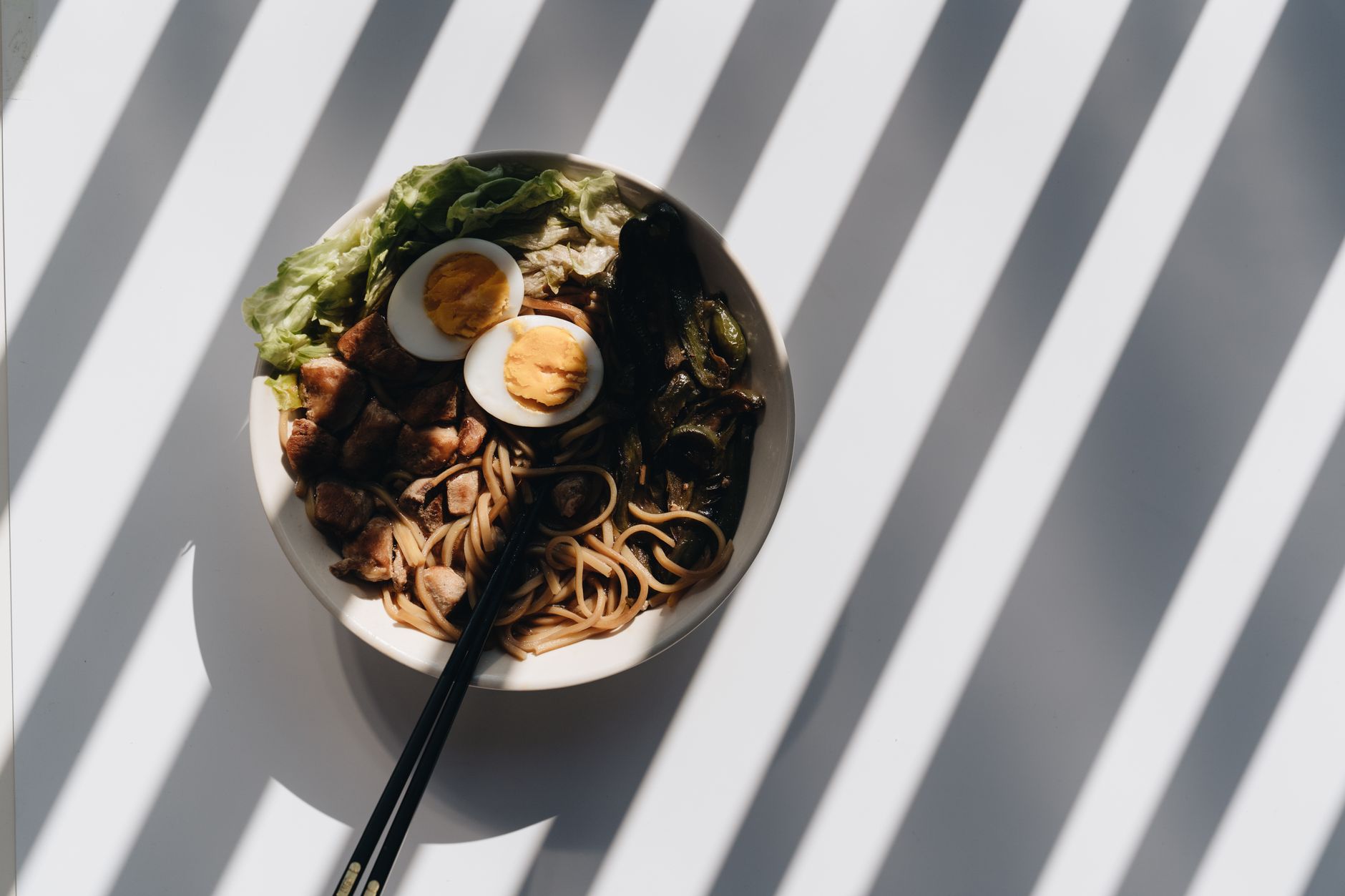
Low-carb keto ramen with shirataki noodles, miso broth, crisp pork belly and a soft-boiled egg: a full bowl at 7 g of carbohydrate.
- 480
- kcal
- 34g
- protein
- 34g
- fat
- 7g
- carbs
- Prep
- 15 min
- Cook
- 25 min
- Serves
- 2
Ingredients
- 4 cups chicken bone broth
- 2 packs shirataki noodles, rinsed well
- 2 soft-boiled eggs
- 6 oz pork belly, sliced
- 2 tbsp white miso
- 1 tbsp sesame oil
- Scallions, nori, chili oil
Method
-
1
Prepare the shirataki
Rinse the shirataki under running water for a full minute, then dry-fry them for 3 minutes. This is what removes the packet smell.
-
2
Crisp the pork belly
Crisp the pork belly slices in a dry pan.
-
3
Make the miso broth
Warm the stock and whisk in the miso off the boil, so it does not split.
-
4
Assemble the bowls
Assemble: noodles, broth, pork, halved eggs, scallions and nori. Finish each bowl with sesame oil and chili oil.
Shirataki, and how to make it not taste like the packet
Shirataki noodles are made from konjac glucomannan and contain almost no digestible carbohydrate, which is the entire reason they are here. They also come packed in a liquid that smells strongly of the sea, and skipping the preparation is why most people try them once and never again.
Rinse them under running water for a full minute — longer than feels reasonable. Then dry-fry them in a hot pan with no oil for three minutes, moving them constantly. The remaining water steams off, the texture tightens from rubbery to springy, and the smell goes. This step is the difference between a good bowl and an inedible one.
The miso goes in off the heat
Miso is a living fermented product and boiling it does two things, both bad: it kills the culture and it drives off the volatile aromatics that make it taste of anything. Take the stock off the boil, ladle a little into a bowl with the miso, whisk it smooth, and stir that back in. Adding the paste directly to hot liquid leaves lumps that never fully dissolve.
The egg
Six and a half minutes from a rolling boil, straight into ice water, for a white that is fully set and a yolk that is still liquid at the center. Older eggs peel far more easily than fresh ones. Marinating the peeled eggs overnight in soy sauce, mirin and water gives you the ajitama from a ramen shop and costs nothing but planning.
Making the broth better
A store-bought bone broth will do; it is also where much of the protein comes from. If you want the bowl to be genuinely good, simmer chicken bones with a piece of kombu and a few dried shiitake for a couple of hours — the glutamate from the kombu and the guanylate from the mushrooms multiply each other. It is the same synergy that makes dashi, made with kombu and bonito flakes, taste the way it does.
What it is worth nutritionally
7 g of carbohydrate for a full bowl of ramen, against something in the region of 60 to 70 g for the wheat-noodle version. 34 g of protein and 34 g of fat put this squarely in ketogenic territory — see what the ketogenic diet actually is for what that threshold means in practice. The pork belly is most of the fat; swapping it for chicken thigh brings it to around 20 g.