Vegetarian stuffed peppers
Vegetarian stuffed peppers with black beans, brown rice, corn and smoky spices, baked under Monterey Jack. 11 g of fiber a pepper, and vegan if you skip the cheese.
- 315
- kcal
- 14g
- protein
- 10g
- fat
- 46g
- carbs
- Prep
- 20 min
- Cook
- 55 min
- Serves
- 6
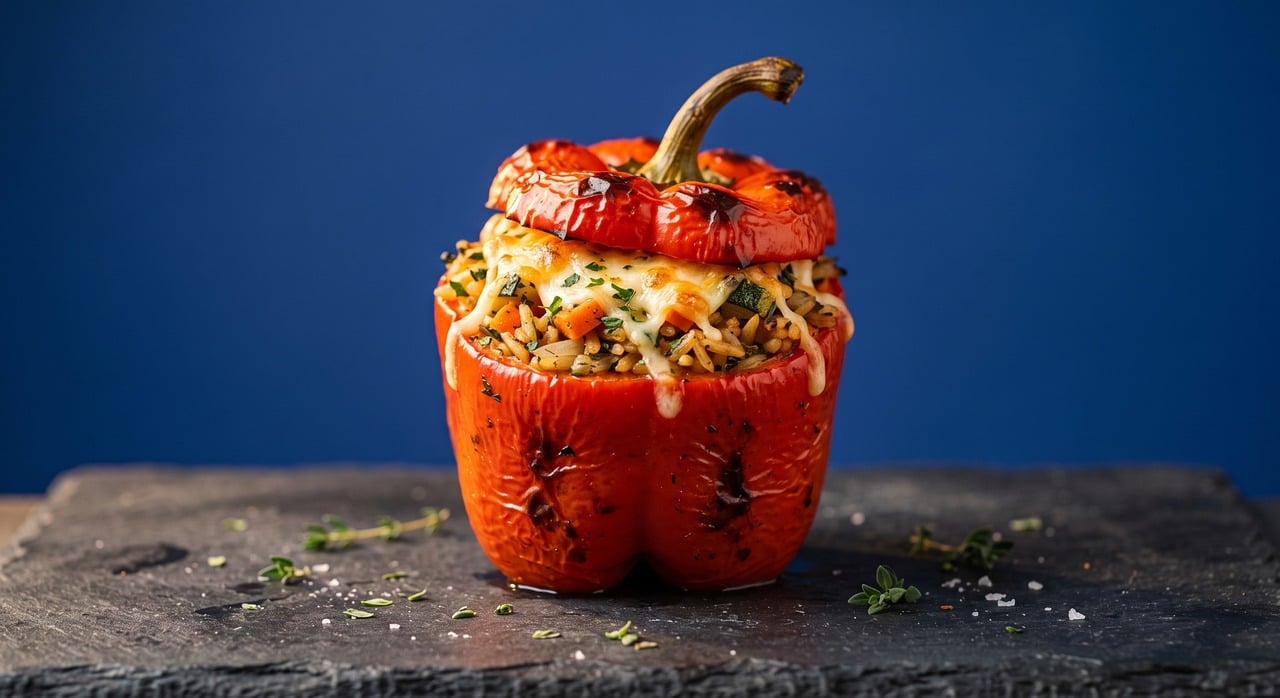
Photograph by tehzeebkazmii on Pixabay
Ingredients
- 6 large bell peppers, any color
- 1 tbsp olive oil
- 1 onion, diced
- 3 cloves garlic, minced
- 1 tsp ground cumin
- 1 tsp chili powder
- 1 tsp smoked paprika
- 2 cans (15 oz each) black beans, drained and rinsed
- 1 cup (150 g) corn kernels, fresh or frozen
- 1 can (14.5 oz) diced tomatoes, drained
- 1 can (8 oz) tomato sauce
- 1 1/2 cups (about 290 g) cooked brown rice
- 1 cup (115 g) shredded Monterey Jack or pepper jack
- Salt and black pepper
- Chopped cilantro and lime wedges, to serve
Method
-
1
Prepare the peppers
Heat the oven to 375°F. Cut the tops off the peppers and pull out the seeds and ribs. Trim a thin slice off any base that will not stand up, without cutting through.
-
2
Pre-bake the peppers
Stand them in a baking dish and bake empty for 10 minutes, so they are tender by the time the filling is hot.
-
3
Cook the onion and spices
Meanwhile cook the onion in the oil over medium heat for 5 to 6 minutes, until soft. Add the garlic, cumin, chili powder and smoked paprika and stir for 1 minute, until fragrant.
-
4
Mix the filling
Tip the beans into a large bowl and mash about a third of them with a fork. Stir in the onion mixture, corn, diced tomatoes, half the tomato sauce, the rice and half the cheese. Season well with salt and pepper.
-
5
Stuff and bake
Pack the filling into the peppers, mounding it on top. Pour the rest of the tomato sauce around them in the dish, cover with foil and bake 30 minutes.
-
6
Add the cheese
Uncover, top with the remaining cheese and bake 10 to 15 minutes more, until it is browned and the peppers are tender when pierced. Scatter with cilantro and serve with lime.
Why black beans and rice, and why mash some
A meat filling holds together because ground beef binds as it browns. Beans and rice do not, so a meatless filling tends to tumble out of the pepper when you cut it. The fix is mashing about a third of the beans before mixing. The mashed beans act as glue, with help from the cheese as it melts, and the filling slices cleanly. Black beans are the best bean for this: they keep their shape in the oven and their mild, earthy flavor goes with cumin, chili and corn. Pinto or kidney beans work the same way.
The rice gives the filling body and keeps it from tasting like a bowl of beans. Brown rice adds a little more fiber than white; leftover rice from the fridge is ideal, since it is drier and does not turn mushy.
Vegan stuffed peppers
For strict vegetarians, check the cheese label for microbial or vegetable rennet; some Monterey Jack is made with animal rennet. Everything except the cheese is vegan as written, so leave it off or use a vegan shredded cheese that melts. Without cheese, the filling needs a little more help to hold: mash half the beans instead of a third, and stir 2 tablespoons of the tomato sauce in with them. A spoonful of salsa, sliced avocado or a cashew crema on top replaces the richness. Each pepper then has about 245 kcal and 10 g of protein. Check the label on canned beans and tomato sauce for added animal fat or cheese; most have neither.
Other meatless fillings
- Quinoa instead of rice. Use the same 1 1/2 cups, cooked. It adds about 1 g of protein a pepper and makes the filling lighter. Our quinoa salad explains how to cook it so it does not turn mushy.
- Lentils. Replace one can of beans with 1 1/2 cups of cooked brown or green lentils. They give a texture closer to ground meat.
- Leftover chili. About 4 cups of vegetarian chili, mixed with the rice, is a ready-made filling. Skip the beans, corn and diced tomatoes.
- Italian style. Use cannellini beans, Italian seasoning in place of the cumin and chili powder, and part-skim mozzarella. That is closer to our classic stuffed peppers with ground beef, just without the meat.
Getting the peppers tender
The filling only needs heating through, but the peppers need about 45 minutes in the oven to soften. That is why they go in empty for 10 minutes first, and why the dish is covered with foil for most of the baking: the steam softens the peppers without drying out the filling. If you like them firmer, skip the pre-bake. Wide, blocky peppers with flat bottoms stand up best and hold the most filling. Red, yellow and orange peppers are sweeter; green ones are cheaper and slightly bitter.
Making them ahead and freezing
Stuff the peppers, cover and refrigerate up to a day before baking, and add 10 minutes to the covered baking time. Baked peppers keep 4 days in the fridge, so they make good meal prep: reheat covered in a 350°F oven for 20 minutes, or in the microwave for 2 to 3 minutes. They freeze for 3 months, individually wrapped. The peppers soften more after thawing, but the filling holds up well.
What to serve with them
One pepper is a full dinner. For a bigger meal, serve them with a crisp salad, such as coleslaw, which cuts through the beans and cheese, or with a spoonful of Greek yogurt or sour cream on top.
What they are worth nutritionally
One stuffed pepper has about 315 kcal, with 14 g of protein, 10 g of fat and 46 g of carbohydrate, including about 11 g of fiber. That is a little less protein than the beef version, which has 23 g, but more than twice the fiber, almost all of it from the beans. Most of the fat comes from the cheese; using 1/2 cup instead of 1 cup saves about 35 kcal and 3 g of fat a pepper. For a sense of how that fiber compares with other foods, see our list of high-fiber foods.