Broccoli soup
Creamy broccoli soup without cream: the peeled stalks and one potato give it body. Plus how much a cheddar version adds.
- 170
- kcal
- 6g
- protein
- 7g
- fat
- 23g
- carbs
- Prep
- 10 min
- Cook
- 20 min
- Serves
- 4
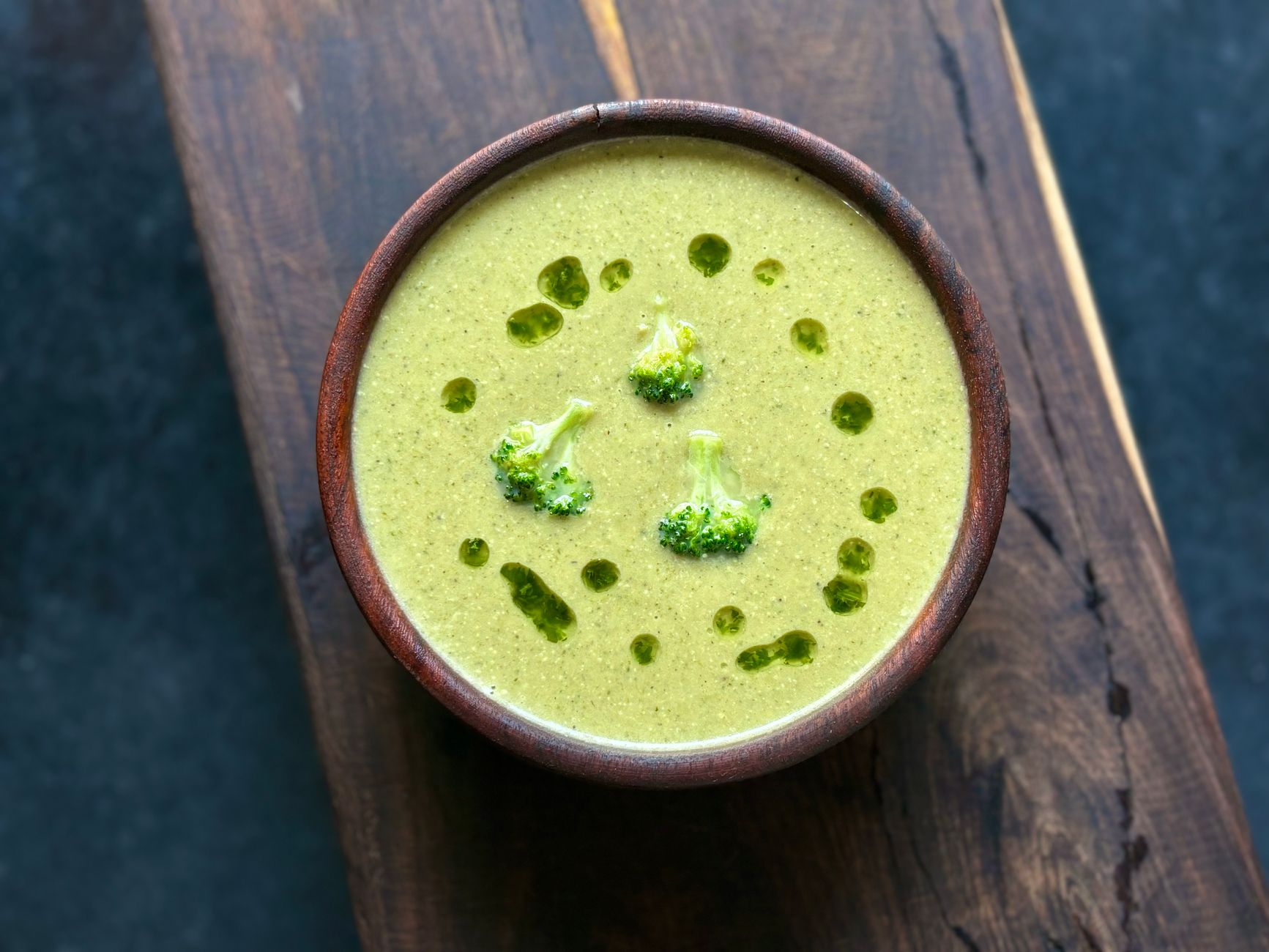
Photograph by Rahul Sonawane on Pexels
Ingredients
- 1 large head broccoli, stalks and florets separated
- 1 leek, sliced
- 1 potato, cubed
- 4 cups vegetable stock
- 2 tbsp olive oil
- Black pepper
Method
-
1
Cook the stalks and leek
Peel the broccoli stalks and slice them thinly. Soften with the leek in the oil for 8 minutes.
-
2
Simmer the potato
Add the potato and stock, simmer 10 minutes until the potato is tender.
-
3
Add the florets and blend
Add the florets and cook 4 minutes only, then blend.
-
4
Season
Season generously with black pepper.
The stalks are the soup
Many recipes throw the stalk away, which is both wasteful and a mistake. The stalk is sweeter than the florets and has a denser, less sulfurous flavor. Peeled and sliced thin, it cooks down into the body of the soup. The florets are added at the end for color and freshness, not for substance.
The reason for the four-minute rule on the florets is the same as with any brassica: sulfur compounds break down with prolonged heat into the smell people associate with overcooked cabbage. Four minutes is enough to soften them and not enough to start that reaction.
Why there is a potato in it
One potato is doing structural work rather than flavor work. Blended, its starch gives the soup a body that broccoli alone cannot — the alternative is cream, which costs considerably more calories for a similar effect. If you want it richer anyway, a splash of cream at the end is fine; you will not need the potato as well.
The cheese question
Broccoli and cheddar is a classic pairing for good reason, and it adds about 70 percent to the calories. Around 30 g of sharp cheddar per serving adds about 120 kcal and 7 g of protein. Using a strongly flavored cheese means you need less of it — a sharp aged cheddar at 20 g delivers more flavor than a mild one at 40 g.
Keeping it
Four days refrigerated. It freezes acceptably but the texture loosens slightly; blending again after thawing fixes it. The color dulls in storage regardless, which is cosmetic.
What it is worth nutritionally
Broccoli is among the better vegetable sources of vitamin C and vitamin K, and it carries glucoraphanin, which the body turns into sulforaphane — the compound behind most of the interest in cruciferous vegetables. Glucoraphanin itself survives cooking fairly well, but myrosinase, the enzyme that converts it, is destroyed by long heat, which is another argument for the short cooking time here.